-
Why It’s Worth Reading the Newspaper Again
When I was a senior in college, I read the newspaper cover to cover every single day for a year. At 11:00 AM, I took myself to the Dunkin’ Donuts on the URI campus, ordered a bagel with cream cheese and black coffee, and cosplayed a retired man with nothing to do in the middle of the day but read for two hours.
I was aware of the intense luxury of the moment. After graduating, I knew a full-time desk job would leave no space for leisurely afternoon reading. But I didn’t know reading the physical newspaper would prove so refreshing.
These days, I’ve traded the daily “Wall Street Journal,” filter coffee out of a styrofoam cup, and South Kingstown, Rhode Island for “Le Monde,” a double espresso, and Paris. As expected, I no longer have time to read the entire paper every day. But I’ve slowly been turning on friends to the dying art of reading the print newspaper. (Really, isn’t it already dead?) Here’s why:
Discover topics you wouldn’t ordinarily follow
This is the number-one thing I love about reading the physical newspaper cover to cover. Unlike websites, apps, or — God forbid — social media feeds where it’s too easy to simply scroll the headlines without really reading anything, the physical pages of a newspaper keep your eyes (and mind) focused on what’s in front of you.
Not to mention the lack of algorithms. Yes, of course there are still editors, agendas, and other tastemakers (some more nefarious than others) deciding what makes it to print. But unlike an algorithm that’s designed to reinforce your existing beliefs and feed you sensationalism to make your blood boil, a printed newspaper gives the same story to everyone, no matter what other content you’ve engaged with before.
That means in a single sitting, I can cover art, politics, culture, and finance, reading entire articles on subjects I’d normally scroll by without a second glance.
Free yourself from pop-up ads and paywalls
That alone is a compelling reason to pick up a newspaper instead of your phone. Sure, a newspaper still has ads. But no matter which page you’re on, there’s nothing physically obstructing your view of the text, unlike digital articles riddled with pop-up ads, ceaseless notifications, and, worst of all, abominable audio ads.
The same goes for pesky paywalls. You’ve already paid for the paper. Rather than having your data mined and your soul all but sold to God knows whom, buying a newspaper is a clean, transparent transaction: You pay for the paper. You get the paper. You can read the paper in peace without any notifications accosting you with solicitations to subscribe, click, or do anything but read the damn thing.
Get a break from the screen and constant notifications
I’m always looking for ways to add more quiet into my daily life, and I’ve found a general rule of thumb that rarely fails: get away from the screen.
“But I want to be informed,” you may protest. “I don’t want to shut out the world and become a hermit.”
Not a good enough excuse, my friend. The Internet is not necessary to be a well-read, informed person. There’s plenty to discover offline in the pages of the daily newspaper. And guess what? Once you’ve exhausted today’s edition, there’s more coming tomorrow. And the day after that. And the day after that.
Keep writing alive
Like much else in life, you get what you pay for. If you want quality reporting, vibrant storytelling, and intellectuals to earn a respectable wage, the money has to come from somewhere.
I get it. Life is crushingly expensive, and it seems there’s no respite in sight. But your local library definitely carries newspapers for free. Your local coffee shop might, too. (If not, why not make a friendly suggestion? The worst they can say is no. Plus, chatting up your local barista is a great way to practice putting yourself out there.)
Bottom line, our purchases literally fund the world we live in. If you want more free press and more jobs for creative thinkers, start reading the daily paper.
Going offline and living well
I’m a big advocate for living an analog life. The research is there; we know the Internet (and social media, in particular) is making us sad, lonely, anxious, envious — the list goes on. Reading the newspaper, even once a week, is a step towards building healthier habits to make life better. And it’s easy.
If the dark caverns of the Internet are still eating a lot of your free time, this is what helped me quit social media for good.
There are alternatives to the default way of living. You don’t have to do anything, especially lose time to doomscrolling and headline-skimming.
For more ways to fund the kind of world you want to live in, read easy, affordable ways to support local businesses and alternatives to Amazon for books.
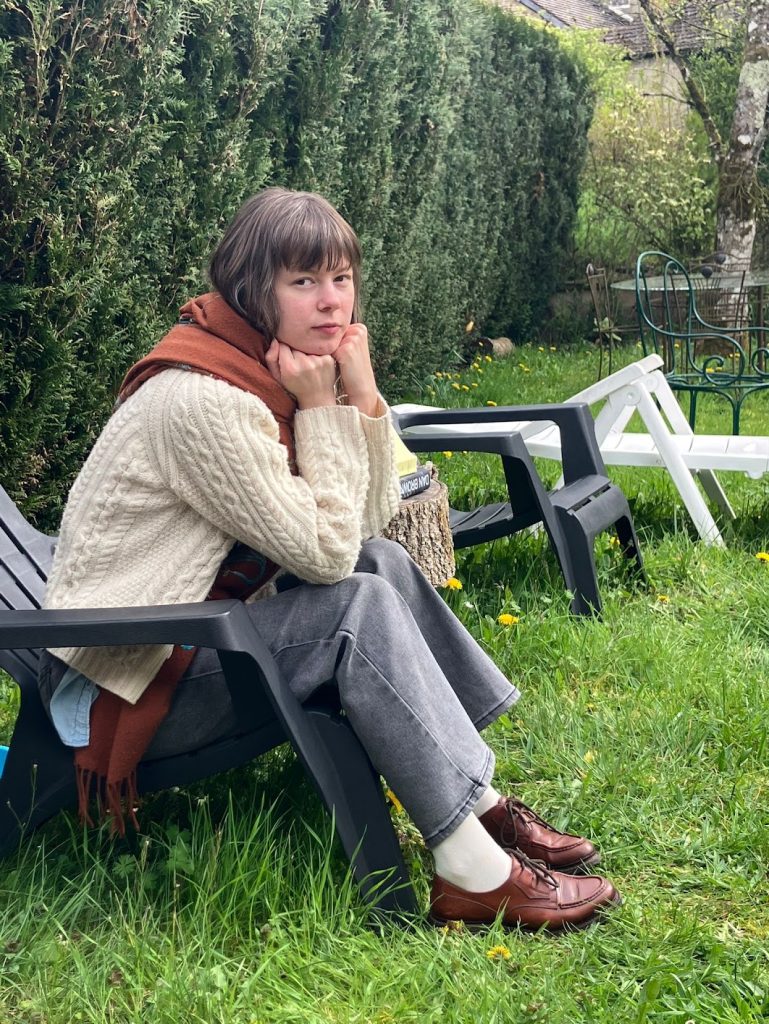
Hello, I’m Merry.
I’m an American-raised, Paris-based writer. By day, I work as a technical ghostwriter. Here, I get to write about whatever I want. I call it “A Merry Loner” because I believe that once you can be happy on your own, you can do anything.
I send an email whenever I publish something new. That’s all.
If you think someone would like this post, you can send it to them. (It would honestly mean a lot to me.)
More Things to Linger On
-
How to Get Through a Difficult Time
The world is a beautiful but sometimes cruel place. It gives us love, beauty, friendship, and countless marvels of nature. But it can also be torturous.
Even if we’re fortunate enough to sleep in a warm bed, walk safely down the street, and fill our cups with preferred food and drink, we are not in the clear. Family troubles await us, as do friendship complications, work stresses, school anxieties, financial worries.
The troubling thing about troubles is that almost anything can become troublesome.
What are we to do in such moments? How can we pull ourselves out of a slump when there is no one there to lift us up? Even when family and friends abound, sometimes, the troubles still gnaw at us from within. What then? How do we get through a difficult time?
Some turn to God, others to science, others to the Internet or the advice of a know-it-all or at least a well-meaning friend. Helpful resources, these may be, but even the best external balms can do little to cure inner wounds.
Yes, luck often plays a rather large hand in dealing our share of particular woes. Some are born into money; others, beauty. Still others, an unteachable charisma that works as a magic key for getting a promotion, finding true love, or getting upgraded on every flight. But anyone who’s ever read a children’s book or even mediocre literature knows that neither money nor beauty nor fame can buy happiness.
Because happiness is a lot like troubles: It comes from within.
So when life is troubling you, fate seems against you, and Lady Luck is never on your side, don’t let yourself despair for too long, for you have a trick up your sleeve no one can match: you.
1 Find comfort in knowing your problems aren’t unique
We valorize the word “unique,” but sometimes there’s a great relief in knowing we are but one among many.
This doesn’t mean our troubles are insignificant; it means they are surmountable. If other people decades prior and oceans away have faced the same troubles that keep us awake tonight, then, surely, we, too, can overcome them.
“How will I pay rent next month?” “Am I going to end up alone?” “When will they notice me?”
Much of human strife can be categorized thusly: worrying about money, love, or a greater sense of purpose. Yet as we ourselves face existential dread, it’s as if we are the very first to feel its weight. No one’s ever faced such an ordeal before us nor suffered a heartbreak like ours. No one’s ever been so without hope.
But, more often than not, our problems are not unique. Somewhere in the expanse of time and space, someone else has, is, or will feel their heart break as ours is, lose a loved one, cringe from embarrassment, get let down.
Accepting that our troubles are, in many ways, commonplace doesn’t deny us the right to feel them deeply, but it can help us face them with a calmer perspective. If others have so suffered and prevailed, we can, too.
2 Remind yourself that nothing lasts forever
For better or for worse, nothing lasts forever.
In good times, I rewrite this motto in my journal to remind myself to appreciate the people, places, and treasures around me. Friends I’m now close with who, one day, will no longer be part of my everyday life — not because we’ll have a falling out or lose that unspoken fondness for each other, but because life will simply march on. Coffee dates that now seem ordinary will become fond memories of the past. Blurry photos from blurry Friday nights will become hazy relics we blow the dust off of every few months. Then every few years. Then less and less often until most fade from our storytelling repertoire.
The same motto serves me when times are tough, for every bout of depression I’ve lived, every lonely season, every year without much purpose or many friends, each has turned out to be but a brief period in the grand scheme of life that one day met its natural end. I discovered new faces, changed locations, explored new hobbies, and sooner or later, found the light again.
Each time, it was waiting right around the corner. Though there was no hint of a new relationship about to bloom or an evening that would warm my soul for weeks, still, they came. All on their own, the good times simply came.
3 Confide in someone (it doesn’t even have to be a friend)
It is inexplicably easier, sometimes, to pour our hearts out to a stranger than it is to a trusted friend.
Talking to a friend, somehow, gives permanence to our words and, by extension, our troubles. We will surely see them again, and a considerate friend will surely follow up on our confessions. A stranger, less so.
Of course, a stranger isn’t always prepared to listen. But every now and then, fate strikes. An acquaintance at a party makes that secret part of you that never could reveal itself before feel seen. You never meet them again, but as they leave, they take a heavy weight from your shoulders with them.
Or maybe you stumble into a conversation at the corner coffee shop. There’s an elderly woman who drinks plain black coffee and is too far removed from modern day to understand your stresses about spreadsheets or the young person’s dating hellscape. But she listens. She nods in the right places and gives you a smile that, for the first time in a while, doesn’t feel like someone’s obligatory pleasantry. You leave with your cappuccino and, for the first time in a while, optimism.
4 Return to the real world (that is, the one offline)
When going through a difficult time, it’s easy to assume everyone else is walking on a cloud. After all, what do they have to be concerned about? They haven’t the stresses you do: the taxing job, the hair that doesn’t cooperate, the disappointing bank account, the nonexistent love life.
But if looking in the mirror is difficult, peering out the window isn’t going to help.
So close the curtains — that is, the curtains to the screen. Stop looking at social media. Stop romanticizing strangers’ lives and critiquing your own. Stop imagining how buoyant and beautiful you’d be if you could just buy something new. Stop feeding the beast that tells you what you have isn’t enough.
Above all, stop turning to the screen to try to drown yourself out: scrolling in the grocery line, looping background music while you cook, shoving a podcast in your ears the moment you step outside, anything so you don’t have to face a moment of silence with your own thoughts.
In difficult times, escapism is a tempting reprieve, but it is temporary. Finding peace requires coming home to ourselves.
Making it through hard times starts with coming back to yourself
Wherever you go, there you are. No matter where we run, what we consume, or how we try to numb ourselves to our realities, there is no escaping what lies within. Though confronting the inner angst, loneliness, disappointment, or resentment that may be eating you is daunting on a good day, flight is no path to contentment. It takes you and you alone to get there.
Getting off social media and silencing the voices that distract, confuse, and belittle me has made it easier for me to listen to myself and weather the difficult times. Going cold turkey, however, isn’t for everyone. This is how I quit social media and brought more calm back to my life.
For another perspective, see how my dear friend Shelby DiNoble took a step back from social media and, in doing so, what he learned about himself.
Now when the difficult times make a reappearance (as they always do), I seek beauty to ease my spirit. These poems about new beginnings are a favorite I pull from my bookshelf often. For really low moments when I want to remind myself it’s never too late to turn things around, one of these quotes about feeling alone is ready with its wisdom.
Hello, I’m Merry.
I’m an American-raised, Paris-based writer. By day, I work as a technical ghostwriter. Here, I get to write about whatever I want. I call it “A Merry Loner” because I believe that once you can be happy on your own, you can do anything.
I send an email whenever I publish something new. That’s all.
If you think someone would like this post, you can send it to them. (It would honestly mean a lot to me.)
More Things to Linger On
-
How to Find More Quiet in Daily Life
The chaos is all-consuming. Notifications that vie for our attention morning, noon, and night. Ever-present background music that now seems to flood every public space. The uninvited blare of a stranger’s phone serving you videos and advertisements for products you wish you didn’t even know existed.
Where is the calm? In hiding, waiting for you to unearth it and protect it like a timid fallen sparrow.
A year or so ago, I reached my limit for what felt like everything. Too many texts. Too many emails. Too much noise. Not enough space for myself to think, uninfluenced. So I introduced more quiet into my daily life, and the effects have been blissful. This is what I did:
Live without constant background music
It is everywhere these days. The library, I think, is the only establishment left that doesn’t pipe music into the ether every minute of the day.
I play the piano, the guitar, and the flute. I carefully transported my record player (a prized treasure since high school) across the Atlantic to settle into my Parisian apartment. It needn’t be affirmed that music is a balm for the soul and an important daily companion for many of us. But I’ve learned it should be a companion we seek out, not an overbearing busybody who won’t give us a moment alone.
Now when I’m walking to work, grocery shopping, or just unwinding at home, I don’t default to music. Instead of seeing silence as some frightening void I must rush to clog up, I savor it. More than that, I savor the daydreams and reflections to which only silence can send me.
Read more than you watch
The temptation to sit and empty our minds and live vicariously is hard to fight, especially when fatigue or boredom come calling. At the end of the day, I, too, appreciate giving my mind a rest with a big bowl of popcorn and the antics of my favorite characters.
But I realized I was leaning on these supports too often, even when my mind wasn’t tired and didn’t need a rest. Maybe I was procrastinating or trying to quiet anxious thoughts or simply bored. In any case, ending a binging or scrolling session rarely made me feel better. Instead, it introduced comparison, self-critique, anger about the state of the world, or the desire to buy something I before didn’t think I needed.
Reading doesn’t torment me in the same way. It quiets the anxious swirl in my mind, forces me to slow down, and gives my eyes and soul a break from the frantic energy of the screen.
I’ve never closed a book thinking I’m not pretty enough or smart enough or really need to run off and buy something.
Sleep with your phone in airplane mode (and turn off as many notifications as possible)
I once read, “My phone is supposed to be a convenience for me, not for others.” Those are now the words I live by. No more do I wake up to a deluge of notifications that immediately spikes my cortisol and sets my mind reeling with my first morning breath. Instead, I check my phone in the morning when I’m ready to, after having exercised, showered, dressed, and stepped into the sunlight to begin the day.
Nothing bad has happened, and no message has proven so dire it couldn’t wait for me. My phone is a tool I use to make my life easier; it dictates my daily rhythm no more.
During the day, meanwhile, I’ve significantly limited the number of notifications that make it to my screen. While I cherish the contact I maintain with long-term friends and faraway family, I do not believe I need to drop everything, physically and mentally, because someone somewhere had a thought. It can wait until I’m ready.
So away with notifications that break my attention from the present and the physical to the faroff and the digital. Away with alerts that tell me about upcoming sales. Away with everything that steals my focus and tricks me into thinking what happens on the screen is more important than what happens in front of me.
Take a break offline
Unfortunately, the Internet has become a hardened reflex for many of us. When there is a free moment or we have to wait in line for more than three minutes, the screen is the default. There is always some reason to justify it. We’re just “checking in.” It’s for work. We’re catching up on the news.
The only thing that’s catching is the sorry habit of running away from ever sitting in the quiet of your own thoughts. Stop running from yourself.
When you need to take a short break from a work task or you’re waiting in line for coffee, train yourself to stop reaching for the phone. I keep a pack of cards at my desk and play a few games of Solitaire when I need to clear my mind between tasks. I stand up and stretch for five minutes. I play a couple songs on the guitar. If I’m at the office, I’ll set a timer for ten minutes and doodle or go and sit outside. If I’m in line somewhere, I challenge myself to just be. There needn’t be an activity for me to pursue every minute of the day.
Sometimes, I mess up. In my stress, I reach for the phone. I look at things I don’t need. I scroll with no point. And I always put down the phone more harried and wired than before, now with guilt and self-disgust layered on top.
Solitaire and doodling, on the other hand, have never done me dirty.
Stop constantly stimulating and distracting yourself. Learn to just be with yourself.
Being alone is, for some reason, quite unsettling for a lot of people. We feel we must be busy. We must be talking to someone. We must never be bored. I believe this is slowly killing us.
Being plugged in all the time keeps our bodies on high alert, depriving us of any prolonged calm and relaxation. It makes us constantly weigh our lives, our successes, our have-nots against someone else’s, or, more likely, the illusion of someone else’s life that we’re certain is easier and more fulfilling than our own.
Worse still, when we never allow quiet into our days, we deny ourselves access to the one thing truly responsible for our own happiness: ourselves.
Friends, family, pets, travel — the list of external pleasures is endless. But they can only do so much to really fill us up if they’re not founded on an already solid ground of inner contentment. Running from the quiet of sitting with ourselves makes that contentment ever harder to find.
Learn why spending intentional, undistracted time alone with yourself is good for your mind and your relationships. If that seems difficult, see four ways to help you learn to enjoy your own company.
Appreciating intentional solitude is easier when the entire world isn’t trying to distract you. See 34+ ideas of what to do instead of social media, whether you’re eating, commuting, waiting in line, or simply bored. If you’d like to work towards quitting social media altogether, here’s what worked for me.
Hello, I’m Merry.
I’m an American-raised, Paris-based writer. By day, I work as a technical ghostwriter. Here, I get to write about whatever I want. I call it “A Merry Loner” because I believe that once you can be happy on your own, you can do anything.
I send an email whenever I publish something new. That’s all.
If you think someone would like this post, you can send it to them. (It would honestly mean a lot to me.)
More Things to Linger On
SIGN UP
An email whenever I publish something new.
A good life begins in your own company.