-
“Life Is Sad and Then You Die.” Why this is the motto that will bring you peace.
This is my motto, and it should be yours, too: “Life is sad and then you die.”
WTF, right?
Have we stumbled back to Tumblr and all its side bangs, smudged eyeliner, and adolescent woes of 2012?
Not quite.
Related Posts:
- Accepting Your Fate (Finding Acceptance Alone)
- Is This the Secret to Happiness?
- Why Are We All So Afraid of Being Alone?
We’re far closer to thirty than we or our not-so-subtle gray hairs would like to admit with our feet firmly planted on the ground and our heads grazing but no longer lost high up in the clouds. Say it with me:
“Life is sad and then you die.” This is the motto that will bring you peace.
(And I’m an optimist! If you can believe it.)
Hear me out:
Life is full of sadness. People die. People get sick and suffer for years on end with no explanation given by any God or gods in response to loved ones’ pleas. People are mean. They judge you, spite you, ignore you, insult you. Some will even try to buy you. Others will sell you things and pretend they’re saving you. Worst of all, it often feels like it’s the most rotten people who are born beautiful and rich because life is just as unfair as it is sad.
This can all be expected. In the wise words of Trailer Park Boys’s fictitious Ray, “That’s the way she goes”:
- the mean girl at school who can do whatever she wants because people have decided she’s pretty
- the mean boy at school who’s decided he can do whatever he wants because he’s tall
- the slimy boss who takes credit for your work
- the slimy algorithms that now dictate your work
… and so it goes.
Yes, these things are sad. But they will continue to happen, nonetheless. And you—no matter how unique and interesting and rarefied you are in so many little, obscure ways—are not special for experiencing these unhappy happenstances.
Sad things happen to all of us. And then we (eventually) die.
The sooner you realize this, the sooner you can get on living.
The faster you’ll realize you should appreciate your precious time here since we’re all walking around with invisible hourglasses trickling down.
And the easier it’ll be to release your anger when one of the Sad Things happens to you or a loved one (however justified that anger may be).
Because that’s the way life is: It’s sad. And then we die.
But acknowledging this sadness and recognizing its ubiquitousness is not to accept the absence of happiness.
Life is very happy, and we see demonstrations of its wonders every day, from grand gestures to small acts of kindness. A wise man knows, however, that the greatest moment of the greatest happiness of all can never mark the End of the Sad Things, for there will always be more Sad Things.
A wise man also knows how to be happy in spite of the never-ending torrent of Sad Things.
- He knows to keep replanting flowers in his garden even though the neighborhood kids keep stealing them (because girls will be girls)1.
- He knows some people will always make more money than him no matter how hard he works—but that doesn’t mean his life has to be any less worth living.
- He knows that even if he dresses the way you’re supposed to dress and tells the jokes you’re supposed to tell that there will always be people who don’t like him.
Maybe for some years he has a big social circle with lots of friends to pat him on the back and keep his spirits buoyed one Friday night after the next.
… And then maybe for some months people are busy working or traveling or being in love or otherwise living their lives outside of this person who is but one among many.
This may make him feel sad and alone for a moment, until he thinks to himself: “This is just one of those Sad Things. But that’s alright. There’s almost certainly a merry moment coming around the corner.”
When you dwell on the Sad Things, you feel sad. But when you accept that the Sad Things will always be there, then you can be free of them and you no longer have to live your life swinging from the emotional pendulum of happenstances.
Life IS sad and then we die. But don’t dwell on the Sad Things so much that you can’t notice the merry moments among them.
I’ve told a number of friends my “Life is sad and then you die” motto—some over ice cream cones in sun-filled parks and others over whiskey stones in dimly-lit bars.
It usually takes them a couple of listens to come around. But after they’ve laughed in my face and/or rolled their eyes at me, they start to realize I’m not being dramatic (or crafting what would have been a great AIM away message).
I’m completely serious and have chosen this to be the hill I die on (no pun intended):
- Life is sad and then you die.
- Once you learn to be happy on your own, you can do anything.
Because the only thing holding you back from creating happiness is you wishing your life could be different.
Just be happy. Now.
More essays on finding happiness in this sometimes lonely world?
Yes, please. Sign up for A Merry Loner’s newsletter to get the latest in your inbox.
Recommended Reading:
- How Heather’s Lonely Year at Uni Became the Springboard to Her Greatest Adventures
- Alone at Night in Paris—Where to Take Yourself on a Solo Date
- 20 Journal Prompts for Anger | How Anger Writing Prompts Can Help You Work Through Your Feelings
- 13 Habits to Start Now in Your 20s (or Whenever) for Long-Term Physical & Mental Wellbeing
- Because no one ever says “girls will be girls” to justify our childhood wrong-doings. (This is a true story. Sorry to those people whose flowers my best friend and I plucked on our walks around the neighborhood.) ↩︎
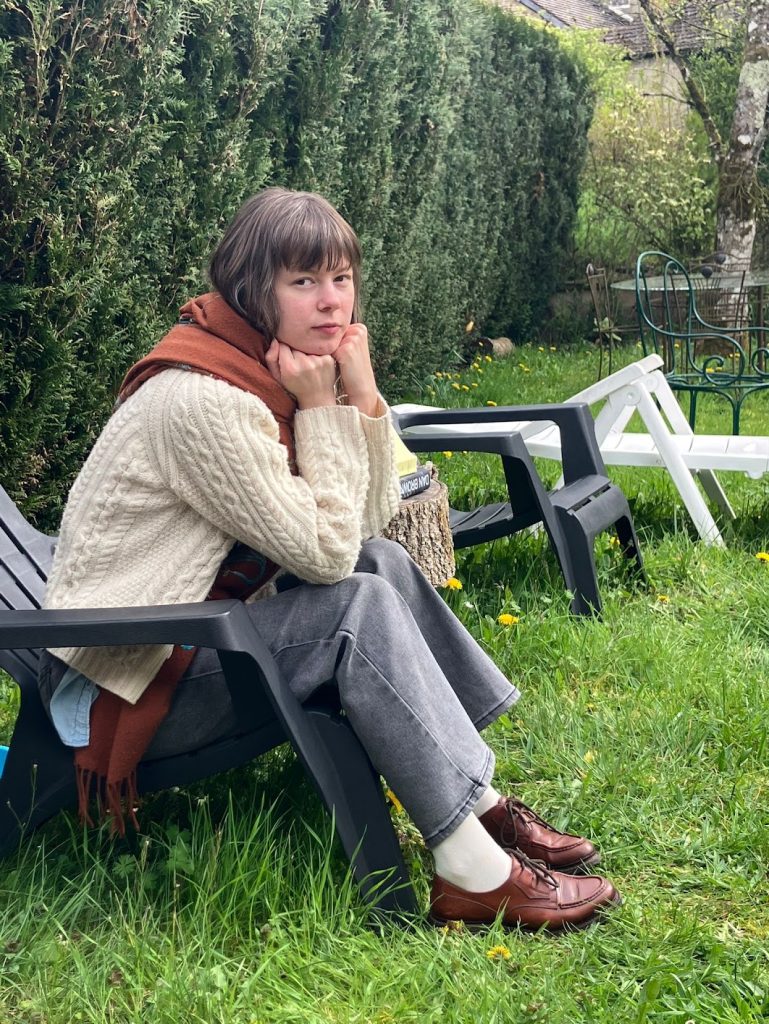
Hello, I’m Merry.
I’m an American-raised, Paris-based writer. By day, I work as a technical ghostwriter. Here, I get to write about whatever I want. I call it “A Merry Loner” because I believe that once you can be happy on your own, you can do anything.
I send an email whenever I publish something new. That’s all.
If you think someone would like this post, you can send it to them. (It would honestly mean a lot to me.)
More Things to Linger On
-
Are You Afraid of Being Alone? Here’s why you don’t have to be.
There’s no need to fear. In fact, I think it’s time to change what it means to be a “loner.”
When was the last time you took yourself out to dinner? Or went on a weekend getaway by yourself? Or just went to the movies alone? (OK, I know nobody goes to the movies anymore … )
If so (or if not), would you consider yourself a loner? And is that a good thing?
Related Posts:
- Accepting Your Fate (Finding Acceptance Alone)
- How Heather’s Lonely Year at Uni Became the Springboard to Her Greatest Adventures
- Alone at Night in Paris—Where to Take Yourself on a Solo Date
Being a loner gets a bad rap.
Quite unfairly, in my opinion.
When you Google the word “loner,” the first thing that comes up is the Oxford English Dictionary, which says a loner is “a person who avoids company and prefers to be alone.”
Next, WebMD says pretty much the same thing: “Being a loner means that you would prefer to be by yourself rather than with others.”
At least Wikipedia (my love) gives the term “loner” a bit more nuance: “a person who does not seek out, actively avoids, or fails to maintain interaction with other people.”
All in all, the Internet seems to agree that being a loner is a bad thing—that it means you’re some kind of anti-social freak who hates being around people.
I strongly disagree. The word “loner” shouldn’t have a negative connotation.
Frankly, I’m really sick of everyone thinking being alone is just about the worst possible thing that could happen to you.
Think about it:
- Being a loner.
- Being lonely.
- Being on your own.
They don’t have good connotations, do they?
Don’t get me wrong: I’m in no way an advocate for social isolation.
For one, I like people. I love a good party. I love spending time doing nothing with my friends. And to be honest, I know that I’m usually a little verbose.
Plus, it’s clear that spending too much time alone is bad for us—even bad for our health.
This 2013 study “revealed that social isolation predicted mortality for both genders, as did smoking and high blood pressure,” concluding that “the strength of social isolation as a predictor of mortality is similar to that of well-documented clinical risk factors.” [Source: PubMed Central]
The dangers of social isolation are such a problem that “in 2018, the U.K. appointed a minister for loneliness and Loneliness Awareness Week was introduced to encourage people to ‘fill their lives with new friends and experiences.’” [Source: University of California San Francisco]
ICYMI: Both of these studies were conducted BEFORE the COVID-19 pandemic, when the world started paying a lot of attention to the risks of isolation and loneliness. Since then, things have obviously gotten a lot worse:
- A 2021 survey of 2,496 U.S. adults determined that more than half (58%) of U.S. adults are considered lonely. [Source: The Cigna Group]
- Even the Surgeon General is sounding the alarm, releasing a report in May 2023 to “[call] attention to the public health crisis of loneliness, isolation, and lack of connection in our country [the U.S.]” [Source: U.S. Department of Health and Human Services]
So, yeah. Social isolation is definitely a bad thing.
But you know what’s also a problem? Being too afraid to ever do anything by yourself.
You know what I mean:
- That friend who’s never been single for more than 2 months since they were in high school
- That family member who won’t get on a plane by themselves
- That co-worker who won’t take a break and eat lunch in the company kitchen by themselves
Of course, to each his own. I’m not trying to single anyone out or judge them.
What if being a loner is the secret key to finding happiness?
I’ve always been a bit of a loner. (And no, it’s not because I’m an anti-social freak who hates being around people. Thanks for asking, though.)
Instead, there are two main reasons why I’m a loner:
- I genuinely enjoy doing things on my own.
- I don’t feel uncomfortable being by myself.
Let me explain.
Back in the day, when I lived in an apartment in Providence, Rhode Island with three roommates, one of my favorite parts of the week was taking myself to the local pub around the corner with a couple of books and perhaps my journal where I would sit, read, daydream, and ponder the night away with just me, a couple of pints, and a cheeseburger.
(That and Sunday morning, when I did more or less the same thing but diner-style with a newspaper and/or The Economist, a veggie omelet, and some burnt coffee.)
To me, solo time is a luxurious reprieve from the chaotic world. So why do so many people think it’s weird?
So many times, I would
- walk into a restaurant and ask for a table for one
- travel for the weekend by myself
- show up at a party without a date or a friend
…there would be a prolonged silence, and then:
- “Good for you.”
- “Wow, that’s so brave.”
- “I could never do that.”
Huh?
I just don’t get it. What is so scary about being alone? What is so horrifying about the very thought of doing something by yourself? And (even more outrageous) being comfortable and at ease while doing it?
Maybe this is how you feel.
Maybe you’re afraid of being seen as a loner because that also means being a misfit, an outcast, and an anti-social weirdo. (And that’s certainly the case if you listen to what the Oxford English Dictionary and WebMD have to say.)
But I think there’s another way.
A Merry Loner’s Manifesto
This is my mission: to change the idea of what it means to be a loner—from misfit outcast to calm, contented, confident individual.
I call it being A Merry Loner. Because once you learn how to be merry on your own, then you can do anything.
Ready to Embrace Loner Living?
It’s time to flip the script on loneliness.
Join me for A Merry Loner’s 7-Day Do Things Alone Challenge to learn how to redefine loneliness as chosen independence.
Recommended Reading:
Hello, I’m Merry.
I’m an American-raised, Paris-based writer. By day, I work as a technical ghostwriter. Here, I get to write about whatever I want. I call it “A Merry Loner” because I believe that once you can be happy on your own, you can do anything.
I send an email whenever I publish something new. That’s all.
If you think someone would like this post, you can send it to them. (It would honestly mean a lot to me.)
More Things to Linger On
-
13 Habits to Start Now in Your 20s (or Whenever) for Long-Term Physical & Mental Wellbeing
Who has read Atomic Habits by James Clear? I can’t raise my hand just yet, though I am a frequent reader of his 3-2-1 Newsletter in which he shares three of his own ideas, two quotes, and one question to ponder.
Many of the newsletter musings harken back to the theme of habits: how to create good habits and how to kill the bad ones.
Since I’m a big fan of lists and daily routines and most things related to self-improvement, you can bet that building good habits and habit tracking is right up my alley!
Plus, I just turned 27, so I’m definitely starting to feel the looming cloud of Turning 30 and all its rude questions like, “Do you have your shit together?” “Are you on a road to failure?” “Have you been wasting your 20s on useless endeavors?”
The usual, you know.
But while I do truly believe that life doesn’t end at 30 and that we can continuously recreate, redefine, and reinvent ourselves, it does help if you’ve got at least some things in your life running efficiently on autopilot in the background.
Enter the art of creating good habits—the ultimate snowball effect for personal growth.
It doesn’t have to be so hard. You can start today working on developing one new good habit—and then reap its benefits for all the weeks, months, and years you continue.
Whether you’re a young 20-something just dipping your toe into the world of adulthood or you’re rapidly approaching the 30-year-old milestone and you’re starting to panic, today is a great time to start.
Here are the best habits to develop in your 20s:
Related Posts:
4 Good Habits to Develop in Your 20s for Your Physical Health
Ever heard the saying, “Health is wealth”?
It may be a cliché, but it sure is true. Despite all those horrifying stories of billionaires trying to extend their lifetime with crazy diet and fitness routines, we’re all equal in one regard: We only get one body, one life.
And even though you may feel young, strong, and invincible when you’re in your 20s, the day will eventually come when your skin starts to sag, your energy levels start to drop, and you start making that sighing noise whenever you get into or out of a chair. (And that’s if you’re lucky enough to grow old!)
TLDR; take care of your body because you only get one.
Here are 5 habits to develop in your 20s for your physical health:
1. Establish an exercise routine
The sooner the better. And no—it doesn’t really matter what it is. I’ve read countless articles with experts all quoted saying pretty much the same thing: The best exercise is the one you’ll actually do.
So the next time someone tells you your workout is worthless because you’re not doing this exact, precise thing at the gym, you can tell them to kindly mind their own business. Basically, anything that gets your heart pumping and your body moving will do the trick. [Source: Harvard Health Publishing]
Personally, I’m all about yoga, pilates, and cycling. I try to do one of the above five times a week. Sometimes it’s three times a week. Sometimes it’s six. But I find that (like most habits) the more I do it, the more my body and my mind crave it.
If you’re not a gym rat—no worries. Neither am I. There’s plenty you can do to get your body moving and your heart rate pumping without running nowhere on a machine under a fluorescent light like you’re in some kind of chilling dystopia.
Instead, here are a few different types of exercise you can try if you don’t like the gym:
- Swimming
- Rock-climbing
- Kayaking
- Tai chi
- Jumping rope
- Jumping on a trampoline
- Hiking
- Roller-skating
- Dancing
2. Drink a glass of water first thing in the morning
Here’s a horrifying statistic: Apparently, 47% of Americans don’t drink enough water. [Source: CivicScience]
I don’t think I have to tell you the many ill side effects of dehydration, like disease, dizziness, and confusion. [Source: Mayo Clinic] It’s no shock that not drinking enough water will start to make you feel like crap.
But—are you drinking enough water in the morning?
Up until recently, I didn’t. I would wake up, maybe have a sip or two of water, and then move on with my day.
And then complain later that I was always thirsty. (I know, it seems pretty pathetic in hindsight.)
But last winter, I tried something different. In the dead of the dark and cold when I forced myself out from under the warm covers, the first thing I did was chug an entire glass of water. And no kidding—that’s exactly what my body was craving. After hydrating first thing in the morning, my body is awake, energized, and ready to go.
This may be painfully obvious for some of you. But if you fall into the camp of people NOT drinking enough water (apparently, that’s 47% of us), then consider trying this trick.
It may just make your early mornings a lot less painful.
3. Don’t skip doctor’s appointments (yes, you’ll have to schedule them yourself)
I’m looking at you, you who hasn’t been to the dentist in the last two years.
When we’re younger (if we’re lucky), many of us have parents/caregivers who are responsible for making sure we stay on top of all our doctors’ appointments. But once you’re out there in the big, wide world all on your own, Mom stops picking up the phone to pencil in your biannual dentist appointment. (Or, at least, she certainly should.)
Of course, having healthcare and the means to pay for it is its own whole thorny subject, and I’m not going down that rabbit hole in this blog post.
Instead, I’m here to give you a friendly reminder (once again) that health is wealth and that proactive healthcare (i.e., seeing your doctor(s) regularly) is NOT something you want to skip out on.
Consider this: Preventive care can help catch early signs of conditions (like high blood pressure or high cholesterol) that could lead to bigger problems down the road. [Source: Temple Health]
Plus, remembering to keep your regular doctors’ appointments can help you save money! After all, if you can catch a small problem before it becomes a big one, you can stay away from larger health bills. [Source: Chicago Booth Review]
So don’t sleep on this one. This is one of the top habits to develop in your 20s—and keep throughout your life.
Of course, you know you better than I do. (And spoiler: I’m not a health professional.) So the specific appointments you need to keep is a conversation you need to have with yourself and your doctor(s). But in most cases, typical annual doctors’ appointments you may want to keep include:
- General physician
- Dentist (biannually)
- Gynecologist (for the ladies)
- Eye doctor
Every time you go, make an appointment right then and there for next year and put it in your calendar.
4. Start a simple skin care routine
Just as your body will thank you later in life for exercising regularly, your skin will thank you later in life for loving it every day with a special skin care routine.
Don’t panic. You don’t have to do anything crazy. (Unless you want to.)
The Internet is certainly ripe with literally millions of videos, blogs, and pictures of skin care routines with an incredibly dizzying array of products, products, products.
You do not need them all. (Unless you want them.)
Instead, there are really only three things you need to do to your skin every day for optimal health:
- Wash. (You really only need to do this at the end of the day.)
- Moisturize. (Twice daily. At night is most important.)
- Wear SPF. (Every single day whether it’s rain or shine.)
If your head is swimming and you have no idea where to begin, I recommend you stay off of TikTok and Instagram. That’s only going to make things more confusing (and more clickbait-y).
Instead, here are two very good resources for skin care health, both of whom back up everything they say with scientific articles: Marie Veronique and Beautypedia.
Specifically, I recommend Marie Veronique’s 5 Steps to Skin Health for introductory reading.
My favorite skin care brands are:
- Kora Organics
- KlarSkin
- Marie Veronique
M
More recommendations on how to make your life better?
Yes, please. Sign up for A Merry Loner’s newsletter to get the latest in your inbox.
4 Important Habits to Learn in Your 20s for Your Mental Health
Exercise. Drink Water. Make regular doctor’s appointments. Eat healthy. These are all good habits to develop in your 20s for long-term physical health. But as we’re all (thankfully) starting to realize as a society, mental health is just as important.
Here are some of the most important habits to develop in your 20s for mental health:
1. Make mental health a priority
First things first, get used to making mental health a priority in your life. Easier said than done, right?
I get it. We’re all busy. Between managing work, staying active, and trying to maintain any kind of social schedule, adult life feels like one big hamster wheel that’s constantly running at maximum speed.
(Maybe that’s why the melting face emoji is now a thing? ????)
In an end-of-year report from the American Psychiatric Association, Americans said they anticipated higher stress levels and worse mental health in the coming year. Specifically,
- 37% rated their mental health as “fair” or “poor”
- 26% said they expected more stress in the new year
So, what can you do to start improving your mental health today?
It doesn’t have to be complicated. Here are a few simple ways to help you prioritize your mental health on the regular:
- Make journaling a daily habit: Even five minutes or five written lines can be enough. Feeling stuck? Try out some journaling prompts to help you get started.
- Practice self-care: It might be feel a little silly, but that’s kind of the point. Self-care activities are supposed to give you a little respite from otherwise hectic, stressful days.
- Get lost in a good book: We all need a break from reality sometimes. Instead of scrolling for 30 minutes and feeling like a piece of shit afterwards, why not try picking up a book? If the idea of bookworm-ing is stressing you, start with something easy, like one of these classic novels for beginners.
2. Limit your social media use
It’s not just your annoying aunt complaining. Social media really is bad for your mental health. Even the Surgeon General is coming out and saying it.
The 2023 U.S. Surgeon General’s Advisory outlines some of the potential risks of using social media, including:
- Body dissatisfaction
- Disordered eating behaviors
- Social comparisons
- Low self-esteem
All of these factors are particularly a threat for teenage girls. (!!!)
Think you’re better at critical thinking than teenagers are? Sorry, adults also fall prey to the dangers of social media.
Just look at the COVID States Project, where 5,000 adults with an average age of 56 from all 50 states were surveyed; as reported in Harvard Magazine, “those who used Snapchat, Facebook, and TikTok were more likely to report symptoms of depression.” [Source: Harvard Magazine]
Bottom line: Learning how to limit your social media use is one of the best habits to develop in your 20s for good mental health.
So, what to do instead of doom-scrolling? Try this:
- Read a book (paper is better)
- Go for a walk
- Meditate
- Take a quick nap
- Play checkers with a friend
- Learn to knit, crochet, cross-stitch, etc.
- Color in a coloring book
- Take up painting (it doesn’t have to be a masterpiece!)
3. Develop a reading habit
I was one of those kids growing up who could easily read a book a week. Even when I was older and studying in college, I still always made time for recreational reading.
But once you get out of that student mindset, it can be harder to fit regular reading into your busy “adulting” schedule.
But it’s important. And I don’t think I need to make a case for the fact that reading is good for your brain. So instead, I’ll just tease you with a few fun statistics (I can’t help myself):
- Leisure reading strengthens memory skills [Source: Beckman Institute]
- Boost self-confidence
- And evens support you at work [Source: Grand Canyon University]
Maybe you weren’t a bookworm when you were a kid. Or maybe you lost your bookworm-ing ways. No worries. It’s not too late to get back into it!
If you’re not sure where to start, check out this round-up of the easiest classic novels for beginners.
4. Practice self-care
I know. The term self-care is pretty lame sounding. But I think there’s a reason behind all the hype. (And I’m trying to ignore the cynic in me that says the huge marketing push behind self-care is just to sell us things…)
Anyway. Truly, taking time to spend on yourself is hugely important.
Not convinced? The University of Alabama at Birmingham had an interesting conversation with Sumayah Abed, M.D. and Kaylee Crockett, Ph.D. on why self-care is important for your health.
You can read it in full here. These are some of the takeaways:
- Self-care can help prevent illness from occurring or reoccurring
- Self-care improves your ability to manage stress
- Self-care is part of maintaining positive mental health [Source: University of Alabama Birmingham]
Best of all, self-care doesn’t have to be complicated. It could be as simple as lighting a candle that smells good, going for a walk, or just taking a nap. These are all easy, affordable (or even free) things you can do on a daily basis—or just when you need a self-care pick-me-up.
If you want to add more self-care into your life, but you’re at a loss for what to do—you’re in luck. I spent the time writing a huge list with a whopping 100 self-care ideas just for you.
The best daily habit? Reading.
Sign up for A Merry Loner’s 30-Day Reading Challenge, and let’s make better habits, together.
- Daily accountability emails
- A free reading tracker
- Book recommendations
- Hand-selected author quotes to get you in the literary spirit
5 Healthy Habits to Start in Your 20s for Your General Wellbeing
Taking care of your physical health and your mental health are obviously good ideas—both in your 20s, younger, and beyond.
But we are complex beings with complex needs. In other words, there’s a lot more to get out of life than just exercising, eating your vegetables, and remembering to go on your stupid little mental health walk.
Here are five more good habits to develop in your 20s to improve your general wellbeing:
1. Wake up early
Not to sound super lame, but you know what? My grandparents were right. It IS nice to wake up early in the morning.
For example, last week I signed up for a yoga class at 8:00 AM on a Monday. Naturally, by Sunday evening, I was regretting what I’d done and dreading waking up in the cold, dark hours, extricating myself from my cozy blanket, and biking in the morning bleakness to my local yoga studio.
Somehow, I managed to convince myself to do it anyway.
And I was really glad I did. When I walked out of the yoga studio at 9:15, the sun was shining and so was I. I was full of energy, all stretched out and limber, and walking down the street in a sparklingly good mood.
(I don’t know about you, but my favorite time of day to walk through the city is during the morning hours. It’s quiet, calm, and clear. And it makes me feel relaxed and happy, rather than feeling like I’m crawling through the rat race with my plebeian peers down in the metro.)
After yoga, I went to a cafe, indulged in a delicious cappuccino while reading for a bit, and was back at home, showered, and ready to work by 10:30.
Obviously, I don’t do this every day because I can be really lazy. But I’m trying to get better at it, because learning to wake up early (at least somewhat regularly) is probably one of the best habits to develop in your 20s.
2. Explore hobbies
Once again, I feel like an old man saying this one, but I think this is one of those highly underrated habits to develop in your 20s.
When you’re a kid and then later maybe a student, it feels like you’re constantly learning new things. (For one, you’re literally in school.) But beyond that, you might be taking after-school classes, playing sports, learning musical instruments, discovering new languages, etc.
And then most people promptly forget all these extracurricular activities until they reach their Golden Years, get bored in retirement, and sign up for a bunch of classes at the local rec hall.
But what about all the years in the middle?
TLDR: Make it a priority to keep up with your hobbies as an adult.
But why, though?
Well, it’s fun. And if that’s not enough to convince you, consider this:
One study reveals that participants who “engag[ed] in leisure” (AKA doing things you enjoy AKA having a hobby) had better moods, less stress, and lower heart rates. Meanwhile, related studies reveal that leisure activities are associated with:
- More positive moods
- Better life satisfaction
- Less depressed moods
- Less stress [Source: The Society of Behavioral Medicine]
If you need yet another reason to keep practicing hobbies in adulthood, I suggest you read this article Kerri Duncan wrote for The Guardian: The joy of mediocrity: we need hobbies, even if we’re bad at them, to free us from perfection.
3. Learn a few go-to recipes
Anyone who knows me knows that I’m not a big cook.
But anyone who knows me also knows that I very rarely order takeout (which is partly because I’m a huge cheapskate).
What’s my point?
Not enjoying cooking is no excuse for not knowing how to cook. As you near thirty, you really don’t want to be one of those people who barely knows how to make pasta. It’s lame. It’s embarrassing. And it’s downright expensive.
I’m not suggesting you spend your time learning how to become an impressive home cook. I’m not even saying you have to learn to love cooking. But you should at least know how to cook a few basic, healthy recipes without having to spend 30 minutes Googling.
For example, I’m really lazy in the kitchen, so my quick go-tos are:
- Roasted vegetables: Because roasted vegetables taste like candy. And roasting requires very little hands-on time in the kitchen.
- Tacos: Because who doesn’t like tacos? Again. They’re healthy, cheap, and require very little effort.
- Soup: This one takes a little more hands-on time, but I find it relaxing. Put on a good podcast. Pour a glass of wine. Chop all the veggies. Then basically do nothing while they simmer on the stove. Healthy, cheap, and requires very little effort. (Sensing a theme?)
Now, for recipe inspiration from someone who actually knows what the hell they’re talking about, I invite you to check out my friend Ally’s food blog, Nigella Eats Everything.
4. Contribute to the community
Because nobody likes a selfish son of a bitch.
But really, though.
And if you are a little selfish (Aren’t we all, sometimes?), then consider this. Volunteering can contribute to:
- Lower rates of depression and anxiety
- Reduced stress
- More feelings of meaning (Don’t we all need that?)
- Decreased risk of heart disease, stroke, etc. [Source: Mayo Clinic News Network]
Maybe you did a little (obligatory) volunteering when you were in college. But are you still volunteering as an adult? According to AmeriCorps’ biannual survey, an estimated 23.2% of Americans (i.e., 60.7+M people) formally volunteered between September 2020 and 2021.
I’ll be honest: I wasn’t one of them. But this is one of my goals for the year and another one of those good habits to develop in your 20s that I’m trying to make stick.
5. Start making and tracking goals
Speaking of goals. When life gets busy, it’s easy to feel like we’re just going through the motions. Then, suddenly you wake up one day and you realize years of your life have passed you by and you were on autopilot the whole time.
This is what I call passive living versus active living.
Passive living is when you kind of just go with the flow. You don’t actively make decisions about where you live, what you do for work, who you spend time with, etc. You just kind of roll with the punches.
The problem is, when you live passively and fail to make any concrete decisions, your life becomes the side effect of what’s going on around you. It isn’t something you chose.
Whereas with active living, you are actively taking control of your life. You reflect upon, decide, and take action to:
- Live where you want
- Do what you want
- Be with whom you want
In the end, your life is something you created—and something you chose.
To do this, you need to pay attention to what’s going on around you and make goal-setting a part of your regular routine.
A Final Thought on Building Habits in Your 20s
Habits are hard to break. So make them good ones. Over the years, I’ve gotten pretty good at implementing most of the habits on this list—but I’m obviously not good at staying on top of all of them.
This year, I want to prioritize reading more, journaling more frequently, and volunteering.
What habits do you want to work on developing this year?
Before You Go …
When you think about habits to develop in your 20s, it doesn’t always seem so fun. Habits can feel like mundane chores that we (try to) force ourselves to do on the regular, like emptying the dishwasher or changing the sheets on the bed.
But habits can be fun things, too. Actually—they should be fun things. Particularly if you’re feeling stressed, burnt out, or just down in the dumps. That’s why it’s important to make self-care one of those habits you develop in your 20s—and stick with for life. If you need inspiration for cheap and/or free self-care activities, please read my next article to discover 100 things to do for self-care.
Recommended Reading:
Hello, I’m Merry.
I’m an American-raised, Paris-based writer. By day, I work as a technical ghostwriter. Here, I get to write about whatever I want. I call it “A Merry Loner” because I believe that once you can be happy on your own, you can do anything.
I send an email whenever I publish something new. That’s all.
If you think someone would like this post, you can send it to them. (It would honestly mean a lot to me.)
More Things to Linger On
SIGN UP
An email whenever I publish something new.
A good life begins in your own company.