-
Memoirs to Remind You What’s Possible
Getting a new perspective is the most difficult thing a guy or gal can do. We’re all trapped in our own heads all day with unique inner dialogues and baselines for “normal” that come from an evolving amalgamation of our childhood circumstances and current surroundings.
That’s why I love getting a peek into someone else’s life to remind myself that the world is largely made up of people who differ from me in the kinds of families that surround them, the challenges (and advantages) they encounter, and the dreams they chase. I especially appreciate the nudge to remember that life isn’t linear and there are a lot of different ways to build yours.
Here are five memoirs I’ve read over the years that made me think differently:
This Rescue Thing by Penny Allen
It’s not often one gets to buy a book directly from the author’s hands at a private dinner, but that’s where I ended up last winter.
Allen and I both belong to the Phi Beta Kappa Paris chapter, which is how I scored an invitation to a reading of her memoir at Café de la Mairie in the 6th arrondissement. It was an hour-long reading performed by the highly impressive Mona la liseuse who read aloud a series of extracts, creating an essentially abridged version of the memoir.
It’s set in late 20th-century Paris, where Allen is working a stressful desk job. Interspersed among the present day are flashbacks to her life on the West Coast when she mingled with a troop of bohemians, including the scene-stealing, provocative Sansan, her version of that friend we all have who is so mesmerizing they become the object of the entire friend group’s infatuation, despite (or perhaps because of) their unusual mannerisms. After years of barely any contact, Allen receives a fax (yes, a fax) from Thailand with a cryptic message and a plea for help from Sansan, kicking off her journey to Asia to help her friend escape from what she describes as a mental asylum slash prison.
Allen’s true story takes us back to life before ubiquitous Internet and smartphones and prods you to ponder a timeless question: What are you capable of when life demands it?
Dinner for Vampires by Bethany Joy Lenz
I’ve never watched One Tree Hill, the cult 2000s TV show that made Bethany Joy Lenz famous, but that didn’t make her memoir any less binge-worthy.
The big pop culture intrigue that made Lenz’s 2024 book a staple on Internet must-read lists is the juicy reveal that she was in a cult — a real, honest-to-goodness, let’s-all-live-in-the-same-house religious cult called “The Big House Family.” A shudder-inducing name.
But this memoir goes further than satisfying fans’ taste for Hollywood gossip. Actually, celebrity fodder is in rather short supply here. Instead, what you get is a walk in the shoes of a smart, kind, creative person who, step by imperceptible step, unknowingly falls into the clutches of a manipulative tribe, losing millions of dollars and years of her life along the way.
And then she walked back out. Though accidentally joining a cult may seem far removed from most of our realities (hopefully), Lenz’s story proves that disentangling yourself from someone else’s influence, reclaiming your independence, and rebuilding your life, no matter how lost to others it may feel, is always still possible.
My Story by Ingrid Bergman
In college, I went through a big Old Hollywood phase, mainly reading a lot of biographies about Marilyn Monroe and watching Audrey Hepburn and Grace Kelly movies. After seeing Casablanca, I jumped to read Ingrid Bergman’s memoir. Little did I know of the drama that awaited me.
This is the short version: After years reigning as America’s sweetheart star of cinema, Bergman began an affair with her Italian director while filming Stromboli — despite her marriage to a Swedish neurosurgeon. Instantly, she became America’s public enemy number one, with Senator Edwin C. Johnson even lambasting her on the Senate floor as “a powerful influence for evil” and an “apostle of degradation.” Her male contemporaries, of course, who were open womanizers and cheaters received no such titles.
Decades after the scandal faded (and Bergman came back to win her second Academy Award for Best Actress in Anastasia), she published her autobiography with the final word on her story. Even those of us living outside the spotlight can appreciate Bergman’s resilience. We may face criticism and mean-spirited judgment from colleagues, frenemies, or unappreciative family members, but those comments needn’t be the final say on who we are.
Dolly by Dolly Parton
Is there a more lovable public figure than Dolly Parton? At a time when everyone seems to hate each other, Dolly is one icon the country can truly rally around. (Case in point: A recent poll dubbed her the most beloved public figure in America.)
And she’s been beloved by audiences for decades. As her 1994 memoir recounts, Parton grew up near the Great Smoky Mountains in Tennessee before blossoming into the multi-hyphenate (singer, songwriter, actress, philanthropist, and businesswoman) who’s still moving at full force today. I don’t think it’s her long-running success that’s made her a crowd favorite, though, but her incredible philanthropy and kindness, e.g., helping fund COVID-19 vaccine research and delivering free books to children via her Imagination Library.
Her commitment to living unabashedly as herself is also noteworthy. Her signature flamboyant style has been the subject of media discussion for years, but that’s what she likes. Her husband has famously avoided the spotlight despite her supernova celebrity, but that’s never stopped her from performing. Six decades after the release of her debut album, Parton is still chugging along in the same spangled ensembles, proving that being yourself and flexing your creative muscles has no age limit.
Paris Nights by Cliff Simon
I read this book in 2016, just a few months before I took off to Rennes, France for a semester abroad. At 20 years old, it was my first international flight and first time living on my own, so actor Cliff Simon’s memoir about his own one-year sejour in Paris was the perfect reading material for my journey across the pond.
Inside, we see how one serendipitous phone call took the South African actor from Johannesburg to Paris, where he played out a year-long gig dancing at the Moulin Rouge. And Simon delivers on the antics you’d want to hear about life in pre-Internet Paris: jumping between night clubs, dodging street fights, and even accidentally cavorting with diamond smugglers.
What I like most about Simon’s memoir is learning that his year at the Moulin Rouge was just one drop in the bucket. Originally training as a swimmer and gymnast, then becoming a soldier, then shifting through various odd jobs before settling into a career of dancing and acting, Simon’s life was unpredictable and ever-changing. When things don’t seem to be going right or they just feel too stagnant, this book reminds that there lie lots of unexpected twists around the corner. You just have to be prepared to say yes to them.
What moral would your memoir teach?
Every now and then, I like to zoom out and view my life from a birds’-eye view. Decades from now, what tales will I be able to tell?
It’s an interesting practice to stoke one’s ambition but also one’s patience, offering some perspective that whatever you’re living right now — for better or for worse — will, at some point, no longer be.
What story do you want to leave behind you?
Read how to put yourself out there for three ways to help you build that extraordinary life. Then, learn how to get better at doing things alone so you can build the inner peace and confidence to get there without waiting on someone else to join you.
And for your reading list: four books on traveling alone to feed your wanderlust.
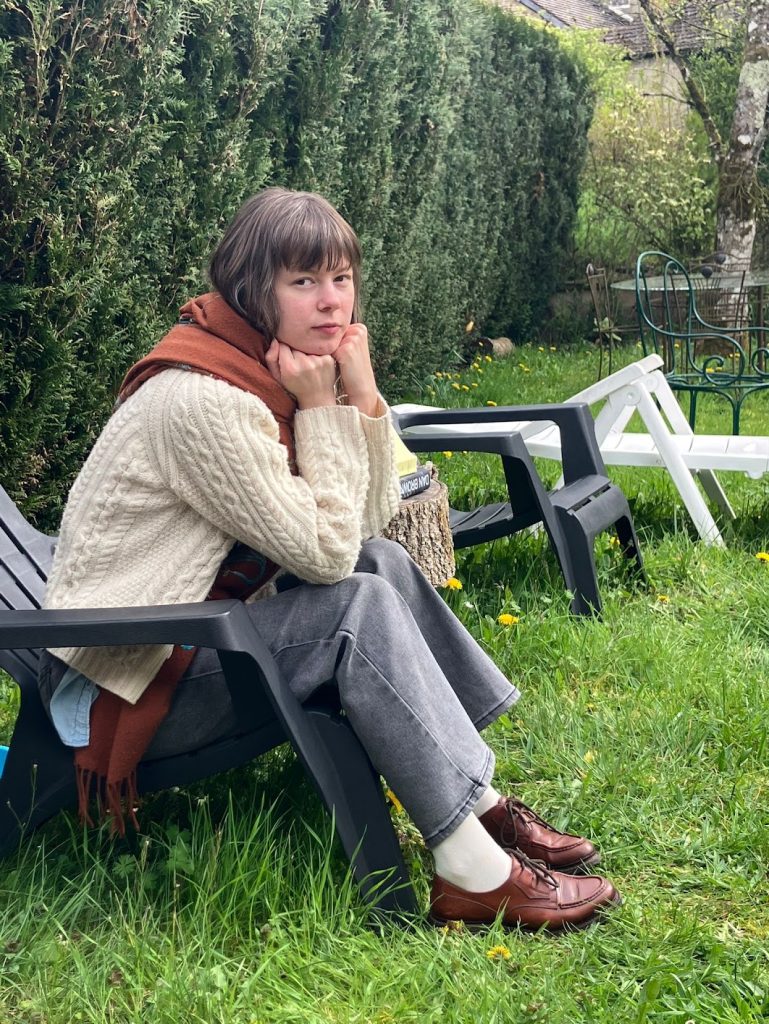
Hello, I’m Merry.
I’m an American-raised, Paris-based writer. By day, I work as a technical ghostwriter. Here, I get to write about whatever I want. I call it “A Merry Loner” because I believe that once you can be happy on your own, you can do anything.
I send an email whenever I publish something new. That’s all.
If you think someone would like this post, you can send it to them. (It would honestly mean a lot to me.)
More Things to Linger On
-
How to Put Yourself Out There
Almost every act in life requires taking a leap to put yourself out there: Making friends. Dating. Applying for jobs. Even mundane tasks like filling out bank forms or sending back the wrong order in a restaurant are easier when you have the gusto to speak up and ask for what you want.
It’s obvious that putting yourself out there can help you land an interview for a slightly less soul-sucking way to pay your bills or finally put you in touch with your soulmate so you can bid adieu to dating apps forever. But it simply makes the days more joyful, too. When you get over your social anxiety long enough to tell that stranger in the coffee line that you like their shoes, don’t you both smile and hate humanity less, even for a few seconds?
I know it’s not easy for everyone to put themselves out there, especially for introverts or those whose childhood report cards never earned the “takes initiative” stamp in the teacher comments. But if you don’t learn how to muster up the courage to put yourself out there, your life is going to end up passing you by while you sit around waiting for people, opportunities, and, dare I say, happiness to come find you.
What I learned about putting myself out there
After graduating college, I moved to the capital city of my home state. It wasn’t far from where I grew up; still, I had only one vague acquaintance who lived there, leaving me with barely any social network to cling to. I knew if I didn’t want a repeat of my college years (which, admittedly, were not the highlight of my life), I needed to do something to build a world around me that gave me the life I wanted.
I knew it wasn’t always going to be fun. People weren’t going to line up and knock on the door to ask to be my friend. I was going to have to make the first moves.
In the end, I lived in that city for two years. I had a big social network with many layers of acquaintances, side characters, and friendly neighborhood faces to add variety to my inner circle and color to my Friday nights.
This is what I learned about putting myself out there and becoming an active player in my own life:
You have to get over the fear of being the first one to reach out.
Relationships don’t spring up from nowhere. Someone has to make the first move, and if you’re not content to let others run your life for you, that someone should be you.
Yes, you can wait on other people to reach out to you. But they’re probably just as nervous as you are. If both of you keep cowering in your respective corners waiting for the other to take the first step forward, you’re never going to meet.
Plus, do you want to leave the direction of your life in strangers’ hands? Do you want to actively choose the people you hang out with (and possibly become romantically entangled with)? Or are you fine with just accepting whomever comes along and falls in your lap?
There’s no secret key to confidence here. One day, you just have to pull the trigger and start practicing, one baby step after another.
Signing up for a social event is a great place to start. But sorry, that’s not enough. You don’t make friendships just by showing up to local trivia night. You have to go further, i.e., exchange numbers with someone (ideally, multiple someones) and then text them afterwards to invite them out for a coffee or drink.
It will be awkward sometimes. Some people will ghost you. But you’re a big person, and you can handle this. (Short people can handle this, too.) Over time, reaching out first will become easier and less scary. And sooner or later, something (or someone) will stick.
Practice putting yourself out there this week with A Merry Loner’s 7-Day Do Things Alone Challenge. For seven days, you’ll get an email a day with one bite-size challenge to help you practice doing things alone in public so you can get more comfortable putting yourself out there.
You can’t take it personally when things don’t work out.
Sadly, life is not just one string of amazing successes after the other.
People will sometimes be rude to you for no reason. On some occasions, you will say the wrong thing. On others, you will say the right thing, but you still won’t hit it off with everybody.
It happens. It’s unavoidable. So stop letting yourself get all worked up when you shoot your shot and fall flat on your face.
Instead, when someone ghosts you, insults you, or otherwise disappoints you, remember: You can just move on. You don’t owe them an explanation, and you don’t always need closure. You can simply call it a day and move on with your life.
Similarly, if you put yourself out there, think someone likes you, but still end up cast aside or left out, do not use this experience as a catalyst to re-examine your self worth. Sometimes, it just be like that. After all, have you liked every single person you’ve ever met? Of course not, so why should other people? They’re allowed preferences, too. You can both be, individually, great people; you just don’t belong together.
It helps to pretend you’re already who you want to be.
I’ve been doing this, almost subconsciously, since I was a teenager.
High school was not a golden time for me. I had great friends, impressive grades, and a stacked extracurriculars list ready for college applications (field hockey captain, yearbook editor, honor council secretary, you name it). But for a variety of reasons that will remain undisclosed, I didn’t often feel happy. As many others probably did (I now realize), I felt like I didn’t fit in and was constantly imagining who I could be and what my life could look like if I were simply somewhere else.
I escaped by reading. Off the pages, I became the protagonist in my own coming-of-age novel. There, I was not schlepping around a Hawaiian-flower-print L.L. Bean backpack, stressing out about my Honors English class, or flipping through fashion magazines alone at lunchtime. I was a budding writer, hatching the first draft of what would become the Next Great American Novel. Or I was a still-undiscovered future starlet, giving an indie performance from the trunk of her used minivan after class. Or whatever other character I was playing that day.
I wasn’t trying to be someone I wasn’t. But strangely, by playing out those stories in my head, I grew the confidence to experiment with what felt right for me and to keep working towards the person I wanted to be.
That meant when a group of boys called me names while walking by my locker or when some girls found an ingenious way of simultaneously excluding me and being polite, I didn’t let those moments alter the way I thought about myself. Instead, I held onto the vision of the person I wanted to be and acted like I already was her.
Putting yourself out there is the only way to create the life you want.
I’ve achieved things I hadn’t even considered to dream because I found the confidence to put myself out there and become an active player in my life.
As a full-time freelance writer who walked away from corporate life, I would have no work, no clients, and no money if I didn’t get comfortable introducing myself to strangers, sending the first email, or following up on what feels like a dead end.
As an American living in France for almost five years, I never would have become fluent in the language if I hadn’t been willing to embarrass myself and muscle through difficult situations.
As someone about to celebrate their fourth wedding anniversary, I wouldn’t have learned how fun being married can be if I hadn’t found the courage (and had a couple of gin and tonics) to tell my now husband, then long-time friend, how I felt.
Though times may feel difficult, there is still much opportunity to bring beauty into your life. Don’t waste time hoping to be discovered. Do what it takes to put yourself where you want to be.
For courage to push yourself to try something new, read these short poems about new beginnings. If it’s friendship you seek to help you bear the weight of what it takes to be human, learn how spending more time alone can, paradoxically, help you get more comfortable meeting new people.
If you feel like you’re putting yourself out there but nothing is sticking, keep the faith. These quotes about feeling alone remind us we’re each steering our own ship and are each capable of creating our own peace.
Hello, I’m Merry.
I’m an American-raised, Paris-based writer. By day, I work as a technical ghostwriter. Here, I get to write about whatever I want. I call it “A Merry Loner” because I believe that once you can be happy on your own, you can do anything.
I send an email whenever I publish something new. That’s all.
If you think someone would like this post, you can send it to them. (It would honestly mean a lot to me.)
More Things to Linger On
-
How to Ask for Space from People You Love
It would do even extroverts well to spend more conscious time alone (admits this one extrovert who learned to enjoy spending time just with herself). Yes, we humans are social creatures, but even the most garrulous among us need time away from our herd, not because that herd is unpleasant or cloying, but because when we are constantly part of a group, we cannot truly be ourselves.
Certainly, there are people to whom we feel we can say anything, people who seem to understand our thoughts and intentions by grace of some unnamed, intangible force, sometimes even before we ourselves are aware of what’s forming within. But even they take our time and attention (no matter how willing we are to give it) away from our own internal dialogue. And we need this internal dialogue to work through new ideas, experiment freely, and decide for ourselves what we think, value, and feel.
Our internal dialogues are something to be preserved. And like all good things in life, sometimes ensuring that preservation means fighting for it.
But how to do so without leaving a bruise? How can we ask for space in a relationship? From dear friends who have softer boundaries for personal space than we do? From family members, who may mean well, but seem to have forgotten that we have grown up into adults with different temperaments, wills, and wishes than those that defined us in adolescence? From romantic partners who may have been taught, through no fault of their own, that codependency is the proof of a loving relationship?
Answering these questions raises another yet another: Whose feelings are more worth protecting?
Do we stifle our own need for space and solitude because we dub these needs somehow less vital than those of another to be near us, talk to us, touch us? Do we put what we feel is our duty to honor other people’s needs over the duty we owe to ourselves?
Building our compassion is a noble goal. We don’t want to hurt other people’s feelings; we don’t want to make them feel neglected or unloved. We want to be a considerate human being, capable of putting ourselves in another’s shoes. But in practicing empathy, we sometimes go too far, walking so long in someone else’s shoes that we forget how to find our own way back home.
It’s a path that can quickly lead to resentment. Resentment for having always, or at least too often, prioritized the needs of our partner over our own; for having submitted to our family’s wishes because we fear disappointing them; for having deferred to the decisions of our friend group, silencing our own opinions for want of keeping the peace.
But how can we really form our own opinions if we never give ourselves the time and space to sit with just ourselves? To pay attention to our own thoughts, unclouded and uninfluenced by someone else’s? How can we learn to be our pure selves if we’re always role-playing friend, sister, partner, father, co-worker, brother, mother?
It’s worth asking oneself: “Who are you without the personalities you’ve built by association? When all of the people for whom you play these roles are gone, who is the you that’s left?”
That’s the you only you can meet when you clear the space to meet them.
Clearing that space takes, quite honestly, courage to ask for what we need. Rather, not ask, but firmly, though politely, insist. Politely because — despite the torrent of self-help manifestos that encourage us to set boundaries and profess our own beliefs so loudly that we close ourselves off to the words of anyone who may have exhibited the slightest indications of perhaps having the chance to disagree with us — it takes two people to maintain a relationship. Politely because advocating for oneself does not have to come at the expense of someone else’s wellbeing. Politely because we may want a little more space in our relationship, but we do not need to sacrifice said relationship to get it. Politely because as a songwriter once said, “Being good to people is a wonderful legacy to leave behind.”
So we insist on that space, firmly though politely. That may look like, telling one’s partner that we need a little quiet time to ourselves after coming home from work, that those thirty minutes of solitude are by no means a rejection but a simple moment of introspective recharging; explaining to one’s parents that we are happy to share an evening meal with them but that we cannot partake in such a meal if they drop by sans invitation, sans announcement; letting a friend know that we value their closeness but we cannot respond to every message within ten minutes of receiving it.
It’s not always easy to ask for what we want. The task is even more difficult when we are unsure of what we need to feel less stressed and more fulfilled. We can begin the hard but glorious work of seeking those answers by dedicating regular time to intentional solitude, time we reserve exclusively for ourselves, without scrolling, music, or even books to occupy us. It’s only in this sacred space that we can hear ourselves, learn about ourselves, and eventually use those learnings to become a better person, for both ourselves and all the people we love.
Read six benefits of solitude and why intentional solitude is getting harder to come by. Learn why embracing this intentional alone time can actually help us meet new people and make new friends. And for an antidote to the poison Big Tech has pumped into our veins over the last fifteen-odd years, find strategies to help you quit social media so you can make space for intentional solitude.
Lest we forget, dedicating time for intentional solitude is never meant to come at the expense of building and maintaining meaningful relationships; healthy alone time is, in fact, necessary to form relationships that aren’t simply a means of avoiding ourselves. Ensuring that alone time means asking for space in a relationship, sometimes even from people we love.
If our loved ones seem unwilling, unable, or unsure how to fill this new time without us, help them learn how to enjoy their own company and how to get better at doing things alone. Better yet, give them the gift of finding comfort in their own company with this seven-day exercise on overcoming loneliness.
Hello, I’m Merry.
I’m an American-raised, Paris-based writer. By day, I work as a technical ghostwriter. Here, I get to write about whatever I want. I call it “A Merry Loner” because I believe that once you can be happy on your own, you can do anything.
I send an email whenever I publish something new. That’s all.
If you think someone would like this post, you can send it to them. (It would honestly mean a lot to me.)
More Things to Linger On
SIGN UP
An email whenever I publish something new.

A good life begins in your own company.