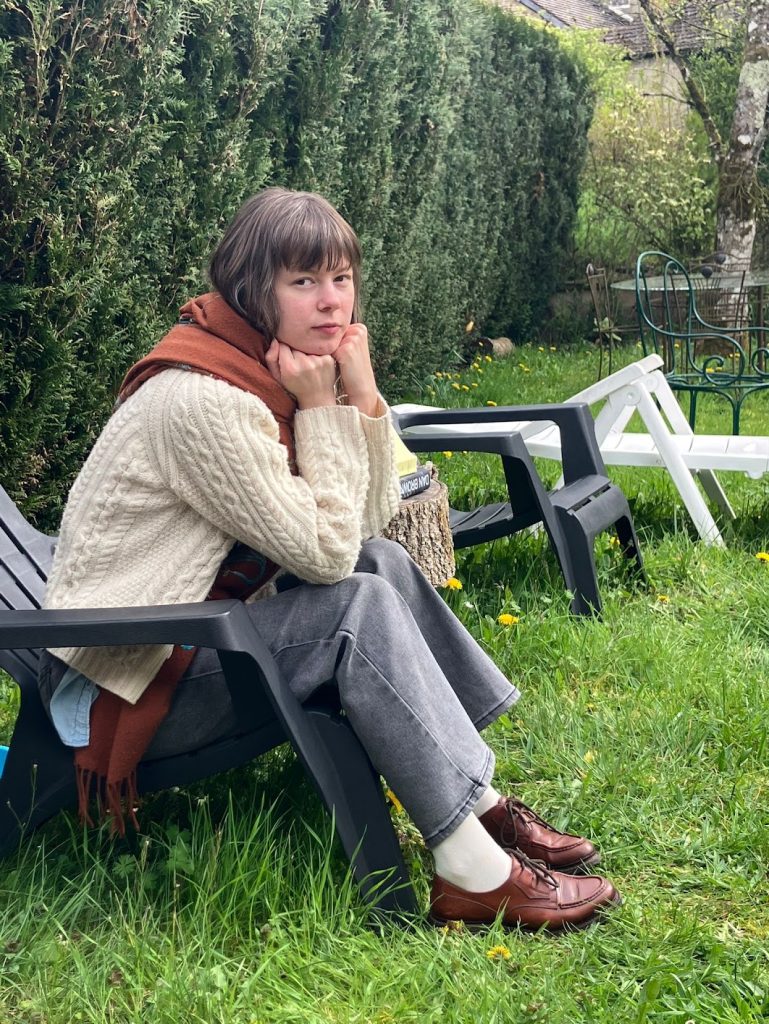
At the end of October, I’ll have been living in France for 62 months (five years and two months). It feels both not that long and like I’ve been here my entire life.
I moved to France (Toulouse, specifically) one year after the 2020 zenith of the COVID-19 pandemic. I was 24, very in love, and ready to get a redo on what had been a rather lackluster university experience in the USA. Now, I’m almost 30, master’s degree in hand for two years now, and married for four.
Considering I moved out at 21, I’ve spent more of my independent adult life overseas than in my native country. At times, life has felt easier than those of the contemporaries I’ve left behind and, at others, much harder. But I have never regretted my choice.
Living outside of your home country is a funny thing. People like to argue about the differences between words like “immigrant” and “expat” and who has the right to be where. Some other foreigners I’ve met abroad never stop speaking about their homeland and the many ways in which it’s superior to where they are now. Others are positively ashamed of their country of origin. To both, I say, “Nobody gets to decide where they’re born.” To judge people — and, worse, fill in the blanks for their personality and beliefs — based on where they’re from is not only unkind; it’s nonsensical.
Just as living in the same small town for your whole life doesn’t make you uneducated and small-minded, traveling the world and living abroad doesn’t make you worldly, cultured, or intelligent.
I don’t claim to be any of these (though my self-respect would pipe up with a defense for the latter). But after living 24 years in the same small town and then five in a new-to-me continent, I do feel I’ve learned a thing or two. Here are three of them:
No matter where you are, you can always be yourself
I have been known to dress a bit flamboyantly. Even to my old desk job, I sported white pleather go-go boots and a 1970s Civil Air Patrol unisex jumpsuit (sometimes simultaneously). But when I venture into uncharted territory, I hold back.
For my first French classes at the Alliance Française in Toulouse and then for my first university classes at Université Toulouse – Jean Jaurès, I dressed to be inoffensive and unassuming: a demure black sweater, jeans, and combat boots. It wasn’t until the surroundings became familiar, less daunting, and, in a way, smaller that I let my personality become bigger and my wardrobe, more daring.
This tendency extended beyond textiles into most daily interactions. I spoke less frequently and at a lower volume. I smiled less. I didn’t talk to strangers. I was quick to assume I was wrong. And if someone was rude to me, I turned the other cheek instead of responding with usual feistiness.
It took me many years of living in a different country to start acting like myself again, to lose the feeling of ongoing deference and self-doubt, and to remember what should never have been location-dependent: I always have the right to be myself.
It’s okay to change your mind
Before I took off with a one-way ticket to Paris, my dad pulled me aside and said: “I know you’ve been dreaming about doing this for a year, but if you get there and realize you don’t like it after, you can just come back. It’s not embarrassing. You don’t need to stick it out.”
Embarrassment, now that’s a universal human feeling. Sometimes, when we have big ideas, we fail to act on them or even voice them for fear of losing face if those ideas don’t work out. But it’s okay to try something and fail. It’s also okay to try something and then just change your mind, no matter what it looks like from the outside.
This is a conversation I’ve had with many fellow foreigners living abroad. Having the chance to comfortably move to a new country (particularly, a rich country) is a huge privilege. But that doesn’t mean you have to like it. I have a friend who’s been on a mission to move out of the USA, so she and her wife moved to a Western European country a couple of years ago. They don’t intend to stay. Set on the idea of living abroad, though, they went on a tour, visiting neighboring countries as candidates for a new home.
Still, nothing they saw felt right. Turns out, their checklist for an ideal place to live was matched most closely by their native country, rather than their overseas fantasy.
Things really are that different
When I came to France to study the first time in 2017, I braced myself for the challenges of living without my mother tongue. That was incredibly naive.
While, of course, it was uncomfortable navigating the bank, the hairdresser, and the fast food joint in French, my social life was almost entirely in English. With friends from Poland, Czechia, and Mexico, I made jokes about “Friends” and “Totally Spies” and “The Big Lebowski.” With others from Italy and Germany, I screeched the words to Britney Spears’s “Toxic” and Katy Perry’s “Last Friday Night.” Naive to the intensity of American hegemony, I was surprised that these American 2000s pop culture staples turned out to just be staples.
It’s another side effect of the Internet and social media. Texting via Facebook Messenger, renting rooms via Airbnb, and following directions via Google can make the whole overseas experience feel comfortably domestic — but deceptively easy. Over time, I’ve come to realize the familiar ease of an “international” language and app-led reservations is a superficial layer that’s only screen deep. Beneath, lie the many unspoken, unseen differences that usually reveal themselves once one or both parties feels insulted, rebuffed, or confused. A short example:
I remember a former American roommate complimenting my “I statements,” a technique from Nonviolent Communication (NVC) where you express your own feelings instead of commenting on others’ actions. But to my Eastern husband who wasn’t assigned Rosenberg’s reading in college or raised in a culture that prizes individuality, these statements weren’t exactly a sign of healthy emotional intelligence. “It’s always ‘I’ with you. ‘I feel this’ or ‘I feel that,’” is a paraphrase of how he understood my NVC conflict strategies during one squabble.
We both spoke the “international” language. We both grew up watching “The Lion King” and “Shrek.” We both remember the hipster, craft beer craze of the 2010s. But that top layer of shared pop culture references masks deeper stratums that make up two very different worldviews.
Often, living in a foreign country can remind us how small the world is and how different people from different walks of life are, at the end of the day, more alike than different. But just as we shouldn’t fill in the blanks for who people are based on where they’re from, we shouldn’t assume we understand someone completely based on a few shared ideas.
Wherever you go, remember yourself
Traveling reveals much to ourselves about our identities; the longer the travel, the more is revealed. But however far you wander and for however long you settle, take care not to lose yourself along the way.
Just because your surroundings change, it doesn’t mean your personality needs to, too. Pushing yourself to try new things is almost always worthwhile, but that doesn’t mean you always have to like it. And new knowledge should never embolden you so much that you forget to remember all you still don’t know.
If you want the experience of stepping outside of your world but are hesitant to move forward, read I Don’t Like Traveling Alone — But I Keep Doing It Anyway, What I Learned Traveling the World Without My Partner, and How to Stop Being Scared of Traveling Alone.
Then, remember why it’s important to enjoy your own company, no matter where you go.