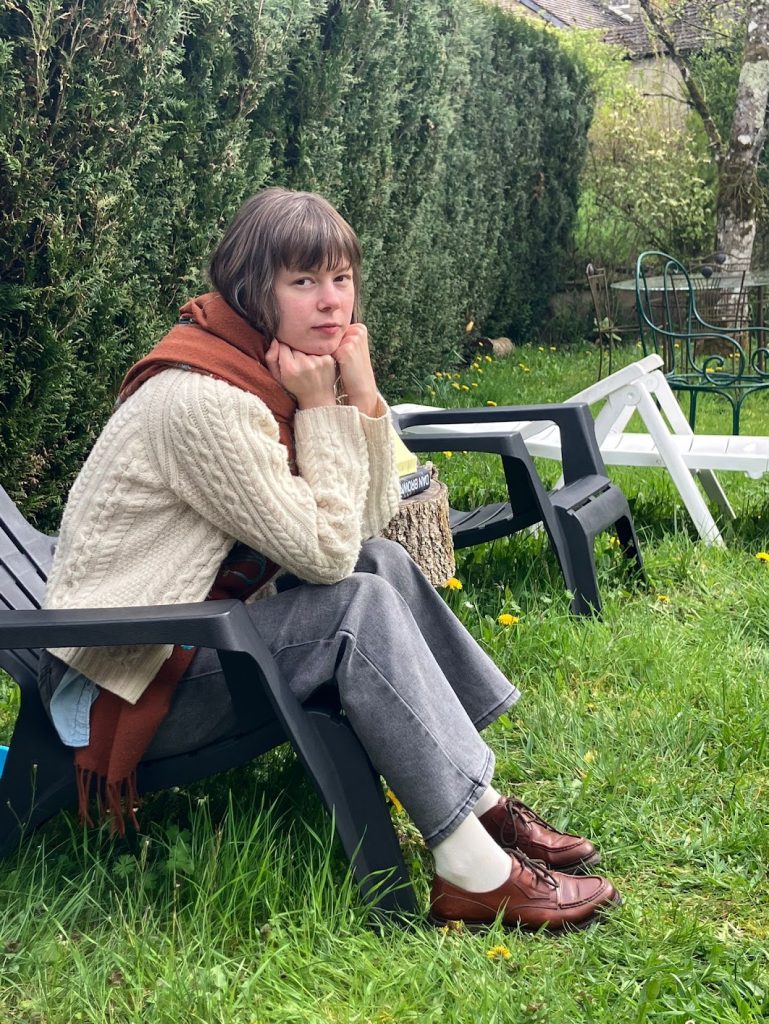
“You can do more if you’re willing to be independent.”
When Sarah Silvia booked a one-way ticket to Spain to become an au pair just a few months after graduating from college, she had next to no travel experience under her belt and wasn’t sure what to expect. But something clicked. What started as a leap of faith ended up becoming her new way of life. Years later, Sarah still organizes her work around her travel (not the other way around), and she’s come to see solo travel as an essential exercise to learn more about herself.
In a conversation with A Merry Loner, this former barista, ESL teacher, and self-described extrovert shares how solo travel taught her how to get better at doing things alone, why flying solo feels easier abroad than in her own country, and how solo travel can actually be one of the best ways to meet new people.
The merry loner lifestyle looks different for everyone. Loner Q&As are interviews with merry loners from around the world who share how they’re creating meaningful, authentic lives that are true to them, without following the crowd or trying to meet others’ expectations. Sign up here to be notified about new Loner Q&As.
A Merry Loner: Before you became an au pair, what sparked your interest in international travel?
Sarah Silvia: In university, I had an education professor who is one of the most incredible people I’ve ever met. She organized a trip to Costa Rica to teach English (ESL); that was the first time I ever left the country. That was in January 2020, right before COVID.
Also in my first year of university, I met a girl from Brazil who became my best friend. We are now inseparable — when we’re in the same country. In December 2021, when the borders finally opened again, I went to Brazil. I was like, “This is incredible. This is not something I want to stop doing.”
AML: Did that experience influence your decision to go be an au pair in Spain?
SS: Definitely. After seeing Brazil for the first time, I was like, “There is so much of this world to see, and there are so many people to meet and places to explore and foods to try.”
When I got home, the very first thing I did was get on my computer and get on Workaway, which is a work exchange website where you can offer a few hours of work in exchange for room and board. I just made a profile and looked up different opportunities in Europe.
Almost immediately, a family in Spain got back to me. We sat on the phone for 30 minutes, and she asked me when I was booking my flight. But I decided to stay home and keep working for a couple of months first. Then it was like, “Cool, see you in September.” It was definitely a leap of faith because it was a woman I met off a random website. There was no fact-checking from my end. I just decided to trust my gut and go. It ended up turning out absolutely incredible.
AML: Before going to Spain, you worked as a barista where you had a big community and social network. What was it like getting used to being by yourself so much in the Spanish countryside?
SS: I didn’t expect it, but I actually spent a lot of time alone in Spain, which was an adjustment. Not difficult, but different because I’m a very social person.
Later when I was an au pair again in France, I didn’t have the same work schedule as most of the people I met. I had the whole day free and then I started work at four, but all of my friends worked all day and got off work at four, so I had to get used to doing stuff alone.
An idea worth lingering on: How to Get Better at Doing Things Alone
AML: In between being an au pair in Spain and France, you also spent time backpacking alone around Europe. What was that like?
SS: I spent two and a half months backpacking around ten countries in Europe. I went everywhere, from the UK to Austria, Czechia, and a lot of places in between. I had no plan. No flights booked. No hostels booked. I would just look at what city was the cheapest to fly to from wherever I was. If there was a cheap hostel in that city, then that’s where I went. After a few visits, I was hooked.
For your inspiration: Alone at Night in Paris—Where to Take Yourself on a Solo Date
AML: You’re a self-proclaimed extrovert. Did your first solo travel experiences change the way you feel about being alone?
SS: Before I started traveling, I wouldn’t do anything alone. Even just going to the grocery store, I would text a friend and ask them to join me. I always just liked being around people. I never get tired of it. But then I moved to Spain and spent a lot of time alone. And when I came back home from Spain, I had this feeling like, “Oh my God, I need to spend some time alone” after being at work all day.
I never felt that need for alone time until I had a lot of it. And then I was like, I kind of understand this now, this need to retreat and be by yourself and have alone time.
An idea worth lingering on: Why Being Alone Is Good for You
AML: How does alone time at home compare to alone time while traveling?
SS: It’s strange — I feel totally fine doing things alone when I’m abroad, like going to dinner, walking around a city, even just sitting at a café for hours. But at home, I don’t really do that. I wouldn’t go out to dinner by myself or go sit at a bar. And I don’t really know why.
Maybe it’s because when you’re traveling, no one knows you. There’s this sense of anonymity; you can do whatever you want, and no one’s watching or wondering why you’re by yourself. But at home, especially in Rhode Island, which has a small-town feel, I’ll probably run into someone I know. It just feels different. Even though this is my comfort zone, being alone in public here feels kind of awkward.
“If you don’t do things alone, you don’t do anything.”
— Sarah Siliva
Part of it might be that I don’t have to do things alone when I’m home. I have my family, my childhood friends; I always have someone I could call. But when you’re traveling and you don’t know anyone yet, if you don’t do things alone, you don’t do anything. You don’t have a choice.
AML: What advice would you give someone who wants to get into solo travel or has maybe tried it but didn’t love it?
SS: First of all, just realize what you like. When it comes to traveling alone, I am really big on food, coffee, sights, beaches, sunsets, nature hikes, and stuff like that. The first thing I do when I get to a new place is look up specialty coffee shops — that’s my first stop. But some people love museums; they love art; they love theater. I would just say: Focus on what you like in cities. Because if you find something that you’re comfortable with, then I think that will entice you to keep going.
AML: I think a common fear about solo travel is never meeting anybody, never making any friends at hostels. What’s been the easiest way for you to meet people while traveling alone?
SS: I have met every single person through the hostels that I stay in. There’s a wide range of hostels from co-working and more professional — those are usually older demographics. Then there are party hostels and everything in between. I try and choose something that is relatively nice, that has group activities planned, like walking tours of cities, because the first day in a city, I will always try to go on a walking tour. Then I usually end up going out for lunch or coffee with the people I meet on the tour.
You just have to start talking to people, like, “Hey, what’s your name? Where are you from?” It sounds simple and so high school, but it works.
Something that might change your perspective: Why Being a Loner Helps You Make New Friends
AML: Simple, but not easy for everyone. Any advice for people who are shy or nervous to strike up conversations with strangers?
SS: In the beginning, it was actually really easy because I had never solo traveled before, so I was really comfortable asking people for recommendations because I didn’t know anything. That’s how we started talking. But actually, last year I went to a hostel, and I felt like I couldn’t talk to anyone. I realized it was because I had become the seasoned traveler, and I just lost that need to reach out. Eventually, I just got over it. I was like, “Well, I don’t know anyone here, so I have to start to talk to someone.” You just gotta do it.
AML: What’s one of the biggest benefits of solo travel compared to traveling with friends?
SS: I have pretty much always just solo traveled. But then one summer I spent two weeks backpacking in Albania with one of my closest friends, and that trip was when I met the least amount of people ever. We realized that by traveling together, we weren’t as approachable. But then I think of the amount of times where I’ve been sitting alone and someone comes up and approaches me and then we start a conversation and a friendship from that.
“You can do more if you’re willing to be independent.”
— Sarah Silvia
When I was with someone already, no one would just come up. You’re much less approachable in a group or in a pair than you are when you’re by yourself. That’s a very vast difference I saw, and I think one of the main benefits of solo travel. It’s not about being antisocial, but you can do more if you’re willing to be independent.
Solo travel can be scary the first time, but we mustn’t let fear dictate how we live. Guest writer Daniel John shares tips to overcome the common anxieties of traveling alone and how even he, an introvert, has come to appreciate solo travel. In a a companion piece, Evan E. Lambert reveals what he learned when faced to travel alone for the first time without his partner. For a different perspective, read Alyssa Wiens’s guest essay on why continues to travel alone, even though she finds it difficult.
For a lyrical dose of inspiration, read quotes on traveling alone from renowned writers and artists, including my current favorite from American singer and writer Henry Rollins.