Category: Loner Q&As

    The merry loner lifestyle looks different for everyone. Read interviews with merry loners from around the world who share honest reflections on how they’re creating meaningful, authentic lives that are true to them—without following the crowd or trying to meet others’ expectations.

    • Staying Focus-Driven: How Giuliana Mendoza Tunes Out the Noise & Focuses on Her Purpose

      Staying Focus-Driven: How Giuliana Mendoza Tunes Out the Noise & Focuses on Her Purpose

      Staying focus-driven sometimes means staying misunderstood. 

      From being the only person on her high school’s math olympics team to moving from Argentina to the U.S. during college to taking a months-long international solo trip in her early twenties, Giuliana Mendoza has always done things her way. And with an independent streak that sometimes takes you off the beaten path, comes the doubters, the naysayers, and the judges. 

      In a conversation with A Merry Loner, Giuliana shares how she sets intentional goals, cultivates a resilient mindset, and sticks to her guns, no matter what the critics say. 

      Sign up here to get all future Loner Q&As delivered straight to your inbox.

      Related Posts:

      Let’s talk about the months-long solo trip you took in your early twenties—what was that like? 

      I will never forget when I traveled around Europe. I did meet up with some friends in certain cities, but I was mostly by myself. I was on this flight from Dublin to Rome, and I was telling [my seat neighbors] how I was planning on going to all these different places and I was doing it by myself for a month, and they were like, “That’s strange.” It wasn’t like, “Oh, be careful.” It was just like, “That’s very strange, and people will, like, judge you for being by yourself as a woman.” It was like, “Something’s wrong with you or whatever.” It was just funny to me. I remember that comment. It didn’t impact anything for me on that trip, but it was just a funny perspective to get. 

      So I was by myself doing a lot of this traveling, and I think I’m very aware of my surroundings, so it never really occurred to me that I wasn’t safe. I think that’s one of the biggest questions I get from girls who are trying to go to Europe for the first time and might be thinking about solo traveling. They’re always concerned about safety.

      “I’m ready to go. I’m ready to start exploring, and I don’t want to be held back [by] someone.”

      I think in a sense, I’m grateful those things didn’t really cross my mind because maybe if I had been a little more cautious, I would have held back a little. But, yeah, I felt really safe, and I loved my time—just deciding what I wanted to do every day and not having anyone determine or have an influence on my plans. I think that was the biggest thing for me: I’m ready to go. I’m ready to start exploring, and I don’t want to be held back [by] someone.

      There are some people who want to try solo travel, but they’re nervous. Like you said, maybe because of safety or just wondering what they would do by themselves. For example, eating alone at a restaurant is really scary for a lot of people—and restaurants are a huge part of travel. What advice could you give to people who are worried about traveling alone? 

      I think one of the nice things about social media is that you can find a lot of inspiration. If you are someone who just doesn’t know how they would do this, sometimes it helps to see someone else doing it. There are a lot of solo travelers sharing their experiences and how they do it. I think that’s great. 

      I think it’s great to ask for advice. If you know someone who has done it, just ask them for tips. I do that all the time. I remember, one of my friends at work, he came up to me recently, and he was like, “I want to thank you for encouraging me to go to Ireland by myself.” He was like, “I fell in love with Ireland, and I would have never done if you weren’t, like, ‘Just go by yourself!’” I remember him coming up to me and being like, “oh, I wanna go, but nobody wants to come with me” or “it’s hard to plan with another friend.” And I was like, “Just go by yourself.” I’ve been to Ireland by myself many times, and it’s such a great country to explore by yourself.

      To hear that that was all he needed to do it, it meant a lot to me. And I remember, last year, we went to hibachi, and this other family sat next to us. This girl was saying she’d been dying to go to Europe, and I said, “You should totally go by yourself.” I ended up becoming friends with her on Instagram, and I saw a couple weeks ago, she posted this whole, like, gratitude post about how much growth she’s experienced traveling around Italy by herself. And I was just like, “Yay, she did it!” But she was really scared.

      Was your Europe trip your first time traveling by yourself? 

      It was my first big trip. Definitely not my first time doing any kind of travel by myself. Actually, right after I graduated, I went to California by myself.

      I was kind of a geek in high school; I was in the math Olympics. And I was the only person in my school that was part of the math Olympics. So every time I got to travel for that, it was just me. I was used to staying in the hotel by myself—and my mom never came along on those [trips] because I had my [younger] sister. So I did that kind of on my own. 

      Was it scary for you at first to travel by yourself? Or was it always no big deal for you? 

      I think I’ve always been a little independent. I’ve always had, kind of, this entrepreneurial mindset, as well. I’ve always saved my own money, which allows you to do the things that you want to do without having to ask for permission. Like say, if the school wasn’t funding the math Olympics or whatever, I could be like, “Well, I’ll fund myself.” Things like that.

      I think there’s a lot of freedom that comes with having that type of personality and perspective. I was always like that from a young age. 

      And this was back in Argentina, right? When did you move to the US? 

      After I did at least two years of college. I was two weeks short of turning 21. [I was living with my dad,] but as soon as I got my job, I moved out. And I didn’t have any roommates, which also was weird. People were like, “You don’t have any roommates? What do you mean you don’t have any roommates?” And I was like, “I just want to live by myself. I can afford to do that, and it works for me. I don’t need any roommates.” 

      I had grown up sharing a room with my sister—she was kind of my roommate, and she stayed back in Argentina. So then it was just like, “Okay. I’m out of that roommate phase because my sister’s not here, and now I’m just on my own.” 

      When you moved to the US, your dad was already here, but that’s still a very big move to do at a fairly young age. What were some of the fears or excitement you had? 

      I was very excited. I was ready for the life that I knew I could have in the US. I think the whole college experience was a little scary, especially because I had never gone to school in English. I had done everything through high school in Argentina in Spanish, and then I had started college in Spanish. So coming here—even though I was bilingual—coming here and having to write papers in English and do all of my schooling in English was something that definitely felt a little scary. But I knew I could do it. 

      I even remember the whole application process. I was very blessed to get a full scholarship to URI, and that required a lot of extra steps to get funding. So it wasn’t just me applying to school; it wasn’t just me transferring and getting validation for my classes that I had already taken. It was also me trying to get the money that I needed to afford school here. I had to take everything one step at a time, and that’s just how I felt about the school experience once I got here. It was like, “Okay, one class at a time. We’ll see how everything goes, so don’t overwhelm yourself.”

      It sounds very overwhelming—the move, the paperwork, everything. And you were doing that all by yourself. People can get really overwhelmed sometimes and just want to give up. What advice can you give to someone who feels like they’re facing too many obstacles and doesn’t even want to try anymore? 

      Just to keep your goal in mind and why you’re doing [it]. That was always top of mind for me. Just reminding myself what was at the finish line and that everything was going to be worth it. I think I do that in everything in my life. When you see the big picture, you understand that everything else is just something that gets you closer to that.

      It does require you to be super focused and disciplined, but it’s okay to take breaks when you need to or to. I think a lot of people, they’re like, “Oh, I have to knock this out,” or they overwhelm themselves. But you don’t have to. If you give yourself time, you can just [go] step by step and switch gears a little bit if you need to and to come back to it. 

      You’re such a doer. You’ve got a very demanding job in tech, and you’re also doing projects on the side, like working with Beautycounter for more ethical cosmetic manufacturing. What gives you your drive?

      Passion. I think when you find something you love, it just doesn’t feel extra. It doesn’t feel like work. I know there’s a lot of cheesiness around that, but I think it’s just something I really enjoy—and I try to find things that feel that way. Right? And if they don’t, it’s okay to admit that to yourself. 

      “It’s okay to say no to something that you might have started and that no longer lights you up.”

      I think I’ve seen people start things and then be like, “Oh, now I’m stuck with this project or something that I started, and I’m not really feeling passionate about it anymore.” It’s okay to say no to something that you might have started and that no longer lights you up. I think I’m really good at that. I’m really good at focusing on the things that bring me joy.

      One of the reasons I started my work with Beautycounter was the advocacy work. I think it’s just so meaningful. Again, there’s this big picture. So when it’s hard to squeeze in the things that I’m trying to do for that advocacy work, I just remind myself, “Oh, this is gonna help [someone.]” I think I’ve been lucky to feel inspired and do things that bring me joy. 

      I think an important component is being self-assured, especially if you get a little pushback. I’m sure you’ve heard all the controversies about MLMs [multi-level marketing businesses] and how they’re a scam. Do you ever get negative feedback? How do you continue working on something that’s important to you when people are criticizing it? 

      I think that’s why it’s so important to have conviction about the work you’re doing. I don’t care about [other people’s] opinions about my life or the work that I do. And I think with Beautycounter, it is a little easier because we are very different. We’re a B corp. I think there are only two brands in this space that are certified B corporations, so I always felt that Beautycounter was so different, and it was easy for me to speak to that when people had differing opinions.

      I think in everything in this world, people might have opinions, and they just might not be informed, you know? They might have had a bad experience. I always felt it was part of my job to educate and to make sure that if someone is going to have an opinion that at least they have the right information to form that opinion. 

      I think having a strong sense of conviction and self confidence comes a lot more naturally for some people than it does for others. What advice could you give someone who has something that’s important to them that they want to work on, but they’re having a hard time staying the course when they get negative feedback from others? 

      Mel Robbins has this theory. It’s called the “Let Them” theory. It’s basically, like, let people think what they want to think. Let them do whatever. You stay focused. I think, like you said, it is harder for some people to not feel the weight of other people’s opinions. But I think it has to do a lot with mindset—and mindset is something that you work on, right?

      “Let people think what they want to think. Let them do whatever. You stay focused.”

      I think reading certain authors and listening to podcasts and kind of shifting the way your mind works makes you more confident. Even, like, the most badass founders out there are scared, have gotten a ton of no’s, have gotten doors shut in their faces—but they just kept going. If you don’t have that already, you have to make that shift.

      It’s like that old saying: “You are who and what you surround yourself with.” When you change what you’re consuming every day, it really changes the way you think. Do you have any recommendations? 

      I really like Simon Sinek. He has a couple books: Start with Why; Leaders Eat Last. And I just started Confessions of a Female Founder. I’m probably going to listen to every episode from that one because she’s [Meghan Markle] going to have different female founders, sharing their entrepreneurial experience. 

      I think something that also really helps with that is taking some alone time to reflect, refocus on your priorities, and recharge a little. I’m that way—I’m quite social, but I really need my alone time to come back to myself. What are your favorite ways to recharge? 

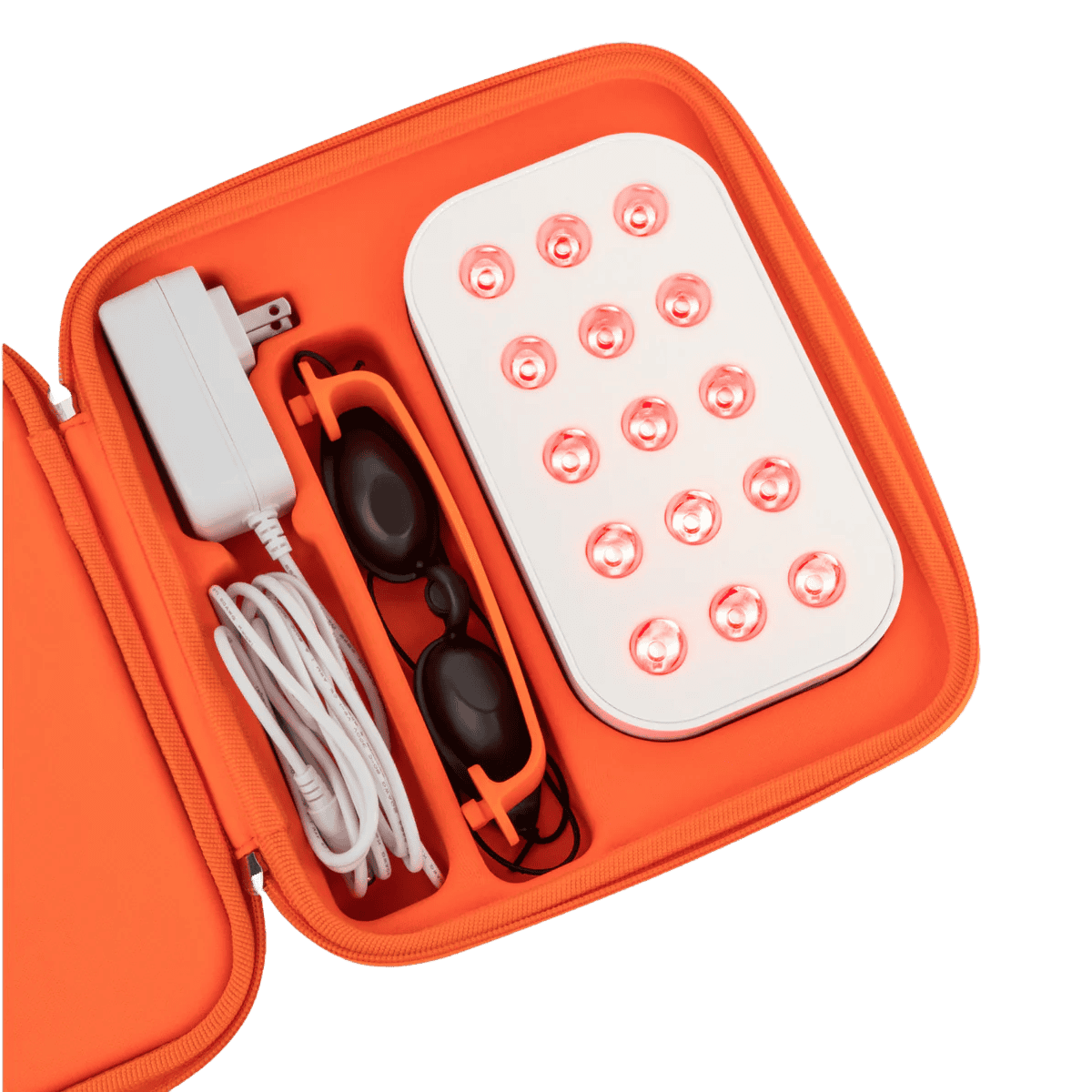
      I’m really big on self care. Red light therapy, skin care. I feel like those are just little rituals in your day where you can just take time off. I have a Lumebox, and I basically just sit in front of it for twenty minutes at the end of the day. It’s like my time to just sit there with my thoughts and let the light hit me. 

      And then my skin care because I’m taking care of myself, and I think there’s something about connecting with your body and massaging yourself and things like that. And it’s a little ritual and something that you do for yourself. When you are a mom and you’re caring for little ones, it’s like, “Okay. This is my time” I also take long, hot showers. I find it just very calming, and I have eucalyptus in my shower—I love it. Just enjoying that hot shower and that me time. 

      For some people, enjoying that alone time can actually be quite difficult. In those moments where you’re alone, instead of recharging, you can have a feeling of FOMO or “I should be doing something productive instead of relaxing.” What advice would you give someone to learn to appreciate alone time more? 

      I think we need it. I think it’s important, and I choose to make it a priority because of how it recharges me. I think one of the issues with society, like you just said, is that we need to feel productive. 

      And sometimes rest is productive. Sometimes rest is more productive than you doing something. So you might have FOMO or you might have guilt because you’re not making progress on something. It’s like when you were studying for exams in school, and you’re thinking, “Oh, my gosh. If I take a one-hour break, I should be studying during this time.” But now you’re going to be so much more focused because you took that one hour to rest, recharge, take a hot shower, take a break from studying, and then come back to it. And I think that is so much more valuable than not taking that time. 

      Recommended Reading:

      Recommendations: How Giuliana indulges in his Loner time

      Lumebox 2.0
      Lumebox

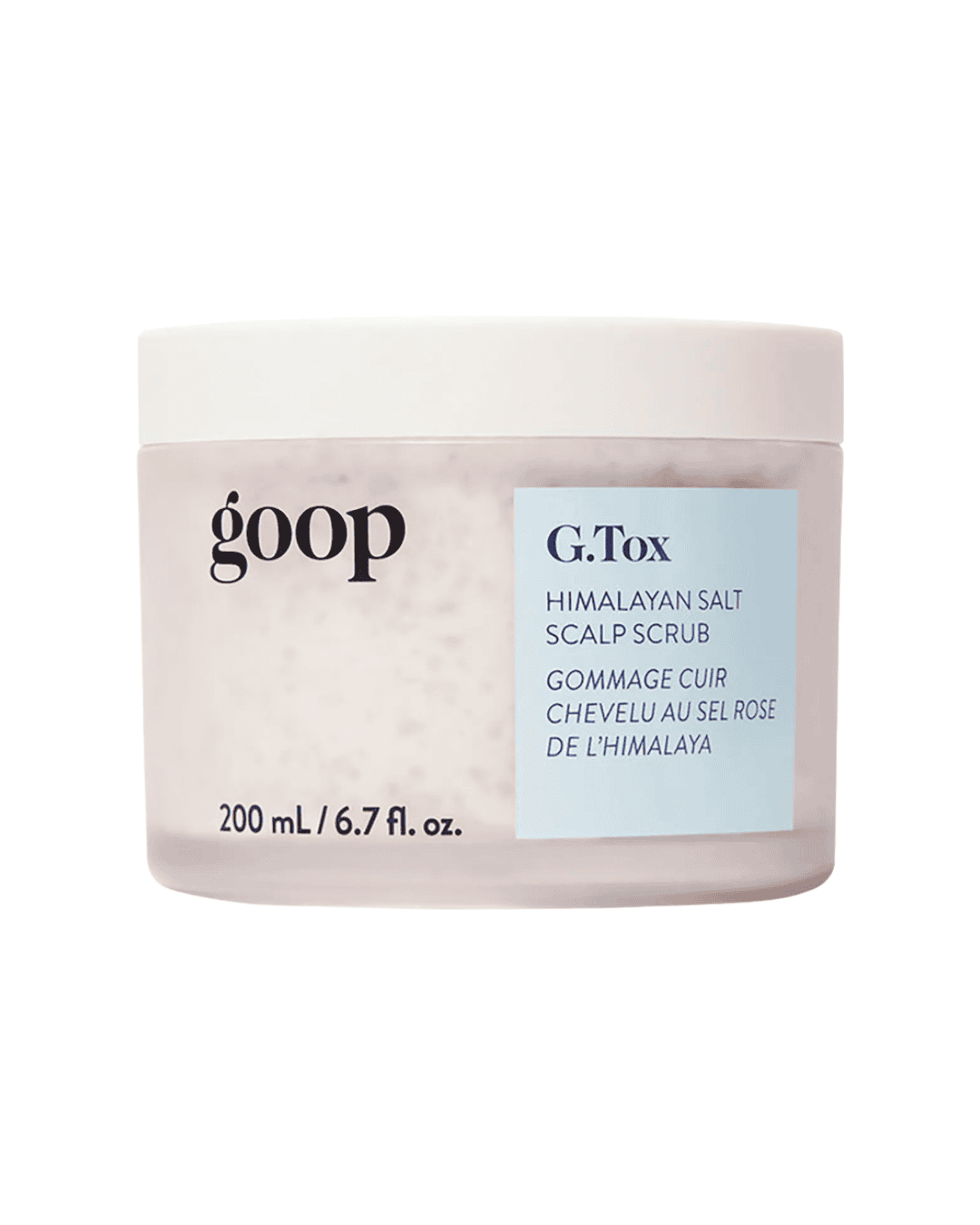
      Himalayan Salt Scrub
      Goop

      Marine Algae Eye Cream for Fine Lines & Dark Circles + Squalane

      Biossance
    • Extroverts Can Be Loners, Too: How Solo Travel Taught Sarah Silvia to Love Spending Time Alone

      Extroverts Can Be Loners, Too: How Solo Travel Taught Sarah Silvia to Love Spending Time Alone

      “You can do more if you’re willing to be independent.”

      When Sarah Silvia booked a one-way ticket to Spain to become an au pair just a few months after graduating from college, she had next to no travel experience under her belt and wasn’t sure what to expect. But something clicked. What started as a leap of faith ended up becoming her new way of life. Years later, Sarah still organizes her work around her travel (not the other way around), and she’s come to see solo travel as an essential exercise to learn more about herself.

      In a conversation with A Merry Loner, this former barista, ESL teacher, and self-described extrovert shares how solo travel taught her how to get better at doing things alone, why flying solo feels easier abroad than in her own country, and how solo travel can actually be one of the best ways to meet new people.

      The merry loner lifestyle looks different for everyone. Loner Q&As are interviews with merry loners from around the world who share how they’re creating meaningful, authentic lives that are true to them, without following the crowd or trying to meet others’ expectations. Sign up here to be notified about new Loner Q&As.

      A Merry Loner: Before you became an au pair, what sparked your interest in international travel? 

      Sarah Silvia: In university, I had an education professor who is one of the most incredible people I’ve ever met. She organized a trip to Costa Rica to teach English (ESL); that was the first time I ever left the country. That was in January 2020, right before COVID. 

      Also in my first year of university, I met a girl from Brazil who became my best friend. We are now inseparable — when we’re in the same country. In December 2021, when the borders finally opened again, I went to Brazil. I was like, “This is incredible. This is not something I want to stop doing.” 

      AML: Did that experience influence your decision to go be an au pair in Spain? 

      SS: Definitely. After seeing Brazil for the first time, I was like, “There is so much of this world to see, and there are so many people to meet and places to explore and foods to try.”

      When I got home, the very first thing I did was get on my computer and get on Workaway, which is a work exchange website where you can offer a few hours of work in exchange for room and board. I just made a profile and looked up different opportunities in Europe. 

      Almost immediately, a family in Spain got back to me. We sat on the phone for 30 minutes, and she asked me when I was booking my flight. But I decided to stay home and keep working for a couple of months first. Then it was like, “Cool, see you in September.” It was definitely a leap of faith because it was a woman I met off a random website. There was no fact-checking from my end. I just decided to trust my gut and go. It ended up turning out absolutely incredible. 

      AML: Before going to Spain, you worked as a barista where you had a big community and social network. What was it like getting used to being by yourself so much in the Spanish countryside? 

      SS: I didn’t expect it, but I actually spent a lot of time alone in Spain, which was an adjustment. Not difficult, but different because I’m a very social person. 

      Later when I was an au pair again in France, I didn’t have the same work schedule as most of the people I met. I had the whole day free and then I started work at four, but all of my friends worked all day and got off work at four, so I had to get used to doing stuff alone. 

      An idea worth lingering on: How to Get Better at Doing Things Alone

      AML: In between being an au pair in Spain and France, you also spent time backpacking alone around Europe. What was that like? 

      SS: I spent two and a half months backpacking around ten countries in Europe. I went everywhere, from the UK to Austria, Czechia, and a lot of places in between. I had no plan. No flights booked. No hostels booked. I would just look at what city was the cheapest to fly to from wherever I was. If there was a cheap hostel in that city, then that’s where I went. After a few visits, I was hooked. 

      For your inspiration: Alone at Night in Paris—Where to Take Yourself on a Solo Date

      AML: You’re a self-proclaimed extrovert. Did your first solo travel experiences change the way you feel about being alone? 

      SS: Before I started traveling, I wouldn’t do anything alone. Even just going to the grocery store, I would text a friend and ask them to join me. I always just liked being around people. I never get tired of it. But then I moved to Spain and spent a lot of time alone. And when I came back home from Spain, I had this feeling like, “Oh my God, I need to spend some time alone” after being at work all day. 

      I never felt that need for alone time until I had a lot of it. And then I was like, I kind of understand this now, this need to retreat and be by yourself and have alone time.

      An idea worth lingering on: Why Being Alone Is Good for You

      AML: How does alone time at home compare to alone time while traveling? 

      SS: It’s strange — I feel totally fine doing things alone when I’m abroad, like going to dinner, walking around a city, even just sitting at a café for hours. But at home, I don’t really do that. I wouldn’t go out to dinner by myself or go sit at a bar. And I don’t really know why.

      Maybe it’s because when you’re traveling, no one knows you. There’s this sense of anonymity; you can do whatever you want, and no one’s watching or wondering why you’re by yourself. But at home, especially in Rhode Island, which has a small-town feel, I’ll probably run into someone I know. It just feels different. Even though this is my comfort zone, being alone in public here feels kind of awkward.

      “If you don’t do things alone, you don’t do anything.”

      — Sarah Siliva

      Part of it might be that I don’t have to do things alone when I’m home. I have my family, my childhood friends; I always have someone I could call. But when you’re traveling and you don’t know anyone yet, if you don’t do things alone, you don’t do anything. You don’t have a choice.

      AML: What advice would you give someone who wants to get into solo travel or has maybe tried it but didn’t love it? 

      SS: First of all, just realize what you like. When it comes to traveling alone, I am really big on food, coffee, sights, beaches, sunsets, nature hikes, and stuff like that. The first thing I do when I get to a new place is look up specialty coffee shops — that’s my first stop. But some people love museums; they love art; they love theater. I would just say: Focus on what you like in cities. Because if you find something that you’re comfortable with, then I think that will entice you to keep going. 

      AML: I think a common fear about solo travel is never meeting anybody, never making any friends at hostels. What’s been the easiest way for you to meet people while traveling alone? 

      SS: I have met every single person through the hostels that I stay in. There’s a wide range of hostels from co-working and more professional — those are usually older demographics. Then there are party hostels and everything in between. I try and choose something that is relatively nice, that has group activities planned, like walking tours of cities, because the first day in a city, I will always try to go on a walking tour. Then I usually end up going out for lunch or coffee with the people I meet on the tour. 

      You just have to start talking to people, like, “Hey, what’s your name? Where are you from?” It sounds simple and so high school, but it works. 

      Something that might change your perspective: Why Being a Loner Helps You Make New Friends

      AML: Simple, but not easy for everyone. Any advice for people who are shy or nervous to strike up conversations with strangers? 

      SS: In the beginning, it was actually really easy because I had never solo traveled before, so I was really comfortable asking people for recommendations because I didn’t know anything. That’s how we started talking. But actually, last year I went to a hostel, and I felt like I couldn’t talk to anyone. I realized it was because I had become the seasoned traveler, and I just lost that need to reach out. Eventually, I just got over it. I was like, “Well, I don’t know anyone here, so I have to start to talk to someone.” You just gotta do it. 

      AML: What’s one of the biggest benefits of solo travel compared to traveling with friends? 

      SS: I have pretty much always just solo traveled. But then one summer I spent two weeks backpacking in Albania with one of my closest friends, and that trip was when I met the least amount of people ever. We realized that by traveling together, we weren’t as approachable. But then I think of the amount of times where I’ve been sitting alone and someone comes up and approaches me and then we start a conversation and a friendship from that.

      “You can do more if you’re willing to be independent.”

      — Sarah Silvia

      When I was with someone already, no one would just come up. You’re much less approachable in a group or in a pair than you are when you’re by yourself. That’s a very vast difference I saw, and I think one of the main benefits of solo travel. It’s not about being antisocial, but you can do more if you’re willing to be independent.

      Solo travel can be scary the first time, but we mustn’t let fear dictate how we live. Guest writer Daniel John shares tips to overcome the common anxieties of traveling alone and how even he, an introvert, has come to appreciate solo travel. In a a companion piece, Evan E. Lambert reveals what he learned when faced to travel alone for the first time without his partner. For a different perspective, read Alyssa Wiens’s guest essay on why continues to travel alone, even though she finds it difficult.

      For a lyrical dose of inspiration, read quotes on traveling alone from renowned writers and artists, including my current favorite from American singer and writer Henry Rollins.

    • Protecting Your Alone Time: Shelby DiNobile on Learning How to Prioritize Yourself

      Protecting Your Alone Time: Shelby DiNobile on Learning How to Prioritize Yourself

      “Being alone can be worth a lot more than being in the wrong relationship.”

      Shelby DiNobile is no stranger to Loner Living. Even before he got off social media as part of an introspective Loner Year, he always prioritized following his gut instead of the crowd.

      In high school, he landed his first internship working backstage at fashion shows. In college, he turned down stable corporate tech gigs to keep following the work that aligned with his creativity. Along the way, he learned to walk away from relationships that never gave him as much as he can give himself.

      In Part II of his conversation with A Merry Loner, Shelby talks about the power of solitude, the importance of doing work that truly fulfills you, and why the right relationships will always respect your need for space.

      This is Part II of a two-part interview with Shelby DiNobile. In Part I, Shelby talks about his decision to stop using social media for a year—and what he learned.

      Sign up here to get all future Loner Q&As delivered straight to your inbox.

      Related Posts:

      AML: When we met in college, we hit it off because we were both kind of on the outskirts of the typical college experience. We were both very independent and doing things a bit differently than the average student. Can you share a little bit about your entrepreneurship during that time?

      SD: I always knew that I liked fashion. When I was in high school, somebody connected me with a designer, and I started an internship. So when I got to college, I already had experience—and I just kept going. I worked really hard; I went to a lot of events and networked a lot, so I think people saw that I was driven and serious about working. That’s how I started working backstage at shows with fashion designers, and soon people were asking me to work with them. I think that’s just what I’m supposed to do. 

      “I didn’t really understand how to take that route of: get a degree; get an internship; get a job.”

      Some people (I can understand it) after a while, would be like, “No, I don’t want to do all these internships and all these side gigs. I just want to get the degree and get the job.” That would have been a lot more simple. But I didn’t really understand how to take that route of: get a degree; get an internship; get a job. That scared me a lot, actually. 

      But I did try it. I got an internship at [a corporate tech company]. But when I got there, it seemed like whatever I was doing didn’t matter. Like it was all fake. When I left at the end of the day, I felt like, “What did I even accomplish? All I did was make a slideshow and email it to six people. And then everyone said something back. So what?” And this was a big corporation. They offered me a job at the end, and it would have been very stable, a great 401k, all that. But I didn’t feel like I was doing anything. Then I got offered a job in sales by another [legacy tech company], but I brushed it off. I didn’t want to do it. I was like, “I don’t really see how I’m gonna fit into a company like that.” It wasn’t in alignment with my interests. It just sounded too rigid.

      I wanted to keep doing what I was doing, which was working for a fashion designer and a home designer—all while still in college. That type of work, it isn’t very structured. But it just felt a lot more fun to do. It’s a lot more creative; it’s a little bit glamorous. I’ve had other corporate jobs since, but I had to go back to what I know. So fast-forward to now, and I’m working for another designer again, Kimberly Pucci.

      AML: You’ve always balanced so many projects at once. Has it ever felt like that cuts into your solo, relaxing time? 

      SD: I remember when I started in fashion back as a student. It was actually a luxury if I had some time alone and I could do whatever I wanted to just relax. One of my favorite things to do then when I was alone was go to a library or a coffee shop or a hotel and just pick a random topic and do some research on it. I still do that now—just go to libraries or historical buildings or random cute boutique hotels. That’s my favorite thing to do when I’m alone. Just plop myself in some cute environment and open my laptop and figure out what I’m doing in the next week or year of my life—just have a drink and think and enjoy myself.

      “I learned to protect my time and that being alone can be worth a lot more than being in the wrong relationship or the wrong company.”

      That time alone when I’m not being influenced by what everybody else needs. In college, one of my favorite places to go to by myself was the RISD [Rhode Island School of Design] library. I would just go and look around and try to discover what else is going on: “What else goes on in the world besides my little world?” 

      AML: That alone time is so important. Of course, being around other people can inspire you. But to do any kind of profound thinking, you have to be alone so you can let your ideas flow. You can’t really do that when you’re focused on talking to someone else. 

      SD: Right! I need to do it more. Because with social media, when I’m alone, I still go there sometimes. I watch videos—but that doesn’t feel like good alone time. I think there’s a certain discipline when you’re alone where you have to make sure you spend that time wisely—because you don’t get a lot of alone time anymore, really. So when [my partner] is working and I have the day off, I’m going to look up a place to go and just take myself there. I’ll bring a book, my laptop, and like fifty bucks. I don’t even know what I’m going to do there, but I’m going to figure it out. Maybe I’ll meet somebody, or maybe it’ll just be me by myself enjoying that space. 

      AML: What about balancing alone time with relationships? How have your different relationships over the years affected your relationship with yourself? 

      SD: I learned to protect my time and that being alone can be worth a lot more than being in the wrong relationship or the wrong company. I’d rather be alone than be around a bunch of people who don’t make me feel good.

      As far as dating goes, some people you can be so close with and you can spend all your time with them, but you still feel so alone because they actually don’t understand you.  

      AML: Right, there comes that negative connotation with “feeling alone.” That’s a bad feeling. But it doesn’t always come from being by yourself; it also comes from being in a bad relationship. 

      SD: Yeah, that’s why I think it’s so interesting that you’re trying to get rid of the negative connotation of the word alone. If you’re in a bad relationship, guess what? You can still be alone, in a way. So if I’m going to feel alone dating someone, then I’d rather just physically be alone. Because then that’s my time back where I get to think my own thoughts and not think about whether I’m making someone else happy. Like, maybe I want to dress in something funky and go sit at a random hotel and read. But maybe my partner doesn’t want to do that. Well, it’s my time and it’s something I want to do. 

      “My alone time is my time back where I get to think my own thoughts and not think about whether I’m making someone else happy.”

      When a relationship affects the value of your alone time, then that’s a bad relationship. If that person doesn’t want you to be alone and they don’t respect your alone time—you have to watch out for those people. They want to have your attention all the time. And then they twist it around and say, “If you’re not thinking about me, then you don’t like me.”

      “When you’re alone, you’re powerful. You can do whatever you want.”

      But the right person in the right relationship will say, “You know, if you need some time to yourself, do whatever you want. Go be alone for three hours. As long as you’re safe and you’re being loyal to the relationship, go do whatever you want.” But some people don’t let you do that. Even if they say they want you to have your own time, they don’t make you feel like it’s your time; it’s really like you’re with them all the time, and your time is theirs. 

      “When a relationship affects the value of your alone time, then that’s a bad relationship.”

      Certain relationships can suck that peace from you, because being alone is peace. That’s what everybody wants: the freedom to be able to think alone. But some people don’t want you to stray away. When you’re alone, you’re powerful—you know what I mean? You can do whatever you want. 

      AML: In a more lighthearted way, I think of that a lot when I’m traveling by myself. It’s as simple as not having to verbalize your thoughts when you walk through the airport. You don’t have to say, “Okay, do you want to get a coffee first? And then I have to go to the bathroom. Or do you want to pick a place to eat first?” With solo travel, you just go ahead and do it. 

      SD: It’s your time to be whatever your human self wants. Maybe you walk into a store and you pick up a book and you spend thirty minutes looking at it. If you’re with somebody else, you can’t do that because you’re like, “Oh, sorry. All right, we have to go.” You can’t always be as spontaneous.

      Now, that doesn’t mean you get to be disrespectful and tell everyone to fuck off. But for example, I have a bachelorette party coming up with twelve girls—and I’m terrified. I’m already planning my alone time. I’m starting to look up little places that I can run away to when I need a little down time to myself. 

      AML: That’s a good strategy: planning in advance little moments you can take for yourself to recharge. 

      SD: There’s so much importance for your mental health with it, too. I like how you’re trying to change the notion of being a loner from something negative to something empowering—because I’ve gotten a lot of that recently. Some people are like, “Where did you go?” “Why don’t you post on social media?” “Why don’t we hang out anymore?” They see it as a bad thing, but to me, it’s uplifting. I just want to be a little more private and mindful and protective of my time for myself. 

      AML: Thank you. I have this thing I call A Merry Loner’s Manifesto that’s exactly that: “A Loner isn’t lonely. A Loner does not lack companionship. A Loner isn’t anti-social.” We like parties. We have friends. We’re not shutting people out of our lives or rejecting others. But we see the value in spending time with ourselves. Like you said, it’s important for yourself—and it’s important for your mind. 

      What advice would you give to someone who wants to reclaim their alone time but is facing resistance from the people around them?

      SD: My advice would be to remember that you don’t owe anybody anything at all. At all. Yes, you should be respectful of your obligations and you should make an effort to keep in touch with people who are important to you. But you don’t owe anybody anything. 

      “You don’t have to give everybody the answer they’re looking for all the time.”

      If you feel like you need to reclaim your alone time, come up with a plan—because people will try to invade it. That’s human nature. People will be like, “Why are you isolating yourself?” And that can be a sign of depression, so those are important things to look out for and be aware if you’re doing that too much. Keep a good tally of your time to make sure you’re not isolating or holding in things that maybe you should discuss with a professional or a friend. Don’t become a shut-in. But if you want more loner time, take it. Create boundaries, and stick to them. 

      “Remember that you can rebrand yourself into another you whenever you want.”

      If you want to get drastic, you can. You can move—to another state or just down the street. You can change your phone number. You can do drastic shit like that. Maybe take down your social media or stop posting. Don’t be afraid. Maybe you need to change your environment. And that is overwhelming, so try to think critically about these things. But sometimes you’re stuck in the same spot and you’re familiar with everything and it’s hard to feel. Remember that you can rebrand yourself into another you whenever you want. 

      AML: That’s interesting advice. Often, people say, “Baby steps.” “One thing at a time.” It’s almost as if making a big change is seen as completely unachievable. But you can if you want to. 

      SD: It can be really risky. I wouldn’t say, “Go buy a house you can’t afford.” You have to be smart about it, but you can still take risks. 

      AML: When I decided to move to France, I had to wait and plan for a year. There was so much build-up. I remember before I left, my dad told me, “I know you’ve been waiting for this for a long time. But if you do it and you decide after two months that you don’t like it, you can just come back. It’s not embarrassing to make a mistake or change your mind. You don’t have to stick it out.” 

      SD: I think that’s really good advice. You can try something new—and if it doesn’t work, then you just try something else. But before you move somewhere or do something drastic, first go spend a little time by yourself. Investigate a life with more solitude. There’s smaller stuff you can do, too. For example, you don’t have to respond immediately to every notification you receive; let yourself reclaim some of your attention for yourself. You don’t have to give everybody the answer they’re looking for all the time. Or if you get invited out and don’t feel like going, don’t go. 

      “Alone time can be used to find out who you are.”

      If you decide you want to make a drastic change, prepare for it. Make sure you know what you’re getting into. That way, if you move, for example, you don’t wake up one day and think, “Oh, my God, I feel so alone.”

      Be aware that if you’re going to make decisions to prioritize your alone time, you need to be prepared for the changes that come with that—like not always having someone to talk to. This change might be a little anxiety-inducing, especially if you’re used to constantly being around a lot of people and a lot of stimulation. Remember that alone time can be used to find out who you are. But just be aware of the changes going in so you don’t get, like, lonely shock. I’ve gotten that before. 

      AML: That’s a good point. If you’re making a drastic change, just because you encounter a tiny hiccup, it doesn’t mean you shouldn’t keep going. Change means being a little uncomfortable sometimes—that uncomfortableness doesn’t necessarily mean you’re making a mistake. 

      SD: Yeah, you have to be compassionate with yourself. Because when you start to take more time alone, you may see things you don’t like about yourself or things you want to change about yourself. Or you may see things you don’t like about the world or things you don’t like about the people you used to hang out with. Those realizations can happen when you decide to take more time for yourself. It’s not going to be like you end up in Margaritaville alone and you’re having a great time. Sometimes it’s like that—you can do whatever you want, go wherever you want, eat whatever you want. But you will be alone sometimes, and you have to be prepared to be okay with that. 

      And when you become busy with your new life change, make sure you still keep tabs on the people who are really important in your life. Don’t become so alone that you’re not keeping up with your tribe and having those good conversations, because that’s still important. 

      This interview has been edited and condensed for length and clarity.

      Recommended Reading:

      Recommendations: How Shelby indulges in his Loner time

      Calm Powder

      Natural Vitality Calm

      RISD Medallion Cap

      Rhode Island School of Design

      Isabella Overnight Bag

      Kimberly Pucci

    • Looking Inward: Why Shelby DiNobile Decided to Get Off Social Media & What He Learned 

      Looking Inward: Why Shelby DiNobile Decided to Get Off Social Media & What He Learned 

      “I needed to get away from all the distractions I had built around myself.”

      Shelby DiNobile decided to get off social media for a year—not an easy feat when you work in the high-speed fashion industry and you’re used to keeping up with a big network of friends and colleagues. But Shelby says he needed what he calls his “Loner Year” to take a step back, slow down, and look inward.

      In a conversation with A Merry Loner, Shelby opens up about why he chose to quit social media for a year, the pressure of maintaining an online persona, and how spending more time alone actually helped him focus on more real, authentic relationships.

      This is Part I of a two-part interview with Shelby DiNobile. Sign up here to get Part II (and all future Loner Q&As) delivered straight to your inbox.

      Related Posts:

      AML: In the past year, you’ve decided to go a little off the radar. You moved. You’ve mostly stopped posting on social media. You even changed your phone number. What incited this?

      SD: I had been on the radar for so long, but a lot changed over the past few years: COVID; meeting [my partner]; starting a new job. All those things made me realize like, “You know what? Right now, I don’t want to keep posting everything that I’m doing. I don’t really want everyone to know what I’m doing while I’m doing it. I don’t want them knowing all my personal business.” So I think I’m just getting out of the habit of doing that. 

      It was also a mental health thing. Every time I posted something, I had friends that’d be like, “Oh, where are you?” “Where are you going?” “What are you doing?” And I don’t want that anymore. It just wasn’t really a healthy situation. I started posting things years ago because I wanted to promote myself in general [for work] and because I did enjoy sharing what I was doing. But at some point, after COVID and when I started getting serious with [my partner], I was like, I just need a break from this. Plus, I’m not sure where social media is going right now and if people are [using] it the right way. It just kind of gave me anxiety.

      AML: Did you feel pressure to check how many people were responding to your posts and what kind of responses you were getting to gauge your own personal statistics? 

      SD: Yes, exactly. That was a big part of it. First of all, I [would ask myself]: “Did I Photoshop the picture to look good enough?” There are so many photos up there, and it’s not like I Photoshop everything, but I do tweak things so they look good. And then it would be like: “Is it getting enough likes?” “Am I getting comments?” I just realized: I am worrying way too much about this, and I need to stop. 

      AML: Was it a difficult transition? When you stopped, how did you feel? 

      SD: It was difficult at first because when I was excited or I was out, I wanted to post things or just take a hot selfie or share what I was doing, whether it be for personal reasons or work-related. It was a little bit hard at first because I would go to do it but then I’d be like, “You know what? I don’t want to do that. I don’t know who’s looking at my stuff; I’m not sure of their energy or if I really want everybody knowing what I’m doing right now.” 

      “It was definitely a time to go inward.”

      It was definitely a time to kind of go inward. Because it’s very easy to become very active with social media. If you do it the right way, you can get exposure—and I have. I have used social media; I’ve leveraged it a lot. I’ve made a lot of money off it. I’ve met clients; I’ve gotten jobs. I’ve made more money in certain situations just because my social media looked really good. So those are some of the reasons to keep up with it. But I just kind of got burned out with it.

      AML: Yeah, when social media started out, we were just sharing stuff for our friends to keep in touch with them. But like you said, unless you have the right privacy settings activated, you don’t even know who’s looking at your pictures now. And it’s become a tool to get a job or make money or create this over-romanticized version of your life. It’s no longer just about communicating with your friends. 

      SD: Exactly. I was doing that for a while, exploiting the shit out of Instagram to just put out a really great persona. It’s not like I don’t have one, so I thought: “Why shouldn’t I put it out there?” But it became almost like a job. And then I would overthink certain decisions because my first thought was always how it would look online: “Should I live here?” “Should I look like this?” I buzzed my hair recently. Before, I would have thought: “Should I do that? Is it going to look good online? Is everyone going to like the way it looks?” At some point, I was like, okay–I’m exhausted. I’m just going to do what I want. I’m not going to show anybody anything. 

      “I would overthink certain decisions because my first thought was how it would look online.”

      AML: You called this last year your “Loner Year” and a time to look inward. Without the distraction of social media, what have you been doing? What have you learned? 

      SD: What I’ve been doing a lot of is, I like to call it, taking stock—of just everything. When you’re on the go all the time and you’re in a certain world where you’re moving and shaking, you just don’t really know what’s going on [with yourself]. You kind of lose perspective of things like, what kind of people are you around? Who are really your friends? What kind of places are you going to? I used this past year to take stock of my life, reflecting on things like, “Maybe I shouldn’t be friends with that person. Maybe that person’s just kind of draining the life out of me. Maybe this industry—fashion and production in general—is draining the life out of me.” 

      One of the other reasons is—I’ll be completely honest with you—I drank a lot. Last year, I went on a health retreat. I’d been drinking a lot for a long time. I felt like I needed to get control of the drinking and take a look at who I was as a person.

      “For the last few years, I’ve been whatever you see on social media.”

      And when you go to start mental health retreats like that, one of the biggest things they say is try to stay away from social media. Try to give that a break. Give your phone a break. So that’s kind of where it all started. I knew something needed to change. And also, getting into a serious relationship, I wanted to be more private. It all just kind of hit me at once over the past year, like “Who is Shelby supposed to be for the next decade of his life?” Because for the last few years, I’ve been whatever you see on social media. 

      AML: You hear a lot of talk about overstimulation with technology, but it’s not just technology. We’re inundated by so much all the time. 

      SD: That was part of the reason I decided to make a big move; I felt like I needed to be left alone. I changed my phone number. I stopped posting so much on social media. I needed to just get away from all the distractions I had built around myself. I needed to focus on who I was and what I wanted to do and whether what I was already doing was good for me or not. 

      AML: It seems like spending more time alone, being offline, and looking inward actually helped you focus on more authentic, real relationships?

      SD: Yes. I think when you’re looking inward and you’re not so worried about [life online], you’re just having authentic communication with the person you’re with. And when you’re spending more time alone with yourself, you have time to really reflect and understand which relationships in your life are authentic.

      Like there was this person I used to travel with, and I don’t talk to them anymore because I realized they were not good [for me] to be around. It was kind of a shock, because this person and that group had once been really important people in my life.

      AML: What do you like to do with your newfound alone time? I like to do the typical relaxation things, like candles and a bath with a book. I’m also really into yoga. 

      SD: That’s awesome. I just got one of those trays that go across my bathtub. I’m like, “Why has this piece of wood changed my life?” It’s just a plank that goes across the tub, but it leveled up the whole experience by a million. I also like to cook—good Italian dishes I grew up with, like pasta, sauces. I love making soups. Otherwise, nothing crazy. I just like to rest and enjoy myself.

      This interview has been edited and condensed for length and clarity.

      Recommended Reading:

      Recommendations: How Shelby indulges in his Loner time

      Walnut Bath Tray

      Osprey Wolf Wild Woods

      Men’s Robe

      Ralph Lauren

      Oat Cleansing Balm

      The Inkey List

    • Food Editor Ally Mitchell on the Power of Taking Risks Alone

      Food Editor Ally Mitchell on the Power of Taking Risks Alone

      Ally Mitchell has lived in Toulouse, France for over 3 years, transplanting her life to the southwestern Pink City to move in with her French partner, Gaylord. Today, she’s a food culture and history tour guide for Taste of Toulouse, a freelance editor, and the owner of Nigella Eats Everything, where she writes about food and France. 

      Ally’s passion for food (and travel) goes back almost a decade. In 2016, she studied at Leiths School of Food and Wine in London in her native UK and then moved to the other side of the world to work as a chef in New Zealand in 2019. 

      Since her teenage years, Ally has always been driven by an independent streak and a calm confidence that she doesn’t need other people to realize her goals. With A Merry Loner, she reflects on following her Loner intuition and the power of taking risks alone.

      Sign up here to get all future Loner Q&As delivered straight to your inbox.

      AML: You moved to France to live with your partner, Gaylord. Even when you’re with a loved one, it can feel isolating to live in a new country. Can you share your experience?

      AM: Well, it’s had its ups and downs, of course. I was talking about this with a friend last night. When you move to a place for a man, there’s this kind of feeling that you have in yourself—but also that a lot of people tell you—that they need to be “punished” in some way because you’ve done something [for them]. It’s kind of like there needs to be this even-ing out because you’ve done them this big favor; you’ve changed your life for them, so they need to do something to pay you back. 

      When I joined a Facebook meet-up group, we were going around the table, and I realized the majority of them were women who had moved to be with their male partners. This girl I sat next to mentioned: “You never see men moving to another country for a woman.” I was there, like, yeah—definitely noticing this. And Gaylord’s “punishment” (if that’s the right word) for me moving here was to help me with my admin for everything. I’m like: “I don’t know French. You’re fluent in English. We could have moved to the UK, but we’re here. So you’ve got to do all of this for me.” And he still does.

      But I think it took a while to sort of feel more like I had roots in Toulouse because for the longest time, I felt like the only reason I was here was because of him. It wasn’t until I started working as a food tour guide with Taste of Toulouse that I actually thought: I have every reason to be in Toulouse. Toulouse is now my home. I feel very comfortable here. I now know its history because of the tours, and also, I now know so many people in the market who are French—people who are delighted to see me whenever I pop by. 

      And that has given me so much more confidence here. The day I took Gaylord into the market and went to get loads of charcuterie and stuff. He was just there, amazed by how many people knew me. It was such a weird feeling because it’s his country. But I know the city better than him. 

      AML: Before you started working as a tour guide, did you ever feel a bit lonely or isolated? Obviously, you have your partner. But we also need people other than our partners to make us not feel lonely.

      AM: Totally. That feeling of loneliness for friendship is very common. When you’re in a relationship, you’ve got your favorite person with you all the time, but [sometimes] they’re not fulfilling that role that you want them to fulfill in that moment. You’re craving friendship. That can be a really lonely feeling. And I get that every now and then. I’ve had it a lot since moving to France, especially if I think about my friends back home in London. I can count on one hand how many I’m still friends with—and I was living in the UK for 27 years! I just don’t know what’s happened to them all. They’ve all dropped off or something. And that makes me feel very lonely and sad because that means my core friends are here in Toulouse, which is lovely—but then also, what do I mean by a core friend? Sometimes I don’t know how much I commit to friendships because I know I’ve got Gaylord at home. Whereas, if I was single, I know that my friendships would be everything. 

      So maybe that should be my new resolution: to invest more time in my friendships because they are SO important. But sometimes when you’ve got a really low social battery (which I have quite a lot), it’s so easy to just be at home with the person [you] don’t even need to try with. 

      AML: It’s an interesting balance. On the one hand, if you have a low social battery, then you rely on alone time to recharge. But if you spend too much time alone, then you feel kind of isolated. What do you do in those moments? 

      AM: When I’m feeling lonely and it’s a loneliness I don’t like… I’m actually not sure. I would probably try and reach out to someone. I would probably text; texting can be enough sometimes. Whether it’s just like a little communication or making plans for the foreseeable future—it doesn’t have to be that day. At least knowing I have something in my diary makes me feel reassured. 

      AML: What about even before that—when you had just moved to France and hadn’t developed a network of people you could reach out to?

      AM: When I first moved, there was an awful lot going on, so you’re not really aware that you’re lonely because you’ve got so much else to do. I was trying to learn the language, trying to get work, trying to start my blog. There was so much going on. And then eventually I realized that I need friends because I can’t just be on my own as often as I am. So I went onto all these different groups, like Facebook. 

      There’s where I met a lot of British people who emigrated over to France. They were all very welcoming, but they kept saying how awful England was and how happy they were to be in France. I was like, well, I’m not going to gain anything from this. This is not an interesting conversation for me, so I never bothered going back. But I think it’s important to take those risks—to keep putting yourself out there. That’s why I tried an art class next—and that’s where I met a really good friend I’ve known for years now. 

      AML: Exactly! I have this idea that you have to be a bit of a Loner to make more friends because you have to be comfortable going out and doing things alone and putting yourself in scenarios where you’re going to meet new people. If you’re too hesitant to do activities because you don’t want to do them by yourself, you’re limiting your pool of potential friends.

      AM: Of course, you kind of have to be an extroverted introvert. You have to be very comfortable in your own skin—being on your own. 

      I remember when I changed schools when I was 16. It was a big deal because I’d never changed schools before, and I suddenly went from being in this all-girls environment to a mixed school with boys. It was so intimidating, so scary. But I was like, I can do this. This is a chance for me to reinvent myself. And that’s when I started going by my name, Ally. Before that, I’d always been Alison. I was just like: This is a great opportunity for me to be this “better” version of myself, someone who [makes me] feel more confident. And because I was able to do that, I know now that I can go into any room on my own and be okay. But it is scary. 

      AML: Yes, there’s a bit of bravery in anonymity. When you’re with people who already know you, you sometimes feel like you have to play the same part you’ve always played. But when you have the courage to put yourself out there alone, then you can be whomever you want.

      AM: Absolutely. I do sometimes wonder if you’ve got one friend in a place, they can become too much of a crutch and then you don’t even try. Sometimes when I go to Nikita’s place whenever they’ve got one of their hugely-packed soirées, there’s always people I’ve never met before. And they’re always very friendly, but I find it so much easier to go and talk to Nikita. 

      AML: Let’s go back to your social battery. When you do need alone time to recharge, what do you like to do in that time for yourself? 

      AM: I really like baking. Sometimes after I finish a deadline, I just want to deep-clean my flat while watching Bridgerton. I just like really nothing stuff—it makes me feel good. It’s something to fill the void of your thoughts, like watching YouTube, listening to podcasts, and stuff like that. 

      I don’t really do the whole bath relaxation thing. I picked up a book for the first time in ages today. But I think I’d like to get into more of a habit of my alone time, to read, for example, because that is something I really enjoy doing. 

      I actually really like my alone time. One of the reasons we wanted a separate kitchen [in our new flat] is because we both really like cooking. And when one of us is cooking, we like to be alone to do it. 

      AML: Interesting! Because normally couples are all “And we love to cook together…” haha, why do you like doing it alone? 

      AM: No, that’s weird! Haha, no. [When you cook alone], you’ve got every right to choose what you’re going to be watching or listening to. That’s just a habit I’ve always had. When I cook, I like to be alone and put on an audiobook or a podcast or an interesting YouTube video. We both really just enjoy that moment that’s just for us. And if we shared it, then we wouldn’t be able to put on that content that we enjoy. It’s a real treat, and it’s definitely one of those Loner moments that is a pleasure.

      AML: In addition to working as a tour guide, you’re also a freelance editor and a blogger. When you work for yourself, you can be in control of everything, but it can also be very isolating. What are your thoughts on working alone? 

      AM: I enjoy working on my own, and I don’t notice I’m lonely because I’m so busy. When you’re busy and you’ve got this goal that you’re focused on, you don’t feel lonely even though you’re alone because you’re engaged and you’re caught up doing something.

      That’s kind of how I felt when I went abroad to New Zealand to work. I was 27. I just left with a backpack, got on the plane, and then arrived in the middle of the night, went to my hostel, slept a lot, and then had complete insomnia the next day. But that first night I was in Auckland, I was just walking the streets. I got a McDonald’s, and I was just wandering. I had no idea where I was. And there was this kind of weird balance of feeling completely alone because I was literally on the other side of the world from everyone I knew. But then I also knew that I had this other purpose because I was there for a reason. I was there to find work, and I was there to enjoy my life and be in New Zealand. So it wasn’t a painful loneliness; it was a loneliness by choice, which is completely different to actual loneliness. 

      At that time, I already had a blog, which was like a story-telling diary of my adventures through food. Then with the COVID-19 pandemic rudely getting in the way of everyone’s lives, Gaylord and I decided to settle down in France. It was during lock-down time, and I realized I needed a creative outlet—that’s when Gaylord encouraged me to take my blog more seriously. 

      It started to grow from there, and it’s been my passion project for the last three years, but I’ve taken a step back recently due to burn-out. I’d like to get back into it, because every time I look at the blog, I’m very proud of what I’ve done. It’s all been me. Every time I look at it, I’m like, “Wow, I actually did this.” 

      AML: What kind of advice would you give to someone who has an idea for a project they want to build but are intimidated or overwhelmed to take it on by themselves? 

      AM: Creativity is an isolating thing because it’s something that’s just for yourself, and it’s something you express personally. Everyone’s creativity comes out in different ways. For me, it’s cooking and then writing about it and taking photos. I can’t imagine sharing that with someone else—it’s totally just my thing. If someone’s got something creative that they really want to release, I would just say, start doing it. 

      [With] all of the opportunities we have these days because of the Internet… Get started. You don’t have to take it too seriously. When you start feeling like you need to commit to it, then that’s the time to really start investing more. Before that, it’s just meant to be an outlet.

      AML: There’s so much pressure these days to monetize your hobby. You have to make it visible and viral and popular—but that takes away from the initial joy of just doing something for yourself. 

      AM: Exactly. There are people making music and stuff. You can just put up a video on YouTube and see if anyone sees it. It doesn’t have to be Spotify-ready. It doesn’t have to be an album. It doesn’t have to be millions of followers. All you need is you. 

      AML: With all of these projects you’ve taken on alone, what have you learned about yourself? 

      AM: That’s an amazing question because I’ve never thought about it. You don’t know what you’ve done until someone else tells you—because you’re just doing it. 

      My mom has always been proud of the fact that I can just walk into places and I’ll be fine. Like when I went to that new school, she literally watched me walk in very confidently. She says she thinks about that all the time; she knows I’ll be okay because I’m able to be independent. I don’t necessarily need to go with other people. I can do things on my own. 

      Then, I’ve got the blog, as well. I can work for myself. I don’t need other people to do all of these things. I’ve had friends back home that say they admire and are very impressed that I was able to move abroad multiple times. The thing is, when you’re doing it yourself, you don’t really think about it. 

      When I’ve got friends who are saying, “I’m not happy, but I don’t want to stop doing what I’m doing because it’s secure…” Yes, of course. I do understand security. But at the same time, I would also say, you’ve got to try these things. I can’t imagine not trying, even though it is me doing it on my own. Like, Gaylord’s not with me all the time. He and I are very different in that respect. We have our own lives. It surprises me so much that people assume when you’re in a relationship, you just do everything together. No, do things by yourself! 

      Changing schools and going to culinary school and moving to New Zealand. I did them. I did them on my own. I went to all of those things without knowing a single other person. Every time, it’s almost like there was no question. Like, “of course, I can do it.” I’ve done it multiple times without anything bad happening. In fact, my life’s changed for the positive because of all those things. 

      This interview has been edited and condensed for length and clarity

      Recommendations: How Ally indulges in her Loner time

      Bookmark-Style Reading Light

      Glocusent

      Insulated Mug

      Qwetch

      Heritage Rectangular Casserole Dish

      Le Creuset

    • How Heather’s Lonely Year at Uni Became the Springboard to Her Greatest Adventures

      How Heather’s Lonely Year at Uni Became the Springboard to Her Greatest Adventures

      At age 25, Heather Lucas has already had the chance to call four different countries home. I met her in 2021 in France, when we both moved to Toulouse to do a month-long, intensive TEFL (Teaching English as a Foreign Language) program. 

      But that wasn’t Heather’s first time living in the south of France. She’d already spent three summers working as an au pair for a French family in Provence, making the bold decision to take a break from her studies when she found herself lonely and unsatisfied at university in London. 

      Now living in Leiden in the Netherlands, Heather reflects with A Merry Loner about following her gut, embracing independence, and the incredible power of spending time alone.

      Sign up here to get all future Loner Q&As delivered straight to your inbox.

      AML: Both times you came to France—for the TEFL program and to be an au pair for the first time—what was the reaction of the people around you when you made those decisions?

      HL: Actually, the first time I au pair-ed was during a gap year that I had ended up taking between the first and second year of university. My first year of university, I went to Royal Holloway in London, and I studied European studies and French. And I thought that this was exactly what I wanted to do. But I was also quite young. I was 17, and I was moving to the other side of the country, away from my family and friends. That first year, I actually really struggled and didn’t find a lot of enjoyment in the course. I didn’t kind of get the fun of the proximity to London because, for the first semester, I was underage and a lot of friends were going out drinking. 

      After a lot of decisions back and forth, and me privately going to see one of the counselors at the university and visiting their wellbeing center, I found out that I could transfer to another university. I was like: Oh, my gosh. I had no idea this was a thing. Yes, this is absolutely what I want to do. 

      I had made all of those decisions and gone through that whole process on my own. I didn’t talk to anybody about it. I don’t know if I just felt like I was supposed to enjoy university, and then I didn’t, and I was like: Oh, no. What’s happening? I actually hadn’t really told anybody until it came to the final point of, okay, I’m transferring to Aberdeen in Scotland. But I made the decision a month after the deadline. That’s why I ended up taking a year-long break away from university. But it was the right decision, and I’m happy with the decision because that was what led to me au pairing. 

      I would say that the au pairing had quite a strong reaction from my parents because they were like: What do you mean? You’re going to go live in France and look after somebody’s children for four months? And I was 19. I was old enough to make that decision but still young enough in their eyes. 

      Some close friends were like, oh, my gosh—yes. This makes total sense with the French. So I think friends could kind of see the vision. But this was also one of the first times that any of us were spending time away from each other for such a long period of time. Although we’d been away for university in different places, I think maybe people’s first reaction was like: Oh, no. I’m not going to see you for four months.

      AML: At both points, when you were in university in London and then when you moved to France to be an au pair, how did you feel about being alone in new situations for the first time?

      HL: I think they both felt so different. Being at university in London, I did feel alone. I felt very much on my own. I’d made some friends who I’m still really close friends with now, but it was not so much of a friendship group; it was more of individual friends. This was different to high school, for me. That made me feel a lot more like I was on my own. And I think just the reality of university not being only this academic and education program but teaching you how to live on your own and sort of fend for yourself. It was balancing the academics and the social aspect of university—just trying to do it all on my own. That did feel quite lonely. 

      But then arriving in France, I was just happy. I was like: This is exactly what I want to be doing. I was excited. You know when you know you’ve made the right decision? That was really what it felt like. It was just comfortable. When I arrived, the family met me at the airport, and then it was about an hour’s car journey back to their house. We were chatting away in the car, and I was like: Oh my gosh. I’m doing this. I’m speaking in French for a solid hour. And we found out that we had so much in common with each other, like our birthdays are the three consecutive days in the same month. This detail really stuck with me—it was almost like in that moment I knew I was doing the right thing.

      I suppose because I was jumping in to be part of a family dynamic, that helped me not feel so alone. I had time on my own, which is something I do very much need for myself. But being part of their family unit, at that point in time, was something that I think I really needed—and not necessarily my own family unit. It was different, but it was good. 

      AML: After that, when you went back to Scotland to finish university, how did that transition feel? 

      HL: I went back to Scotland after having au paired, and I felt so much more confident. I would say confidence was really the thing that I’d been lacking in that first year in London. Going into the next three years in Aberdeen, I was confident in my abilities with French, and I was just also confident that I could socialize; I knew how to make friends which, again, is something that you don’t really think about going into university. But if you’ve just spent almost a decade at the same school, then that’s not something that you’re having to do over and over again because you have the same friends because you’ve grown up together.

      I think I just felt like maybe it was a bit daunting because I knew I wanted to be serious about the studies and I wanted to do well. It was all internal academic pressure, but I’d kind of set that standard. The whole lifestyle stuff and being social and looking after myself—I knew that I could do that, by this point. I think confidence in my abilities really helped in that moment. And I was only a two-and-a-half hour drive or train ride away from my family, so if something happened, I literally could just jump on a train and go home, which at that age was still really helpful. It was just a safety net that was there in case I needed it.

      AML: Your next step was going to do your master’s in the Netherlands, where you are now. You’re obviously older, but how else did it feel different when you came here?

      HL: It felt good. I wasn’t really considering the fact that I was doing this on my own because I was doing this for me. This course was the best maritime history course that I’d found. I was deciding between this and a different university in England, and I was thinking: Okay, what’s the best decision? What’s the best place for me to go, not only academically, but in terms of what I want lifestyle-wise? And I’d realized that if I’d gone to this other university in England, I would have pretty much had the same lifestyle, the same routine. I would have shopped at the same supermarkets. I wouldn’t have changed too much personally. Not only does Leiden have the best course, but it also was the best opportunity for me to grow and for me to do something different. 

      I thought, if I’m going to do this, now is the best time. I’m young. I’m not worried about settling down. I’m not worried about where I’m going to live. And I was just grateful that I was able to do it and that things had worked out that had got me here. It’s been my best experience of university life ever. 

      In terms of not feeling too alone—although I was going into this and doing it by myself without friends or family nearby, at this age now, I’ve got past the need to have people nearby. It doesn’t affect my friendships, even as more of my friends move away from our old hometown. We’re all quite good at keeping in touch, and I’m used to balancing that and seeing people when we can. 

      AML: And you have to live your life.

      HL: Yeah. But also, going to live in the Netherlands, I knew that the flat I was moving into was a shared flat with three other international female students, so we were all going to be in the same circumstances and going through the same stuff. That was actually quite nice. I was excited because I knew there’d be people around me that were doing the same thing, even though none of us were on the same course. We actually ended up getting on really well, and we had a lovely year. It really became a little home, and we got each other through so many deadlines and late nights and the usual uni stuff. That certainly helped me with not feeling like I was doing it on my own. We were doing it independently rather than doing it alone.

      AML: You said it’s important for you to have time alone—that you really need it. Why? And what do you like to do when you’re by yourself?

      HL: It’s just kind of recharging batteries, personally. I don’t know about the whole introvert, extrovert thing. I would say I’m extremely social when I’m with my close friends. But I also know that in a group of people, I maybe wouldn’t be the first to jump up and say something. Maybe there is a part of me that’s introverted, and that’s why I do relish time on my own just to relax. 

      Especially over the last year and also back when I was in France—I’ve been maybe not doing a lot of things physically, but I’ve been using my brain to learn how to speak French fluently and then doing this master’s and using my brain every day to write so many essays. I just found it exhausting, so time on my own would really just be me in my comfy clothes, probably with a cup of tea and likely scrolling on my phone. I try not to, but TikTok is there. I have been addicted since probably the pandemic. Everybody was inside, and we had to connect, and actually, it gave me so much community. Even though it was people all over the world, it was people that you could relate to. It was just light-hearted and helped me take a break from everything—and I still use it for that today. It just takes my brain off everything else. I found that I’ve finally started reading for fun again because when I was studying, starting a book and getting involved with a world of characters was too much. Sometimes I would call friends and family or watch Netflix, but I wouldn’t too often. I needed time on my own to give my brain a break from everything. 

      AML: What would be your advice for people who are hesitant to go out and do things by themselves?

      HL: It’s so difficult to think of anything other than, just do it. Take that leap. And I think you have to trust yourself. You have to trust that, if you’ve thought about doing this, it’s because it’s something that interests you or is the right path or place for you. So just follow it. Just follow that instinct, and see how much you can grow from it. 

      I know that each experience I’ve done, time and time again, makes me come out feeling like such a different person and just knowing I’ve grown up as I’ve done it. That’s what it’s given me. It’s also given me a whole new social circle, and it’s given me new life experiences and new language skills and things that are so invaluable, really. Each time I do something new, it proves to me that I can do it and that I enjoy doing it. 

      I don’t ever feel like I’m doing this because I have to; I’m doing this because I want to. When I made the decision to leave that first university, I made the decision by myself and told my friends and family afterwards. Although they were surprised, ultimately after time passed and everything, they saw that was the best decision for me and that I made things better because of it.

      AML: I agree. I always say that you need to spend time alone to meet other people because otherwise you’re always in your safety bubble. I feel like you actually meet fewer people if you don’t give yourself the chance to spend time alone.

      HL: Definitely. It’s being alone or being on your own that compels you to do more. Sometimes I feel stuck—stuck in a place or stuck in circumstances. But it’s something that forces me to look at new options and go: Okay, where do I want to go? What do I want to do? How do I want to change this feeling of being stuck? And that comes from spending time alone.

      Ultimately, being alone is a driving force behind a lot of decisions that will broaden your experiences. 

      This interview has been edited and condensed for length and clarity.

      Recommendations: How Heather indulges in her Loner time

      City of Girls

      By Elizabeth Gilbert

      Therapy Re-Charge 3 Wick Candle

      Pecksniff’s England

      Legacy Notebook

      Collins