
Category: Mindful Consumption

    A merry loner doesn’t buy to keep up or fit in. We ignore the pressure to follow trends and constantly own more. Instead, we pay attention to where things come from and how they’re made, choosing to buy less but better. 

    Explore ethical companies, Amazon alternatives, and intentional products for a simpler, less wasteful life.

    • 8 Easy, Affordable Ways to Support Local Businesses—and Why It’s Important

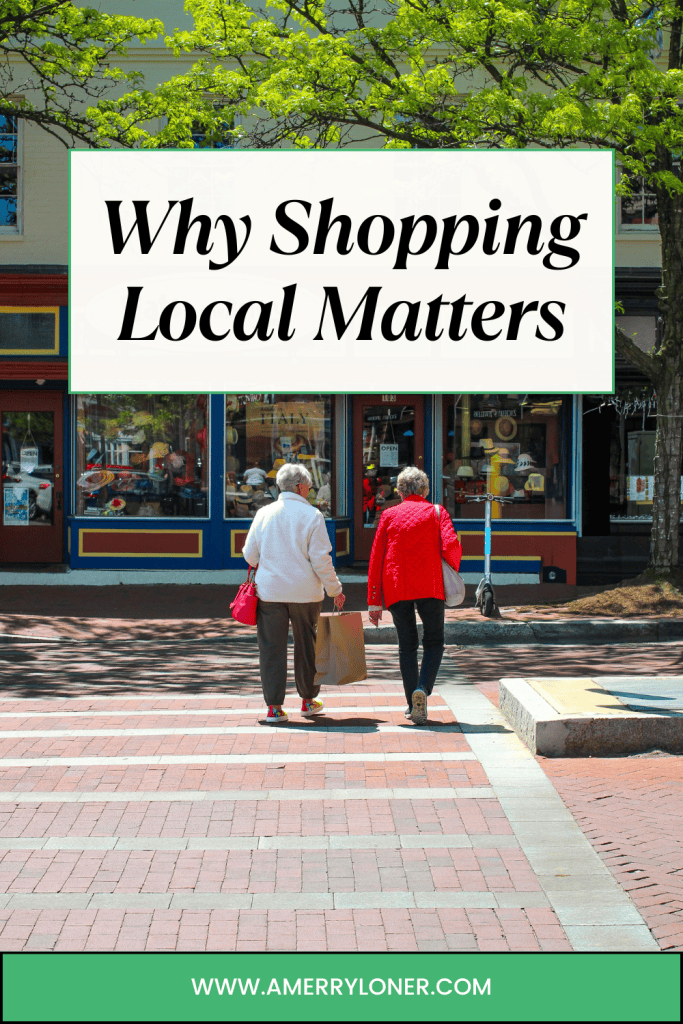
      8 Easy, Affordable Ways to Support Local Businesses—and Why It’s Important

      Shifting just a few purchases to locally owned stores makes a difference as we fight the good fight against mass production and megacorporations.

      In the last quarter of 2025, in a turn of events that stunned no one, OpenAI announced its move towards agentic commerce, allowing U.S. ChatGPT users to buy items directly in the chatbox.

      As an aside, let’s not forget that ChatGPT’s self-proclaimed mission is “to ensure that artificial general intelligence benefits all of humanity.” How encouraging people to buy more things they likely don’t need benefits humanity is beyond me. But what do I know? 

      Embarrassingly for Mr. Altman, ChatGPT apparently isn’t even useful for shilling products. Per researchers at the University of Hamburg and the Frankfurt School of Finance & Management, organic Large Language Model traffic (oLLM) traffic performs “below all other traditional channels,” save paid social. 

      But I digress. 

      While I love to roast Big Tech and drone on about the environmental and humanitarian implications of shopping via Amazon Prime, today, as for all days, the focus is on what small steps we can take to make life more enjoyable. 

      One easy but impactful way to support your community and your own wellbeing is to shop local—and you don’t have to break the bank or otherwise inconvenience yourself to do it. 

      Read on to learn 8 easy, affordable ways to support local businesses and why this matters.

      The shortlist: 8 ways to support local businesses (without spending a lot of money)

      The shortlist: 5 reasons why you should support local businesses

      Plus:

      5 ways to discover local businesses near you to break free from algorithm-led recommendations

      6 quotes to remind you to support local businesses

      2 quotes to inspire you to keep going with your own project (even if it feels like you’re not getting anywhere right now)

      What does mindful consumption have to do with being a merry loner?

      A lot, actually. I don’t buy to impress, fit in, or keep up with the trends. Instead, I vet, research, and ruthlessly scrutinize brands and products so I only take home what truly adds value to my space and my life. Above all, I focus on buying less, but better.

      ​

      Sign up for A Merry Loner’s weekly newsletter, and I’ll share my hand-picked recommendations on ethical brands, Amazon alternatives, and artful products that make life simpler, less wasteful, and more enjoyable.

      ​

      You’ll also get notes about books, analog living, and solo travel—the pillars of the Loner Mindset.

        I respect you and your inbox. No SPAM. You can always unsubscribe if you change your mind.

        How to support local businesses

        Shopping local seems pretty easy. Buy from shops near your home, right? Not really. 

        Most of the brands we touch on a regular basis can all be traced back to a few megacorporations: 

        • “A handful of corporations control the majority market share of almost 80% of dozens of grocery items bought regularly by ordinary Americans,” reveals a joint investigation by the Guardian and Food and Water Watch.

        • More of a visual learner? Good created a fantastic infographic that shows how just ten companies own pretty much all the food and beverage brands we know and buy. 

        • If you’re into videos, check out political economist Jennifer Clapp’s presentation at Duke’s World Food Policy Center on concentrated corporate power in food systems and why it matters.

        I’m not saying we should all become homesteaders and start making our own toothpaste and milk. But shopping local when and where you can is a low-lift way to support your local community and put money in the pockets of families trying to make a living—not in the clutches of megacorporations and their shareholders.

        And it doesn’t have to inconvenience you or cost you more money. 

        Try these 8 simple swaps to support local businesses in your community:

        1. Buy coffee beans or grounds from a local shop instead of a grocery store

        Instead of giving your money to Stop & Shop (AKA Ahold Delhaize, a Dutch-Belgian multinational retail and wholesale holding company), why not give it to the small business owner running the local coffee shop down your street? 

        It’s an easy swap in your weekly routine. Beyond supporting your local community, you get something out of it too: social connection. 

        Rather than mindlessly adding beans to your virtual cart or scanning your way zombie-like through self-checkout, you can meet your local barista. 

        And because coffee is a consumable, you’ll soon become a regular at your local coffee shop, filling up on freshly ground beans and low-effort, but comfortably familiar conversation with your local baristas. 

        Key takeaway: By buying beans from a local coffee shop instead of a corporate grocery store, you support a small business and build ties with your community.

        There’s big power in small talk. 

        During the pandemic, I quit my desk job and worked as a barista for a year in my neighborhood coffee shop. Within a few weeks, I knew almost every regular (and their drink order) by name—and I became friends with many of them. 

        We went to dinner together, hosted parties, and exchanged masked-up, over-the-counter hugs when one of us was having a bad day. (In 2020—2021, it was often that one of us was having a bad day.) 

        The interactions were small and surface level at first, but all those tiny, consistent conversations built up over time. After that, Main Street wasn’t just somewhere I ran errands; it was a lively community full of familiar faces.

        Not a coffee drinker? What about fresh tea leaves instead?

        If your local coffee shop doesn’t sell tea, you have other options. 

        They may not be local to you, but these ethical tea companies prioritize workers’ rights and environmental protection (which can’t be said for just any tea brand you see on the grocery store shelf).

        2. Get groceries at your local farmer’s market

        If you’re already buying coffee from a local shop, take things up a notch by doing some of your weekly grocery shopping at the local farmer’s market. 

        Obviously, you’re still going to need to head to a big-box store for staples like toilet paper and sponges. But when it comes to actual food (e.g., milk, fruits, vegetables, bread, etc.) you can get most of it from a local seller. 

        And once you go farmer’s market, you won’t want to go back to grocery store tomatoes:

        “Produce from local farmers has spent more time on the vine, on the tree or in the ground, so you get better taste and more nutrients,” Melinda Cater, MS, RD, CSG, LDN and Clinical Dietician II at Sibley Memorial Hospital told John Hopkins Medicine. 

        Browsing the stalls at your farmer’s market also gives you a chance to meet and mingle with your community, something we all need more of nowadays. 

        Key takeaway: When you shop at your local farmer’s market instead of your big-box store, you not only support and participate in your local community, you get to eat tastier, healthier food, too.

        Getting involved in your local community makes life more enjoyable. 

        But it can be nerve-wracking to introduce yourself to strangers and initiate conversations. 

        Don’t have the courage to try new things by yourself? You can build it. Sign up for A Merry Loner’s 7-Day Do Things Alone Challenge to build your self-confidence and reduce social anxiety.

        3. Buy books from a local, in-person bookstore

        This is one of my favorite ways to support local businesses, and IMHO, it’s the easiest way for beginners to get started shopping local. 

        Why? Because whether you order a book from Amazon or pick it up from your local bookstore, the end product is exactly the same. 

        But instead of giving the gazillion-dollar company even more money—and funding a business that puts workers’ health at risk, barely pays them a living wage, and lets them get injured on the job—you’re supporting a person making a living in your local community. 

        Plus, isn’t it just delicious to spend some time wandering the shelves of a bookstore?

        I’d say it’s much more pleasant than clicking ADD TO CART and getting bombarded by notifications, ads, and emails pressuring you to buy more things you don’t need. 

        Key takeaway: Shopping at your local bookstore keeps money in your community instead of sending it to Jeff Bezos. And you still get exactly the same product.

        Can’t find the book you want in your local bookstore?

        Your local bookstore owner is usually more than happy to order it for you. 

        If you really can’t find what you need and want to order it online but stay away from the big, bad Amazon, try these affordable alternatives to Amazon.

        4. Shop clothes from local boutiques instead of name-brand stores or online

        I don’t think I need to tell you that fast fashion is one of the worst things to come out of the 21st century. 

        But let me jog your memory anyway: 

        • 60% of textiles contain microplastic, which can accumulate in soil and groundwater when textiles decompose in landfills. In fact, 11% of all plastic waste comes from clothing and textile, making it the third biggest contributor. SOURCES: U.S. Government Accountability Office and United Nations News

        • The fashion industry consumes 86 million Olympic-sized swimming pools of water per year. SOURCE: United Nations News

        Of course, the best way to fight fast fashion is to simply buy less. 

        The next best thing we can do is buy better by shopping second-hand and/or local.

        • Shop from second-hand stores. It’s a win-win. You help eliminate fashion waste instead of contributing to it, and you’re supporting a small business at the same time.

        • Visit a local tailor. Ask them to transform an article of clothing you own or thrifted into something new. Or buy fabric and commission something from scratch. Instead of funding Zara, you’re supporting local artisan with an amazing skill. 

        • Go to a local boutique. The clothes may be new, but you’re putting money in the hands of a local shop owner in your community instead of H&M, and that’s what matters most.

        Key takeaway: Buy your clothes from small businesses by shopping at thrift stores and locally-owned boutiques. You can even bring fabric to your local tailor and ask them to create a bespoke piece for you.

        Fashion is fun. It’s not your fault we got to this point. 

        Everywhere we look, we’re being pressured to buy more. It can be hard to fight it. 

        That’s why I wrote this post on How to Stop Wanting Things to help you kill the desire to consume, once and for all.

        5. Eat at local restaurants instead of chains

        Locally owned restaurants bring so much to their communities.

        I’m sure we’ve all driven by a once-favorite local restaurant that went belly up when their lease expired or they just couldn’t fight the corporate competition anymore. Only when we see the gray husks of their storefronts do we realize how beloved a presence they were in the local lore. 

        Don’t let these folks go out of business. 

        • Instead of getting your daily coffee fix from Starbucks or Dunkin’ Donuts, visit your local café.

        • Instead of ordering Uber Eats from Domino’s Pizza, go to your local pizza guy down the block for a box. 

        Key takeaway: Locally owned restaurants add energy and spirit to your community. Skip corporate chains that make you order on a screen and settle into a mom-and-pop booth instead.

        Why not take yourself on a date to your local pub this week? 

        Back when I lived in Providence, Rhode Island, I was a regular at Harry’s Burger Bar (one of the many delightful bars in Providence). Every Tuesday night, I’d settle in with a book, a burger, and a beer for some quality time with myself. 

        It was a date I never skipped—but I know eating alone can feel weird for a lot of people. 

        Sign up for A Merry Loner’s 7-Day Do Things Alone Challenge to learn how to own the power of being alone so you can stop waiting on others to enjoy your life.

        6. For gifts, check out local shops instead of ordering online

        Another easy way to support local businesses instead of buying more useless plastic trinkets made by unfortunate, overworked souls in an overseas factory: go to local shops and boutiques for gift-giving. 

        There are so many great, handmade wares to buy to support a local artisan and business instead of a factory and a robber baron, like:

        • Handmade pottery from a local studio

        • Flowers from a local florist

        • Sweaters from a local knitting shop

        • Paintings from a local artist

        • Beer from a local brewery

        • Honey from a local farmer

        • Pretty soap and bath things from a local craftsman

        Key takeaway: Don’t default to Amazon when it’s time to buy gifts for loved ones. Instead, head to local shops for handmade goods made from local artists and tradespeople.

        Know a fellow self-care fiend? 

        Create a locally sourced self-care gift basket with local honey, flowers, soap, and the like. 

        Then slip in my Ultimate Guide to Self-Care with 100+ ideas to take care of yourself.

        7. Follow local businesses on social media—and tell friends

        If you’re not ready to spend any money, don’t. (Although I know this is often a lot easier said than done.)

        You can still support local businesses without whipping out your wallet. Often, the best way you can help a small business is by simply spreading the word. 

        • Did your local barista make your latte just the way you like it? Leave the coffee shop a review on Google so more people can find them. 

        • Did you buy delicious fresh vegetables or flowers at your local farmer’s market? Tell a friend about it. Better yet, invite them to join you next week. 

        • Did you discover the perfect burrito at a joint around the corner? Follow them on social media and tell your coworkers about it. 

        Key takeaway: Support doesn’t always have to mean money. Help your local business owners keep their shops going by spreading the word at work, with your friends, and online.

        Did something in this post spark a new idea? Give you a different perspective? Make your day a little brighter? 

        Tell a friend. You can simply share this article with them.

        Better yet, send them to A Merry Loner’s newsletter so they can also get ideas to enjoy their own company (and their life) more.

        8. When in doubt, ask yourself: “Is there a local business I can buy this from instead?”

        Buying beans from a local coffee shop. Shopping from local bookstores instead of Amazon. Eating at mom-and-pop restaurants instead of chains. 

        These are just some ways you can shop local. Once you get in the habit of it, it becomes a lot easier and more obvious to find other ways to support local businesses in your community. 

        Key takeaway: The next time you go to buy something online, stop and see if there’s a local business you can buy it from instead. Every purchase counts.
        Why support local businesses

        The jaws of Big Business are clamping down on us. 

        Doesn’t it feel like you need to create an account (and, in doing so, hand over your personal data) to buy pretty much anything online now? Corporations are squeezing us for fees wherever and whenever they can. All the while, quality seems to be tumbling fast. 

        When you support local businesses, you not only enrich your community and keep money in the hands of working people, but you fight the good fight against the megacorporations intent on owning it all. 

        More reasons to support local businesses in your town:

        1. You keep money in your local community

        When you buy from a local shop, you keep your money in your community instead of sending it to distant shareholders. 

        This does two good things for your community. 

        First, it keeps your town thriving, economically. I don’t think we need to get in the weeds about this. You know that when you shop from local businesses, you help keep them in business. That keeps families in your neighborhood making it money; it keeps tax dollars going back to your town and state; and it keeps money flowing to your local schools, libraries, and other public services. 

        Actually, even without getting taxes involved, most small business owners are committing to giving back to their communities, all on their own. 

        According to the Small Business Index from the U.S. Chamber of Commerce, nine in 10 small business owners “believe that businesses should give back to their local communities.” Eight in 10 believe that giving back to their local community is part of their business’s mission. 

        Keep an eye out for that philanthropy. It’s in more places than you think. 

        When I went to see a production of The Nutcracker at the Providence Performance Arts Center, I remember flipping through the program to the sponsors page. It was full of small businesses I recognized: a local pizza shop, my favorite local brewery, a crowd-pleasing Italian restaurant. All supporting art in the community. 

        Does Amazon support art in your community?

        2. You build your community’s cultural identity

        What’s the second good thing about keeping money in your local community? 

        It keeps it thriving, culturally. 

        I grew up in East Greenwich, Rhode Island, which has a lively Main Street full of restaurants, coffee shops, art galleries, and boutiques. But during tough times, some of those shopfronts become barren. 

        It’s always a sad sight to see. Less friendly chatter on the sidewalks. Fewer smiling faces walking down the street with takeout coffee in one hand a dog leash in the other. 

        That’s what happens when people order their books from Amazon instead of buying from local bookstores or when they auto-subscribe to coffee beans from Amazon instead of meeting their local barista once a week for a freshly ground bag. 

        And no surprise, a culturally vibrant place—not one dominated by big business—is where most people want to live. 

        • Americans are willing to spend an extra $150 per month (and travel up to 30 minutes) to keep their local shops in business. 

        • Nearly 75% say they appreciate their local shops more since the pandemic. SOURCE: Faire

        Eight in 10 (82%) say small businesses positively impact peoples’ lives—only four in 10 people say the same about large businesses. SOURCE: Bentley University

        3. You (usually) get better customer service

        When you interact with a megacorporation, you are but one among thousands if not tens of thousands or even millions of customers. You are not special to them. 

        After all, just think back to the last interaction you had with customer service for a big-name store. 

        Were you even talking to a human? Or did they siphon off your concerns to an (unhelpful) AI chatbot? These days, it seems big business don’t even deign to speak to us. 

        When they do, they don’t make it easy. How many times have you wasted hours of your day waiting on hold, exchanging useless emails, and all but begging to get help from a compassionless corporate portal? 

        Compare that to communicating face to face with an actual person in a real-life shop. 

        I’ve been the customer of many small businesses where the owner or employee clearly went out of their way to help me. Not because they had a middle manager breathing down their neck or tracking software watching their every move. 

        But because they were one person talking to another. And once you strip away the chatbots and automated workflows and the never-ending customer service queues, we can remember that other people are generally nice.

        That time the local barista did me a solid.

        When I was a teenager, I always used to study in the local coffee shop. 

        One day, after settling in with my books and laptop, I approached the counter to order a coffee. 

        My peppermint mocha or whatever the hell teenage, pre-coffee-drinking Merry was into was already in my hand when it was time to ring up. 

        But my debit card didn’t work, and I didn’t have any cash. 

        I handed the cup back and awkwardly said, “Sorry, I can’t pay for this.”

        But the barista just waved his hand and told me don’t worry about it, to keep the drink anway—and let me sit there for hours on the couch and study.*

        Think that would happen in a chain store?

        *When my mom arrived a few hours later to pick me up (this was pre-driving days), she handed me a $20 to put in the tip jar, along with my profuse gratitude. 

        Don’t forget to pay the good deeds forward.

        4. You support skilled artisans instead of mass production

        When you shop locally, you can more directly give your money to talented artisans—instead of trusting corporate structures to let it “trickle down” to the people doing the actual crafting. 

        That’s why I chose to commission a handmade trench coat from a local seamstress instead of buying one from a luxury brand: 

        Last year, I wanted to buy a trench coat. I was prepared to invest because I saw this as a forever item. 

        So intent was I on buying classic and quality, I even briefly considered splashing out on a Burberry trench coat that costs somewhere in the insane realm of $1,000. 

        But when I went to the store to try it on, I was underwhelmed with the fit and the fabric. 

        “I’m willing to spend on an investment, but only if it’s perfect and I love it,” I told a friend. 

        The Burberry trench coat, a major (and majorly expensive) name brand wasn’t cutting it. 

        “I know what I’ll do. I’ll ask the seamstress who made my wedding dress.” 

        The woman who made my wedding dress has a God-given talent. Not only did she make an absolutely divine dress off little more than a grainy picture I gave her, she didn’t even charge me for the fabric. 

        I had wanted an all-lace dress, which would normally double the price of the garment. But she had leftovers from a fancy gown she’d made for someone else, so she gave it to me for free. 

        Remember what I said about small businesses providing better customer service? 

        What she did with the trench coat was even more impressive. 

        All I did was show her a picture of a style I liked. Within a week, I had the coat in my hands. 

        It fit my body like a glove. It had the printed silk lining I chose. And it even included an inside breast pocket that I requested (because why don’t women’s clothes ever have this?). 

        Yes, it was expensive. (I paid her 600€, and I believe I spent about 150€ on fabric and notions.) But with her incredible talent, artistry, and craftsmanship, she deserved every penny. 

        And I would gladly give my money to a hardworking, skilled artisan over a global corporation any day.

        5. You give money to working people instead of celebrities and billionaires

        Jeff Bezos doesn’t need your help. 

        Nor do the Waltons (of Walmart). Nor does the Bettencourt Meyers family of (L’Oréal). Nor does Hailey Bieber or George Clooney or any of the Kardashians. 

        Perhaps the most important reason to support local businesses are the people at the receiving end of those purchases: the people in your community. 

        • The artist mustering the courage to publicly display their work. 

        • The restaurateur putting all their savings into their dream venture. 

        • The coffee shop owner who commits to waking up at 5AM every day because they’re still a one-person show. 

        Wouldn’t you prefer to give them some of your hard-earned money? Instead of adding to the accounts of celebrities, millionaires, and billionaires?
        How to discover local businesses near you

        It might seem obvious, but since we’ve become so used to tuning into the algorithms and distant influencers for recommendations, it can actually be hard to find local shops near us, especially if they don’t have a huge online presence. 

        Here are a few fast ways to discover local businesses in your community:

        1. Google Maps

        Easy enough, right? Open your phone app and search for what you need: coffee shops, restaurants, bookstores, boutiques. 

        Of course, you can just do a basic Google search, but that’s usually going to pull in a lot of online stores with big Internet presences optimized for SEO—not what we’re going for here. 

        To discover local mom-and-pop restaurants and small-town boutiques without fancy websites, Google Maps can help you tune out the SEO noise and see what’s really going on close to home.

        2. Instagram

        This one’s a little bit tricky, a little bit more cluttered, and honestly, not my favorite. But if visuals are what stimulate and entice you, then head here to discover local businesses near you. 

        Simply open up search and type in the name of your town. 

        You’ll likely find some mildly entertaining but largely unhelpful Reels. But through that chaos you can sometimes find small town guides created by locals or travelers, highlighting the local businesses that don’t optimize for Google Search.

        3. Local business directories

        I like this because it’s less flashy and more to the point. 

        Most towns and cities maintain a public list of registered businesses—which you can use as your very own local shopping guide. 

        Just go to Google and type: “[insert town name here] business directory.”

        Because my home state, Rhode Island, is so small, I made the search a little broader. Here’s some of what I found:

        Voilà, easy-to-read, well-organized, no-fuss lists of the local businesses in your community.

        4. Bulletin boards in local spaces

        Trying to live a more analog life? One where you don’t turn to the Instagram and Google overlords for every decision you make in life? 

        Me too. I tire of the scrolling and algorithm gatekeeping, which is why I’m making a pointed effort lately to live life in the real world. And that includes shopping. 

        If you want to find local businesses in your community, then start by getting out in your community. 

        Head to a local coffee shop, town hall, library, or another public meeting place. More often than not these spaces have bulletin boards overflowing with business cards, flyers, and pamphlets for local events, classes, and businesses in your community. 

        While you’re in the building, don’t forget to smile at people, hold the door for strangers, and practice a few other basic pleasantries that make life nicer for all of us.

        Looking for more ways to go analog? 

        With so much pressure to digitize and automate, it’s no longer always intuitive to live an analog life. 

        Try these five simple swaps to bring analog living into your daily routine, without spending a lot of money or otherwise inconveniencing yourself.

        5. Asking people

        Of course, the best way to get in the know about your local community is to ask your local community. 

        The next time you head out for a coffee, you get your oil changed, or you mail something at the post office, ask the person behind the counter: 

        • “I’m looking for a new restaurant to try this weekend? Anything good near here you can recommend?” 

        • “I’m trying to wean off of Amazon Prime. Do you know any local bookstores in the area?”

        • “I want to pick up some flowers on the way home, but I don’t want to go to Stop & Shop. Is there a local florist near here?” 

        Unsurprisingly, people who live in your community will know more about it than Google does, which gets easily duped by strategically optimized websites and sponsored placements. 

        Plus, you’re actually interacting with a person, not an algorithm. And isn’t that the whole point?

        Does it feel weird asking a perfect stranger such a question? 

        For some people, it really does. But it doesn’t have to be that way forever. 

        If you want to build your self-confidence, reduce social anxiety, and get more comfortable speaking up alone in public, we can work on it together. 

        Sign up for A Merry Loner’s 7-Day Do Things Alone Challenge, a comfortable, nonjudgmental email challenge that helps you own the power of being alone.
        Support local business quotes

        When it feels easier to default to Amazon Prime or order online from Starbucks, remind yourself why it’s worth walking that extra block to the local bookstore or coffee shop. 

        Plus, two quotes to inspire you to keep working on your small business venture, even if it feels like an uphill battle against the big guys: 

        “Every purchase you make is a vote for the world you want to live in.”

        Speaker: Anna Lappé, author and educator (1973—)

        “A small business is an amazing way to serve and leave an impact on the world you live in.”

        Speaker: Nicole Snow, contemporary romance author (unknown)

        “Support your friend’s business and progression like you support the celebrities that you actually don’t know.”

        Speaker: Anonymous

        “Shopping locally is an act of love for your community and the people who make it special.”

        Speaker: Dolly Parton, singer, songwriter, actress, philanthropist, businesswoman (1946—)

        “People do not buy goods and services. They buy relations, stories, and magic.”

        Speaker: Seth Godin, author and marketer (1960—)

        “Giving a gift from a small business is giving a gift twice.”

        Speaker: Anonymous

        “Don’t be intimidated by what you don’t know. That can be your greatest strength and ensure that you do things differently from everyone else.”

        Speaker: Sara Blakely, businesswoman and philanthropist (1971—)

        “Dream big, start small, but most of all, start.”

        Speaker: Simon Sinek, author and inspirational speaker (1973—)

        Conclusion: Supporting local businesses is an act of love, to yourself and your community.

        Overconsumption is tiresome. Everywhere we look, we are being encouraged to buy, subscribe, upgrade.

        In the fight against materialism, it often feels like we just can’t win.

        Foregoing buying new goods altogether is too difficult if not impossible—and also, a little pointless. (Who says we can’t treat ourselves to something new once in a while?) But ordering everything from Amazon feels soul-sucking and sad.

        Buying from local businesses, instead, feels nourishing. 

        We nourish working families in our town, instead of celebrity brands or billionaires. We nourish our communities, keeping the streets full with locally owned restaurants, flower shops, and bookstores. And we nourish ourselves, filling our homes with wares dreamed up and crafted by artisans. 

        We don’t have to buy everything from local businesses; that’s often not realistic. But shifting just a few purchases to locally owned stores makes a difference as we fight the good fight against mass production and megacorporations.

        It’s one small, artful battle after another.

        Next Steps:

        Start small. Pick one category (like coffee or books) and start buying from a local business instead of a Starbucks or Amazon. 

        Spread the word. Try a new local restaurant that you love? Tell a friend or invite them to join you next time. Then, send them this blog post so they can get more ideas to support local businesses. 

        Track your purchases. Whipping out the credit card is so easy, it’s hard to keep track of where our money goes. Sit down, go through your bank statements, and review the last month’s purchases. Then, make a list: What did you order from Amazon? And what can you purchase from a small business moving forward instead?

        Use the image below to save this post to Pinterest so this list is there when you need it.
        How to Support Local Businesses (and Why): Common FAQs

        Why is supporting local businesses important?

        Supporting local businesses is important for two main reasons: it keeps money in your local community and it builds your community’s cultural identity. Shopping at local businesses also helps support local artisans and craftspeople, honoring people doing the real work instead of corporations churning out mass production.

        Does Amazon support local businesses?

        Not really. Some people argue that small business owners can expand their reach beyond their local community by promoting their products on Amazon—but they pay a pretty penny for doing so. A study from Marketplace Pulse revealed that Amazon takes more than 50% of sellers’ revenue due to an intricate web of fees, e.g., transaction, fulfillment, and advertising. 

        So even if you’re buying a small business on Amazon, you mostly end up supporting Amazon and its shareholders—not the small business.

        What happens when you support local businesses?

        When you shop local, you help working families in your community make a living; add money to your local economy; and you invest in the character and cultural identity of your community—because every purchase that stays local is a vote for the kind of world you want to live in.

        How does supporting local businesses help the community?

        It keeps money in your local community instead of sending it to celebrities’ or billionaires’ global brands. This way, your money can stay local, keeping your neighbors employed, your public services funded, and your culture thriving.

        Picture of Merry

        Merry

        Merry is the blogger behind A Merry Loner, a full-time freelance writer, and a lifelong bookworm. Since kindergarten, it was her dream to become a novelist. (She likes to think she’s headed in the right direction.) Born and raised in Rhode Island, where she earned a triple-major BA in writing, communication, and French from the University of Rhode Island, she moved to Toulouse, France after the pandemic to complete a master’s in creative writing at Univeristé Toulouse Jean — Jaurès. She now lives in Paris with husband.

        Discover how the merry loner lifestyle makes life more enjoyable:

        LONER MINDSET: fresh perspectives on learning to genuinely enjoy your own company

        BOOKS: reading lists for people who love being alone with a good story

        ANALOG LIVING: inspiration to step back from the screen and live a life offline

        SOLO TRAVEL: guides on where to go and how to enjoy it alone

        MINDFUL CONSUMPTION: vetted recommendations for a simpler, less wasteful life

        LONER Q&As: interviews from global voices on how to live a meaningful, enjoyable life
        Feeling Lonely? Stressed? Overwhelmed? Bored?

        I believe a happy life begins with learning to enjoy your own company. Because when you can be happy on your own, you can do anything.

        A Merry Loner’s newsletter gives you ideas to make your own company (and your life) more enjoyable.

        Sign up and join 504+ merry loners.

          I respect you and your inbox. No SPAM. You can always unsubscribe if you change your mind.

        • 5 Alternatives to Amazon for Books (and why I no longer buy books from Amazon)

          5 Alternatives to Amazon for Books (and why I no longer buy books from Amazon)

          Books shape how we see the world—and where we buy our books from literally funds the kind of world we’re creating. 

          I’ve already ranted about the problem with shopping on Amazon Prime and why I “broke up” with Jeff Bezos. 

          In the 5+ years since I’ve cancelled my Amazon Prime membership and given the entire online store the axe, I’ve done a lot of research on where to buy books online other than Amazon. 

          Turns out, it’s not that hard. It’s not expensive. And it doesn’t take extra effort from your end. But the social and environmental impact is real—and very worth it. 

          In this post, I share my top 5 favorite alternatives to Amazon for books—for everything from physical books, audio books, and ebooks to new and used copies with worldwide (free) shipping.

          I also share the 3 main reasons why I stopped buying books (and everything else) from Amazon and why you might want to consider doing the same. 

          The shortlist: where to buy books online other than Amazon

          1. Bookshop.org—if you want to support indie bookstores

          2. Your local library—If you want to find free books and audiobooks

          3. Better World Books—if you want to support a charitable company 

          4. Book Outlet—if you want to shop discounted books

          5. Barnes & Noble—if you want the ease of a national chain

          What do books have to do with being a merry loner?

          Books are natural companions for merry loners. We love being alone with a good story—and we don’t need a book club to enjoy it.

          Sign up for A Merry Loner’s weekly newsletter, and I’ll share classic and contemporary book recommendations, themed round-ups, and book lists of what I’m reading, what I’ve read, and what’s next on my bookshelf.

          You’ll also get notes about analog living, solo travel, and mindful consumption—the pillars of the Loner Mindset.

            I respect you and your inbox. No SPAM. You can always unsubscribe if you change your mind.

            My top 5 favorite alternatives to Amazon for books

            These are the options I personally use, love, and recommend to my friends and family around the world (spoiler: that’s a hint at good international shipping options). They’re not only good Amazon alternatives for books—they’re affordable, convenient, and much better for your conscience than lining the pockets of an already very rich man. 

            1. Bookshop.org—if you want to support indie bookstores

            When you go to Bookshop.org, their banner proudly affirms: “Every purchase financially supports local independent bookstores!” And who doesn’t love that? 

            Here’s how it works: 

            • When you go to Bookshop.org, you select a local, independent bookstore you’d like to support. 

            • You buy a book—easy, peasy. 

            • When you buy that book, Bookshop.org files the order—but the full profit from your purchase goes to the bookstore you selected. 

            If you don’t select a specific bookstore, no worries—you’re still doing some good. Bookshop.org will automatically put the profits of your purchase into their profit-sharing pool that helps the entire network of 2,000+ independent bookstores. 

            So far, the online shop has already raised over $39 million for independent bookstores. 

            As someone who wants to support small businesses and not contribute to the somehow still increasing wealth disparity in the USA, I like knowing that my book purchases are putting money in the pockets of independent bookshops—and I still get the convenience of shopping online. That’s why Bookshop.org is my favorite Amazon alternative for books.

            Right now, they only ship to the USA and UK (bummer, I know), but if that’s where you call home, I strongly recommend checking out this online B Corp bookshop. 

            Want to vet Bookshop.org for yourself? Check out their mission statement to see how they’ve managed to raise over $42 million for local bookstores.

            Key Takeaways: Why Bookshop.org is one of the best alternatives to Amazon for books

            • They’re a B Corp.
            • You can easily buy books online—while still supporting small, independent bookstores.

            2. Your local library—if you want to find free books

            In a world where an airport will sell you a bottle of water for $6, the fact that you have all the knowledge of the universe at your disposal for free is pretty remarkable. That’s your friendly public library I’m talking about. 

            I don’t think I need to tell you that you can get free books at your local library—but you might need a gentle reminder of all the other reasons libraries rock. 

            For another, these days, you can also borrow ebooks and audiobooks from your local library. If you have the Libby app or Hoopla app, all you have to do is input your regular library card number, and you can rent ebooks and audiobooks without even leaving your house. (And if you get stuck, your librarian can help you out.) 

            Though, otherly, you may want to leave your house. Libraries also serve as third spaces, which in our money-grabbing, digitally-obsessed society we are sorely in need of (and in short supply of). 

            ICYMI, third places were first defined by sociologist Ray Oldenburg. As explained by Allie Volpe for Vox: 

            “Third places are settings a person frequents beyond their home (the first place) and work (the second place). Third places can include more traditional settings like places of worship, community and recreation centers, parks, and social clubs, but also encompass bars, gyms, malls, makeshift clubhouses in neighborhoods, and even virtual settings like Nextdoor. As Oldenburg described them, third places are great equalizers, spots where regulars of different backgrounds and perspectives can mingle in a location that is comfortable, unpretentious, and low-cost.

            At the library, you can get all the books, magazines, and newspapers you want—no expectation to purchase anything. (Just please be quiet.)

            Key Takeaways: Why your local library is the best free Amazon alternative for books

            • You can borrow books, ebooks, and audiobooks—completely for free. 
            • It’s a peaceful, free third space that supports community. (And it might be the one place left in public where people aren’t allowed to play TikTok videos without wearing headphones.) 
            • Apps like Libby or Hoopla let you rent library books online and on the go. 

            3. Better World Books—if you want to support a charitable company

            Better World Books is an online new and used bookseller—and they’re a certified B Corp, which means they’ve been assessed and recognized for meeting certain social sustainability and environmental performance standards. 

            Beyond their status as a B Corp, Better World Books does plenty of non-profit work on their own. For example, for every book you buy, they donate a book to charity. To date, they claim to have donated over 38 million books. 

            I’m also big into literacy (in case you didn’t know, it’s an epidemic, with a new OECD survey reporting adult literacy skills are declining and stagnating around the world)—and Better World Books lends a hand there, too. Their annual literacy grants give money to literacy and educational nonprofits and libraries—yay.

            And for American and British readers, you can also turn to Better World Books for help taking your old books off your hands. They have hundreds of book drop boxes where you can easily donate your READ list when you’re done (before stocking up again from your current reading list). 

            But from the purely consumerist point of view, there are other reasons to buy from Better World Books instead of Amazon. They offer FREE worldwide shipping (and you don’t have to pay a subscription fee to get it, looking at you, Amazon Prime). 

            Key Takeaways: Why Better World Books is one of the best alternatives to Amazon for books 

            • They’re a B Corp.
            • For every book you buy, they donate one book to charities.
            • They fund literacy and educational nonprofits.
            • They offer FREE worldwide shipping.

            4. Book Outlet—if you want to shop discounted books

            Coming home with a fat stack of paperbacks and hardcovers is really exciting for your bookshelf—for your wallet, not so much. 

            While the library is an obvious go-to for budget readers, sometimes nothing beats the fresh, crisp page of an untouched book. (Plus, highlighting your favorite quotes and dog-earing the pages is a big no-no.) 

            For a budget-friendly alternative to shopping on Amazon, I like Book Outlet. The site manages to sell brand-new books at deeply discounted prices (like 50–90% off) because they’re overstock, AKA they’re brand-new books that just didn’t sell anywhere else fast enough. 

            This isn’t the place to go to if you’re looking for more rare or niche titles, but if you want to get New York Times Best Sellers for as little as $6.49, this is the place. 

            Plus, Book Outlet has a charitable side too, donating books and money to non-profit organizations like The Literacy Project, SickKids Foundation, and many others. They must not be a totally nefarious company, either, since they’ve been recognized as one of “Canada’s Best Managed Companies.” 

            Key Takeaways: Why Book Outlet is one of the best alternatives to Amazon for books

            • You get brand-new books at major discounts.
            • They offer easy, free shipping (for order $35+) to the USA and Canada.
            • They reward you for reading with their Book Outlet Rewards Program. 

            5. Barnes & Noble—if you want want the ease of a national chain

            I know why people buy books from Amazon. It’s fast, easy, and the shipping is reliable. (Although, guess what? All of that is true with other online bookstores, too.) So if you’re looking for somewhere to buy books online other than Amazon, you’re likely looking to stick it to the retail giant by opting for a smaller, more indie option. 

            But sometimes the ease of a national chain is too strong—and that’s when I turn to Barnes & Noble. 

            It’s a full-circle story, really. Barnes & Noble started as a small New York City bookstore in 1886 (then known as Arthur Hinds & Company). After a series of expansions in the 20th century when the bookstore changed hands a few times, it became the shopping mall mainstay many of us remember it as today in the ‘90s. 

            Amazon enters the scene. 

            By the 2010s, Barnes & Noble was suffering as IMHO everyone was all too happy with their new smartphones (it’s no coincidence to me that the first iPhone was released in 2008) to pick up a paperback. 

            But Barnes & Noble is back, baby. As reported by Alina Selyukh for NPR, the bookstore’s then-new CEO in 2023 was taking B&N back to its indie roots: 

            “The biggest change borrowed from the playbook of independent bookshops: Daunt gave local Barnes & Noble stores much more authority to order what their readers, in their area want to see.”

            Basically, you’ll find local recommendations, in-store events, themed displays, and that oh-so-wonderful smell of a fresh book that you just can’t get online. 

            It’s working. In 2024, Barnes & Noble opened 60 new stores and is set to open 60 more in 2025. 

            TLDR, this is why Barnes & Noble is one of the best Amazon alternatives for book lovers: 

            • They have a membership and rewards program, too. For premium members, that’s FREE shipping (no minimum purchase), 10% off almost all books, eBooks, and audiobooks, 1 free eBook per month, and a lot of other goodies. 
            • They give you community vibes + the easy access of a national chain. Each store includes customized selections and hosts in-person events.

            Why I stopped buying books on Amazon

            When I was in my early 20s, I used to shop from Amazon Prime, like a lot of other people. But then during the COVID-19 pandemic, I got to reading about Amazon’s poor labor practices, terrible impact on the environment, and the insane wealth of Bezos—and I quickly changed my mind. 

            These are the 3 main reasons I stopped buying books on Amazon: 

            1. Amazon treats their workers poorly

            After all, how do you think it’s possible to buy made-in-China, cheap, plastic, nonsense with a click of the button—and receive it on your doorstep in two days or less? 

            Because Amazon cares about making people buy things—and they don’t care about making other people do the back-breaking, low-paid labor to do it. 

            Amazon puts its’ workers’ health at risk: In six warehouses in Colorado, Idaho, and New York, the US Department of Labor found that Amazon exposed its workers to “a high risk of low back injuries and other musculoskeletal disorders” at six warehouses in Colorado, Idaho, and New York. Source: US Department of Labor

            Amazon barely pays its workers a living wage: In a national study conducted by the University of Illinois Chicago’s Center for Urban Economic Development, 53% said they’d experienced food insecurity in the last 3 months and 48% housing insecurity. 

            Another study by the US Government Accountability office “Amazon was among the biggest employers of people receiving food assistance in nine states that reported the data.” Source: TIME

            Amazon lets its workers get injured: In the same UCI study, 41% reported being injured while working at an Amazon warehouse, while 69% reported taking unpaid time off “due to pain or exhaustion from working at the company. Source: Center for Urban Economic Development

            Bottom line: Amazon puts their workers’ health and safety at risk—and they pay them an embarrassingly low wage in exchange. I don’t know about you, but I don’t want my book-buying to support that. Not when there are so many other places to buy books online other than Amazon. 

            2. Amazon is bad for the environment

            Those smiling cardboard boxes don’t just damage workers’ physical and financial health. They ruin the planet, too. 

            After all, how can a company that promotes egregious levels of consumerism and aggressive overproduction not spell disaster for waste and emissions? That’s because Amazon’s business model isn’t designed for sustainability or mindful consumption. It’s designed to get people hooked on buying so they buy more stuff, faster, and more often. 

            Spoiler: The environmental fallout isn’t worth the environmental consequences. 

            Amazon throws out 100,000s of products each week. According to reports from ITV, Greenpeace, Business Insider, and ZDF frontal, Amazon marked 200,000 products for destruction each week—that means they either get sent to the landfill or incinerated. Why? In short, Amazon values shelf space over product. In other words, all that burning and throwing away is just to increase profits. Source: Ethical Consumer

            Amazon’s fast shipping has a high carbon price. On Prime Day 2024 alone, Amazon was responsible for more than 1.2 million tonnes of carbon dioxide emissions. To put that in perspective, that’s the equivalent of the annual emissions of 68,000 Americans. Yes, all online shopping creates waste, but Amazon’s “Festival of Consumption,” as Kristin Toussaint dubs it for Fast Company, encourages gross levels of materialism that local business and indie bookstores simply don’t match. Source: Fast Company

            Bottom line: Amazon’s business model is built on convenience, not sustainability. The cheaper your package and the faster it arrives, the more environmental damage it causes. Is two-day shipping really worth it? 

            3. Do we really need to give Bezos more money?

            Wouldn’t you rather give your hard-earned dollars to someone else? 

            In the sickening sparring match of the century, Jeff Bezos and Elon Musk love to toggle back and forth for the title of richest person in the world. Right now, that title belongs to Musk, but the Amazon founder clearly isn’t hurting. 

            Here are a few gut-wrenching statistics: 

            • When Bezos spends $1.7 million, it’s like the average American spending $1. (Bear in mind that this comparison dates from 2018—the tycoon is even richer now.) Source: Inc. 

            • Bezos’s wealth is bigger than the GDP of Hungary. Source: Fortune

            • His wedding to Lauren Sanchez (the one for which he rented Venice) reportedly cost $40 million. Source: Reuters

            Bottom line: Whether or not you believe Bezos deserves every penny’s got, the fact remains: Other people need money. He doesn’t. The next time you trade your hard-earned dollars for a book, wouldn’t you rather support someone other than a billionaire? 

            Conclusion: Love books? Consider alternatives to Amazon

            Books shape how we see the world—and where we buy our books from literally funds the kind of world we’re creating. 

            When we default to Amazon out of habit or convenience, we support a system that undermines many of the values books invite us to embrace: empathy, integrity, and thoughtful living. 

            I’ve already broken up with Bezos. Is it maybe time for you to do the same? 

            No virtue-signaling here. You don’t have to go cold turkey or give up all your online comforts overnight. But small shifts matter. So why not start with books? 

            By choosing to buy your next book from a place that pays workers fairly, gives back to the community, and does more for the environment than make empty “climate pledges,” you put your money where your values are.

            And book by book, that adds up. 

            Next Steps:

            Browse ethical book-buying options. Check out my personal favorite alternative to Amazon: Bookshop.org—or visit your local in-person indie bookstore.

            Get your library card. Head into your local library. Then download the Libby or Hoopla app to start borrowing ebooks and audiobooks for free. 

            Find your next read. Browse my curated reading lists, including Books on Self-Awareness and Books for Existential Dread. 

            Read more intentional living posts. See more tips on how to live a simpler, less wasteful (but still enjoyable) life.

            Use the image below to save this post to Pinterest so this list is there when you need it.

            Amazon Alternatives for Books: Common FAQs

            What is the best alternative to Amazon for buying books?

            It depends on what matters most to you. If you want the convenience of online shopping while still supporting local, indie bookstores, Bookshop.org is a great option (and my personal favorite). 

            Are Amazon book alternatives more expensive?

            Not necessarily. A lot of online shopes (like Bookshop.org) are usually running at least one sale, so you can find the books you want for the same price, or even cheaper, than on Amazon—without feeding Bezos’s nasty machine.

            Can I still get fast shipping for books from non-Amazon sites?

            You sure can! My favorite website, Bookshop.org, offers the same two-day shipping as Amazon—though admittedly, it does cost a few bucks. On most other sites, you may have to wait more than Amazon Prime’s infamous two-day shipping—but when you consider the environmental, human, and charitable impact, the trade-off is worth it. 

            Picture of Merry

            Merry

            Merry is the blogger behind A Merry Loner, a full-time freelance writer, and a lifelong bookworm. Since kindergarten, it was her dream to become a novelist. (She likes to think she’s headed in the right direction.) Born and raised in Rhode Island, where she earned a triple-major BA in writing, communication, and French from the University of Rhode Island, she moved to Toulouse, France after the pandemic to complete a master’s in creative writing at Univeristé Toulouse Jean — Jaurès. She now lives in Paris with husband.

            Discover how the merry loner lifestyle makes life more enjoyable:

            LONER MINDSET: fresh perspectives on learning to genuinely enjoy your own company

            BOOKS: reading lists for people who love being alone with a good story

            ANALOG LIVING: inspiration to step back from the screen and live a life offline

            SOLO TRAVEL: guides on where to go and how to enjoy it alone

            MINDFUL CONSUMPTION: vetted recommendations for a simpler, less wasteful life

            LONER Q&As: interviews from global voices on how to live a meaningful, enjoyable life
            Feeling Lonely?

            I believe a happy life starts with learning to love your own company.

            Every week, I write a newsletter with notes on books, analog living, solo travel, and mindful consumption—the pillars of what I call the Loner Mindset.

            Because when you can be happy on your own, you can do anything.

              I respect you and your inbox. No SPAM. You can always unsubscribe if you change your mind.

            • The Anti-Gift Guide: What NOT to Buy This Holiday Season

              The Anti-Gift Guide: What NOT to Buy This Holiday Season

              Gifts that look good, feel good, and DO good.

              It’s that time of year again. When every brand you’ve ever interacted with (if only via a few, long-ago clicks) begins force-feeding you a list of “must-haves” for the holiday season.

              Things you need. Things your mom needs. Your partner needs. Your best friend needs. But you know what they’re not telling you? You don’t need it.

              Really. You don’t need more plastic. You don’t need more expensive, poor-quality clothes you’ll forget about come springtime. And you don’t need yet another useless trinket that’s just going to sit on your shelf and collect dust, unforgotten for a few years until it hits the landfills.

              I get it. I’m no scrooge. People like to exchange and share and generally spread merriment. I’m all for that.

              But before you click ADD TO CART for these classic holiday gifts, maybe do a double-take. Can you find a more ethical, more minimalist version instead?

              Here are 5 gifts NOT to waste your money on this year—and better, less-evil alternatives.

              The shortlist: what NOT to buy this holiday season (& what to consider instead)

              1. Books from Amazon >> local, independent bookstores, instead

              2. Sweaters made out of plastic >> handmade, woolen sweaters from Ireland

              3. Cutesy mugs that no one ever uses >> fair-trade, organic tea

              4. Personal care products that pollute the environment >> certified organic options instead

              5. Any random, unnecessary material good >> the gift of knowledge and inner peace

              What does mindful consumption have to do with being a merry loner?

              A lot, actually. I don’t buy to impress, fit in, or keep up with the trends. Instead, I vet, research, and ruthlessly scrutinize brands and products so I only take home what truly adds value to my space and my life. Above all, I focus on buying less, but better.

              ​

              Sign up for A Merry Loner’s weekly newsletter, and I’ll share my hand-picked recommendations on ethical brands, Amazon alternatives, and artful products that make life simpler, less wasteful, and more enjoyable.

              ​

              You’ll also get notes about books, analog living, and solo travel—the pillars of the Loner Mindset.

                I respect you and your inbox. No SPAM. You can always unsubscribe if you change your mind.

                1. Books from Amazon

                If you haven’t already heard, one of the soapboxes I step up onto from time to time is: Can we please pay more attention to the (many) problems of shopping with Amazon Prime? 

                Consider this:

                Amazon workers are physicall suffering. 42% of Amazon warehouse workers report physical pain, psychological pressure, and poor sleep, according to one survey cited by The Guardian.

                Amazon’s carbon emissions are through the roof. 2022 Prime Day ALONE accounted for more than 1.2 million tonnes of carbon dioxide emissions. Fast Company says that’s “equivalent to the annual emissions of 68,000 Americans.”

                Amazon is serioulsy lacking in the ethics department. “Toxic” and “brutal business practices.” That’s just the surface level of  Vanity Fair’s deep dive into the nefarious online shopfront.

                Why not support local bookstores, instead?

                Spoiler: Books cost pretty much the same no matter where you buy them. This holiday season (and beyond), I strongly encourage you to consider shopping from your local bookstore instead of Bezo’s big bad machine.

                If you can’t find what you need in a physical store-front, I love Bookshop.org. Every time you buy a book, the profits of your purchase go into their profit-sharing pool that supports a network of 2,000+ independent bookstores. 

                Other cools things about Bookshop.org:

                They put their money where their mouth is. To date, they’ve raised over $43 million for local bookstores.

                They’re not evil. They’re B Corp™ certified, which basically means they’re recognized for social and environmental performance, transparency, and accountability. 

                They’re committed to staying independent. Per their mission statement: “It is written in our governance documents that we will never sell the company to Amazon or any major U.S. retailer.”

                Now really, what’s the excuse for turning to Amazon instead?

                Ready to give?

                Find gift-giving inspiration from my 2025 reading list—shelved:

                Key Takeaways: Why Bookshop.org is one of the best alternatives to Amazon for books 

                • They’re a B Corp.
                • For every book you buy, your purchase directly supports local independent bookstores.
                • They’re a Climate Neutral company.

                2. Sweaters made of plastic

                Sadly, it’s the truth. Not to sound like your grandma, but they just don’t make things like they used to—and that sure as hell goes for clothes. 

                Today, even many expensive clothes are significantly inferior in quality than were their counterparts a few decades ago. 

                Amanda Mull for The Atlantic wrote a fantastic article about the degrading quality of clothes, knitwear in particular, in which she explains why our sweaters these days are “garbage.”

                Hanna Rosin continued the conversation with Mull in a succeeding podcast. For those interested, here’s the transcript.

                “In sweaters…you’re getting a lot of what is essentially plastic. That will show up on fabric labels as polyester or polyamide or acrylic. That’s what you’ll usually find in sweater weaves.”

                How are we supposed to buy sweaters now?

                Reject crappy, mass-market labels, and seek handmade, high-quality wares from small businesses instead. Think wool, cashmere—even cotton, if you want a lighter weave. 

                AKA stop buying sweaters made of plastic. Here’s how:

                If you love to shop: I advise you head to your local flea markets or second-hand shops, where you’re more likely to dig up vintage finds made from…ya know, actual fibers (i.e., not plastic). 

                If you’re like me and you hate the hunt for clothes: I’ve got a shortcut: Aran Sweater Market. They’re a small business in Ireland that makes tweed and wool-woven products.

                My husband and I own a few of their sweaters, and we’re even buying a few as gifts this year for others. We like them because:

                • They’re warm.
                • They’re affordable. 
                • They’re high quality and plastic-free. 
                • They’re a small business.
                • They have great customer service.
                • They ship quickly.

                (I’m not an affiliate. I just want to help people stop wearing plastic.)

                3. Another cutesy mug that’ll never get used

                You’ve given them. You’ve received them. 

                Mugs are a go-to gift, making regular appearances at Yankee Swaps, office holiday parties, and once-a-year gatherings with your most distant family members. 

                But be honest: Do they ever end up getting used? Or are they more likely relegated to the back corner of your cupboard, where they bide their time until you eventually move, declutter, or re-gift them to someone else? 

                This year, cut the waste (and the clichés) by skipping the basic mug gift. 

                Instead, if you’re intent on giving a beverage-themed gift, how about some fair-trade organic tea? Think:

                I give more research-backed recommendations on how to choose the right tea to give to a non-tea-drinker, plus tips on how to swap your coffee habit for tea:

                4. Personal care products with silicone in them

                Surprise! Every time you wash your face or moisturize your body, you’re contributing to the build-up of plastic pollution in oceans and waterways. 

                The culprit? Silicone. 

                Here’s the short-and-sweet need-to-know:

                Silicone is NOT bad for your health. It’s basically an occlusive (which creates a barrier on the skin or hair). [Source: Healthline]

                But it doesn’t do anything special for your skin, either. Dr. Deanne Mraz Robinson, a board certified dermatologist told Healthline: “Unless you’re dealing with an open wound on your face, silicones don’t provide any tangible benefits to the skin.”

                The problem: Silicones are NOT biobased or biodegradable. The buildup of silicone waste is causing concern among environmentalists (which should be all of us). Apparently, the EU was even considering a ban. [Source: Chemical and Engineering News]

                What can you do? 

                Look for silicone-free personal care products. Personally, I like Kora Organics. My favorite products are the bakuchiol moisturizer, hydrating mushroom mask, and exfoliating serum.

                5. Any random, unnecessary material good

                Every year, my mom asks me what I want for Christmas, and my answer is always the same: “I don’t know, nothing.” 

                Disclaimer: I am not special. I, too, buy unnecessary material goods and enjoy having them. I restocked my favorite Kora Organics bakuchiol moisturizer during their Black Friday sale, and I recently bought a new skirt. 

                So I don’t need any more things. 

                Instead, if someone is going to be nice enough to give me a gift, I’d much rather something intangible, like an experience or something I can learn from. Something like: 

                The gift of a quiet mind. I got myself the Calm meditation app a few months ago, and I’ve used it almost every day since: morning meditations; wind-down breathing before bed; some help in the middle of the day when I’m stressed and panicking about everything I have to do.

                The gift of a new language. Last month, I signed up for LingQ. Shortly after, I told my husband: “I think they’ve finally created a language-learning app that doesn’t suck.” I’m learning Polish right now, but LingQ supports 50+ languages.

                The gift of art. Instead of a foreign-made, plastic trinket, why not give the gift of art? That could be in the form of painting less, a ticket to a museum, or (for a tangible gift) a piece from a local artist.

                More ideas for non-tangible gifts?

                How about giving your loved one concert tickets or a certificate for a pottery class?

                See more ideas for “experience gifts” in my post: 5 New Things I Want To Do Alone This Year.

                Conclusion: Give gifts that feel (and do) good

                An anti-gift guide doesn’t make you anti-holiday spirit. 

                While we could all probably consume a bit less, it’s natural to want to express your love for friends and family with a few choice tokens. 

                As always, I’m about quality over quantity. Because the best gifts are the ones that look good, feel good, and DO good.

                Next Steps:

                Share this guide with a friend or family member who’s been bugging you about what they should buy people for the holidays. Hopefully, this will give them some more ethical shopping inspiration. 

                Reflect on the most recent gifts you’ve given. Are they in line with your values? If not, what can you change this year? 

                Make your own “ethical wish list.” If someone does ask what you want for the holidays, you can guide them towards purchases that don’t create clutter, pollution, or plastic.

                Use the image below to save this post to Pinterest so this list is there when you need it.

                The Anti-Gift Guide: Common FAQs

                How do I find ethical gifts without spending too much money?

                Ethical gifts don’t have to be expensive. When in doubt, shop small and shop local. 

                That could be: fresh coffee breans from your local coffee shop; a thoughtfully chosen book from your local book shop; tickets to a local show or musem.

                Isn’t avoiding plastic sweaters and big name brands a bit extreme or elitist?

                If it seems that way to you, you’re entitled to your opinion. 

                But doesn’t an actually wool sweater sound nicer, softer, and warmer than a polyester one? Ditto for buying from a small business instead of Amazon’s smorgasbord of questionable, Made-in-China crap.

                What do I do if someone expects a storebought gift from me every year?

                You’re not obligated to fulfill people’s own made-up expectations. But doesn’t mean you can’t get them a thoughtful, heartfelt gift. 

                Instead, how about homemade cookies? A from-the-heart note written in a handmade greeting card? 

                Picture of Merry

                Merry

                Merry is the blogger behind A Merry Loner, a full-time freelance writer, and a lifelong bookworm. Since kindergarten, it was her dream to become a novelist. (She likes to think she’s headed in the right direction.) Born and raised in Rhode Island, where she earned a triple-major BA in writing, communication, and French from the University of Rhode Island, she moved to Toulouse, France after the pandemic to complete a master’s in creative writing at Univeristé Toulouse Jean — Jaurès. She now lives in Paris with husband.

                Discover how the merry loner lifestyle makes life more enjoyable:

                LONER MINDSET: fresh perspectives on learning to genuinely enjoy your own company

                BOOKS: reading lists for people who love being alone with a good story

                ANALOG LIVING: inspiration to step back from the screen and live a life offline

                SOLO TRAVEL: guides on where to go and how to enjoy it alone

                MINDFUL CONSUMPTION: vetted recommendations for a simpler, less wasteful life

                LONER Q&As: interviews from global voices on how to live a meaningful, enjoyable life
                Feeling Lonely?

                I believe a happy life starts with learning to enjoy your own company.

                Every week, I write a newsletter with notes on books, analog living, solo travel, and mindful consumption—the pillars of what I call the Loner Mindset.

                Because when you can be happy on your own, you can do anything.

                  I respect you and your inbox. No SPAM. You can always unsubscribe if you change your mind.

                • The Problem with Shopping on Amazon Prime

                  The Problem with Shopping on Amazon Prime

                  Why are we still shopping on Amazon Prime? (I thought everyone said they hate Jeff Bezos?) After all, you can’t have your Amazon package and #eattherich, too.

                  Related Posts:

                  My relationship with Jeff Bezos began in 2011.

                  The original Kindle Fire was released to U.S. customers in Fall 2011. I think my parents gave it to me for my birthday that year. (My birthday’s in December, so it’s hard to keep track.)

                  I was one of those precocious students whom teachers would describe in my report cards as “a voracious reader,” so even though I always have and always will be an analog kind of gal, my firmware-engineer father was very enthusiastic about giving me the first touchscreen, tablet-esque Kindle. (I used it, but I still prefer library books. Sorry, Dad.)

                  As I got older, the relationship evolved from mostly intellectual to inextricably financial.

                  In 2018, when I was 21, I got the Amazon Visa through Chase so I could enjoy such conveniences like:

                  • 2% cash-back on all the gas I used during my 80-minute, there-and-back daily commute,
                  • 2% cash-back on the many cocktails I consumed on Monday nights,
                  • and the oh-so magical 5% cash-back on the avocados I bought from Whole Foods (for which two out of three of my roommates openly mocked me).

                  And that wasn’t all.

                  I set up renewing purchases for mundane household items so I could also save 5% on boring things like sponges and never again have to leave the grocery store lugging a bottle of dishwasher soap or struggling with a cumbersome package of toilet paper. (The horror.)

                  Finally, I dumped him and moved back in with my parents.

                  It wasn’t until 2020 when I quit my corporate job, moved back in with my parents, and spent the dark winter months licking the wounds of a personal heartbreak that I finally decided to dump Jeff Bezos.

                  In other words, I rescinded my Prime membership.

                  (And no, it wasn’t just because I was living with my mom and thus no longer needed to buy my own toilet paper since she was the one heroically braving BJ’s Wholesale Club during the shortage of the COVID-19 pandemic.)

                  So why did I decide to cut ties with the juggernaut?

                  “It’s not me,” I told the Amazon customer service bot as I went through the exceedingly high number of steps to cancel my membership. “It’s you.”

                  Despite the loneliness, depression, and severe FOMO that consumed me during the pandemic, I had never felt so lucky.

                  Everyone in my family was healthy. We were in a place of financial stability. My biggest grievance was nursing a broken heart, which I did with many bowls of popcorn, many marathon nights of House, M.D., and many afternoons playing cards with my nana. (I always kept my distance, and she is alive and kicking today.)

                  I also spent many an hour walking, contemplating, and reading harrowing articles, such as the selection below:

                  As I struggled to breathe through the disposal mask my mom may or may not have bulk-ordered from Amazon, I thought to myself, “Am I the baddie?”

                  Soon after, I decided I really didn’t need 2-day free shipping to conveniently deliver to my door the useless things I don’t need made, packaged, and delivered by people suffering much more than me.

                  I wasn’t even missed.

                  Unsurprisingly, Amazon was unbothered by my departure.

                  In 2020, Amazon’s net sales totaled $386.1 billion, a 38% increase from 2019. [Source: Amazon Q4 2020 Earnings Release]

                  In 2021, its net sales reached $469.8 billion, a 22% increase from 2021. [Source: Amazon Q4 2021 Earnings Release]

                  Billionaire, bad boy Bezos

                  None of this information is shocking—neither the terrible accounts of worker treatment during the COVID-19 pandemic nor the astronomical sales figures.

                  After all, it’s pretty common knowledge that treatment of warehouse workers is deplorable. And these days, it seems everyone knows that the big tech overlords are pretty much running our lives.

                  Perhaps this is why, “young Americans feel more resentment toward the rich.” So says the Cato 2019 Welfare, Work, and Wealth National Survey, which also reports that among Americans under 30:

                  • 52% “say that ‘most’ rich people in the United States got rich ‘by taking advantage of other people”;
                  • 39% “believe it’s ‘immoral’ for society to allow people to become billionaires”;
                  • 44% “feel ‘angry’ when they read or hear about rich people.”

                  We all say we hate him …

                  It’s not just young people shaking their fists at Bezos’ super-yacht. Turns out, disapproving of billionaires is fun for the whole family:

                  • 70% of republicans disapprove of Bezos
                  • 68% of independents disapprove of Bezos
                  • 66% of democrats disapprove of Bezos (a 10% increase in disapproval after hearing negative messaging about him)

                  And as one Nation indivisible, with Liberty and Justice for all (i.e., the United States), 42% of us hold “a very unfavorable view” of Bezos1. [Source: The Tech Oversight Project]

                  …but many of us are still “running with [our] dress[es] unbuttoned screaming ‘But Daddy I love him!’”*

                  So … why are we supporting his business(es), giving him so much money, and helping him fulfill his childhood dream?

                  • 81% of US households shop from Amazon
                  • The typical customer places 72 orders per year. (That’s 1-2 orders per week.) [Source: Numerator]

                  That’s a lot of awkwardly smiling cardboard boxes.

                  And growing! This year, more people than ever wanted to join Pitbull Bezos’ club: In March 2024, the number of people subscribing to Amazon Prime hit an all time high at 180 million. [Source: Transport Topics]

                  Why are we doing this?

                  Is it so awful to carry toilet paper from the store to the house? Is more than two days so unbearable to wait for a package? Is it no longer romantic to support local bookstores? Or even chain bookstores?

                  You can’t have your Amazon package and #eattherich, too.

                  We’ve all heard the meme-cry, #eattherich. Perhaps you’ve even heard it in the wild straight from the lips of a skinny-jean-clad Millennial or a baggy-trouser-sporting Zoomer. (Maybe you’ve even said it yourself.)

                  A lot of people like to talk smack about rich people and tech billionaires in general. (Might I direct your eyes to this piece from The Guardian by Owen Jones: Eat the rich! Why millennials and generation Z have turned their backs on capitalism.)

                  So some people are trying to not just talk the talk but also walk the walk: “Nearly half of Gen Z shoppers (47%) say they are actively trying to shop less with Amazon.” [Source: Chain Storage Age]

                  Okay. Good!

                  My question is … what “trying”?

                  Truly, what does that even mean? How does one “try” to not buy from Amazon? (You can still go ahead and buy the bloody thing if you want—just do it from another shop.)

                  Why so many on-again-off-again relationships with Bezos? Is there some Pitbull-lookalike fetish brewing among the kids that I don’t know about? Is there truly nowhere else to get toilet paper or books?2

                  Take a cue from Nike, Shia LaBeouf, whomever you fancy, and Just (Don’t) Do It.

                  Or do it. You do you.

                  Maybe you’re among the 58% who approve of him. 

                  Recommended Reading:

                  1. 42% AFTER hearing negative messaging about him; 30% before. ↩︎
                  2. I promise you, there is. Like this one, which is a certified B corp and even grants you free shipping over $15. ↩︎
                • How to Stop Wanting Things

                  How to Stop Wanting Things

                  It’s not easy to figure out how to stop wanting things when the Internet has you in a chokehold.

                  “Everyone lives by selling something,” said Robert Louis Stevenson, whom Wikipedia calls “a Scottish novelist, essayist, poet and travel writer.”

                  But did Stevenson (who died in 1894, by the way) know that the Instagram girlies and the Twitter bros would be selling their asses and their biceps (excuse me—their green juices and their protein shakes) from morning ‘til night with no respite in sight?

                  I’m going to guess probably not.

                  All hypocritical finger-pointing aside (I, too, am a flawed beast), the dude had a point … and I agree with him. I don’t believe there’s anything wrong with trying to make a sale. After all, we’re all just trying to make a living without selling (too much of) our souls to the mega-corporation-algorithm-overlords we’ve let fester and swell for the past 50-odd years. (Heck, I’m also selling something by way of writing services. ✌️)

                  But even though I’d like to scream from the rooftops how fed up I am with the advertising, the marketing, and the pushing, jamming, and ramming of materialism down our throats, that would be complete and utter whinging.

                  Because they can sell, sell, sell as much as they want—but I’m the one responsible for whether or not I decide to buy.

                  Related Posts:

                  So a couple of years ago, I called my own BS and set out to figure out how to stop wanting things.

                  I don’t think I’m a particularly materialistic person, but I like a new lipstick as much as the next gal, and anyone who knows me knows I only buy expensive (usually leather) shoes because they put a spring in your step (and last!) like no other.

                  I used to:

                  • read fashion magazines during high school physics class
                  • watch Fashion Police (RIP Joan Rivers) with my mom and wonder what it’s like to wear couture (I believe my exact words were: “I would never want to be famous, but my only regret is that I’ll probably never get to wear haute couture…”)
                  • and stare longingly at buttery leather shoes from Cole Haan and sniff Dooney & Bourke leather handbags like they were coke (no, just me?) window-shop with my sister

                  And then somewhere along the line … I just stopped. I don’t know why.

                  I traded InStyle for The Economist, gave up TV almost cold turkey (except for sci-fi because I’m a loser), and told my sister I didn’t want to go to the store anymore. I still treat myself to a new lipstick about once a year (and you’ll pry my leather and/or suede high heels from my cold, dead hands), but I no longer give a shit about acquiring new ones until those in my closet become so old that the cobbler refuses to keep re-heeling them. (Yeah, he really did play me like that.)

                  So what happened? How did I learn how to stop wanting things?

                  In the end, learning how to stop wanting things was pretty simple.

                  I just stopped looking.

                  Looking at Instagram. Looking at TV. Looking at magazines.

                  And TBH, it’s a lot easier said than done. Just yesterday I was visually assaulted as I waited patiently like a Good Samaritan for the tram.

                  BOOM! Enormous advertisement for Volkswagen slithering around the side of every tram car when we could have just had nice, clear windows (but this is why we can’t have nice things).

                  BOOM! Mega poster with a pair of Photoshopped t*ts that’s pretending to sell women’s underwear when it’s really selling eating disorders, low self-esteem, and the normalization of hyper-sexualization to teenage girls who think they need to look like that to be worth something to someone.

                  Boom.

                  Even when you’re trying to live in your hand-me-down-clothing, using-an-old-jam-jar-instead-of-a-water-bottle life, the presence of advertisements is downright suffocating.

                  But once you cut ads out of your life off, they just don’t work anymore.

                  It’s like upgrading to Spotify and then suddenly going back to free Pandora radio (and 2010 where it belongs). You think, “What the f*** was I doing back then?”

                  What was I doing when I felt it necessary to scroll through Instagram because I had to wait in the grocery line for 10 minutes and simply needed to fill that time with stimulation?

                  What was I doing when I turned on the TV—not because there was something I wanted to watch but just to “see what was on”?

                  Things that had once seemed so commonplace to me and just a natural part of the fabric of these modern lives we’ve built for ourselves became uninteresting, even buffoonish.

                  It’s like feeling dead inside in the best possible way.

                  Now when someone I know sends me a TikTok video with some cool gadget that apparently solves the very niche problem of cutting mangos that I didn’t realize existed … I feel nothing. (Well, after I feel disbelief that this person I know and respect is actually spending their time on TikTok, which I think we can all agree is the very worst of all the social media platforms. But you do you, friend. (Do I sound judgmental?))

                  Now when another person I know tells me about the new clothes they just ordered online and how they really needed this one specific dress because it has this one specific feature that the others in their closet don’t precisely fulfill (and either way, it’s okay because the dress only cost $40 and they just got it to top up their cart to get free shipping) … I feel nothing.

                  I feel nothing, whereas before I might have felt curiosity to

                  • check out that store …
                  • and then see something I like …
                  • and then ponder buying it …
                  • and then ask myself if I need it …
                  • and then know I don’t need it but come up with some very specific reason as to why I might need it sometime in the future and had better order it now while I can still take advantage of the sale that’s going on.

                  I feel nothing, and it feels great.

                  Don’t get me wrong—I haven’t gone full-on Amish.

                  Just yesterday I spent an embarrassing amount of money on plant oils because I, too, want to have beautiful, blemish-free skin that twenty years from now will have people saying, “She’s in her forties? No way!” because I sometimes delude myself into thinking that this is 1) possible and/or 2) even important.

                  Except this time I bought these things (it’s rosehip oil and tamanu oil, by the way) after obsessively researching the anti-inflammatory properties of rosehip and other plant oils, leaving it in my shopping cart for weeks on end because I hate shopping online, and inevitably feeling guilty for 10 minutes after hitting CONFIRM ORDER.

                  Clearly, this is not a model way of living, and I am in no way positioning myself as someone who should be listened to about … pretty much anything.

                  BUT

                  I am happy that this purchase was the result of my own contemplations and musings, careful consideration, and not because I saw it on Instagram and was able to buy it without any reflection within 30 seconds because iSn’T iT gReAt ThAt InStAgRaM hAs MaDe It So EaSy To bUy ThInGs OnLiNe?

                  Let me be clear from way up here on my soap box: This is not an attempt to shame you for buying things.

                  I buy things, too. It’s fun!

                  But this is one woman shouting into the abyss that even though advertisements are everywhere and consumerism has us all in a chokehold and there is 24/7 pressure to BUYBUYBUY, it is up to each of us individually to stop playing into the game.

                  If you want to buy fewer things, don’t give yourself a budget. Don’t try to resist temptation.

                  Just stop looking. That’s how you kill the desire. Because in my experience, once you go to look again, it all becomes so painfully uninteresting.

                  How to stop wanting things? It’s actually quite simple

                  And no, it’s not the one about life being sad and then we all die (though that’s another catchphrase I love to share with my friends).

                  It goes a little something like this:

                  If you stop looking at things (i.e., excessive social media, TV, emails, etc.), then you won’t have the urge to buy (as many) things.

                  … Because the less you see, the less you desire.

                  … The less you see other people’s lives (and inevitably romanticize them), the less you feel like you’re missing something in your own.

                  … The less you imagine that if you just had this one thing, then everything else in your life would magically fall into place.

                  And the more you realize that you can be happy on your own, without all that extra stuff.

                  That’s how you stop wanting things.

                  Recommended Reading: